Construction firms are increasingly expanding their community investment strategies beyond project delivery, with environmental conservation becoming a growing area of focus. A recent contribution by Sundt Construction and renewable energy developer rPlus Energies highlights how infrastructure and energy companies are supporting local organizations that promote sustainability and ecological education.
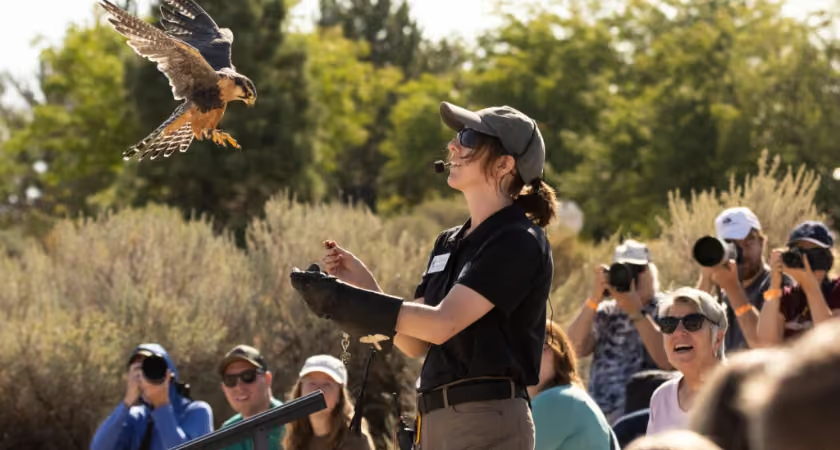
The two companies announced a combined $11,000 contribution to The Peregrine Fund, a nonprofit conservation organization headquartered in Boise, Idaho. The funding will support outreach, education, and conservation programs conducted through the organization's World Center for Birds of Prey campus and broader global initiatives focused on raptor protection.
The investment comes as many contractors and project developers seek to strengthen relationships within the communities where they build while demonstrating commitments to environmental responsibility. Community partnerships have become an increasingly visible component of corporate sustainability programs across the construction and energy sectors.
The Peregrine Fund has spent more than five decades conducting research, species recovery efforts, and educational programs aimed at protecting birds of prey. The organization works internationally to address threats including habitat loss, pollution, and other environmental pressures affecting raptor populations.
For Sundt and rPlus Energies, the donation aligns with their ongoing presence in Idaho's growing renewable energy market. Sundt has served as the engineering, procurement, and construction contractor on multiple energy projects developed by rPlus Energies in Ada County. Collectively, those projects represent nearly one gigawatt of generating capacity that is either operational, under construction, or contractually committed.
Corporate giving initiatives can provide construction firms with opportunities to strengthen community relationships while supporting environmental, educational, and workforce development goals. As sustainability expectations continue to expand across both public and private sectors, community investments often complement broader environmental, social, and governance strategies.
For contractors working on large infrastructure, utility, and renewable energy developments, local engagement programs can help build trust among stakeholders and demonstrate long-term commitment to regional communities. These efforts may also contribute to stronger partnerships with local organizations, public agencies, and residents.
Owners and project developers are placing greater emphasis on corporate responsibility and community impact when evaluating project partners. Contractors that actively support environmental and educational initiatives may strengthen their standing with clients seeking partners that align with broader sustainability and community engagement objectives.
As renewable energy and infrastructure investments continue to expand across the United States, community-focused partnerships are becoming an increasingly important component of long-term business strategy and stakeholder relations.
Source: SUNDT.