Southwest Florida-based Curran Young Construction is making a strategic shift into the affordable housing sector, leveraging its experience in multifamily development to address growing housing demand in the region.

After nearly eight years focused on market-rate apartment construction, the Bonita Springs-based contractor is now preparing to break ground on two major affordable housing developments in Fort Myers, totaling more than 500 units.
“We want to be a part of the solution,” said CEO Chris Curran.
The company, which generated $135 million in revenue in 2025 and employs 45 people, sees affordable housing as both a business opportunity and a response to a critical regional need—especially for workers struggling to find attainable housing despite steady incomes.
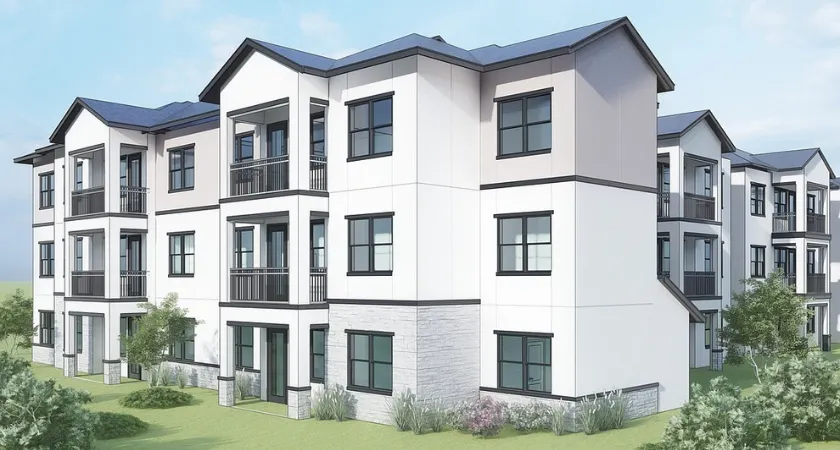
Curran Young’s entry into the affordable housing market begins with two significant developments: The Arwyn and the Reserve at Eastwood.
The Arwyn, a $46 million redevelopment project, will replace the former Horizon Apartments with 230 modern units. Developed in partnership with the Housing Authority of the City of Fort Myers, the Southwest Florida Housing Foundation, Tre-Bel Housing, and Procida Companies, the project will include multiple residential buildings and community-focused amenities such as gardens, a clubhouse, and outdoor gathering spaces.
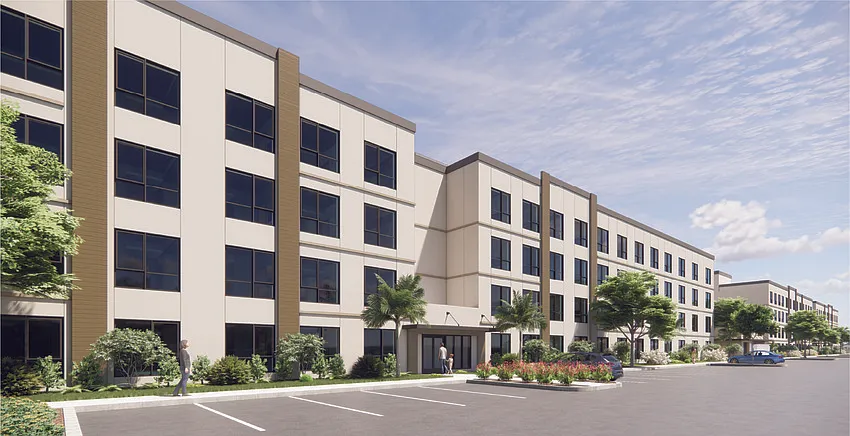
The second project, the Reserve at Eastwood, is a $55 million development spanning 16.5 acres and delivering 288 units. The HUD-financed complex will include amenities such as a swimming pool, pickleball court, playground, and clubhouse, reflecting a growing trend toward higher-quality affordable housing.
Together, the two developments will contribute 518 units to the local housing supply.
Curran Young’s background in market-rate construction is proving valuable in navigating the financial complexities of affordable housing projects.
“There’s a big need for contractors that can work with design teams to get these projects designed in a way that they pencil out,” says Curran, 50. “Because with affordable and rent-reduced construction costs, it’s a tight budget. We know how to work with a design team to make sure that when they’re done with the drawing, they’ll yield a cost that actually fits into the model. We’ve been doing that with market-rate [apartments] the last few years and decided to pivot into affordable housing.”
The firm applies lessons learned from higher-end developments, including efficient building design and strategic procurement practices, to keep costs under control without sacrificing quality.
“It really just comes with several years of building apartments,” says Curran.
He also emphasized that modern affordable housing projects are comparable in quality to market-rate developments.
“There used to be this stereotype that the finished product is of a lesser quality or not as attractive as market-rate apartment projects, and that couldn’t be further from the truth,” says Curran. “These buildings are built the same way as market rate — and in a lot of cases built better.”
Affordable housing developments often rely on a mix of public and private funding sources, including federal Low-Income Housing Tax Credits (LIHTC), state incentives, and grants. These financing structures can be complex and require long-term commitments from developers.
“So they have a vested interest in making sure that the operating costs, the maintenance and the upkeep, is less,” says Curran. “We put in a lot of effort on the front end to make sure the hardware, fixtures and finishes are high quality and durable.”
He added that most renters would not be able to distinguish between affordable and market-rate properties developed by the firm.
Government partnerships also play a key role in accelerating project timelines.
“They want to do it for their constituents, for their residents, and because they’re bought in, it makes the projects so much easier on the front end,” says Curran. “Typically with a market-rate project, it takes years to get going because you don’t have the same backing from the government.”
Despite the opportunity, Curran notes that administrative requirements tied to funding programs can deter some contractors from entering the affordable housing space.
“That kind of scares general contractors away from it, but it’s really not a big deal,” he says. “And there are consultants out there that help with those compliance documents.”
He believes more contractors are needed to help close the housing gap, even if it increases competition.
“But I know there is a huge gap, so we do need more contractors building these affordable housing units so folks have a place to live,” he says.
Curran Young’s expansion reflects a broader shift in the construction industry, where developers and contractors are increasingly turning toward affordable housing to meet rising demand and align with public policy priorities.
In high-growth regions like Southwest Florida, housing affordability has become a pressing issue, driven by population growth, rising costs, and limited supply. Projects like The Arwyn and the Reserve at Eastwood aim to address this imbalance while demonstrating that affordable housing can deliver both quality and community value.
With construction expected to begin soon, Curran Young’s move into the sector positions the firm to play a larger role in shaping the region’s housing landscape in the years ahead.
Originally reported by Beth Lubereck in Business Observerfi.