
As labor shortages continue to challenge the construction industry, contractors are increasingly investing in workforce development initiatives designed to attract and train new talent. One example is Miller Electric’s Trade Pro Academy, a training program focused on creating entry points into the electrical trade for individuals with little or no prior experience.
The four-week academy provides participants with foundational knowledge and practical skills that can help prepare them for careers in electrical construction. The program is designed to serve a broad range of individuals, including first-time workforce entrants, career changers, and those seeking a fresh start in a skilled trade profession.
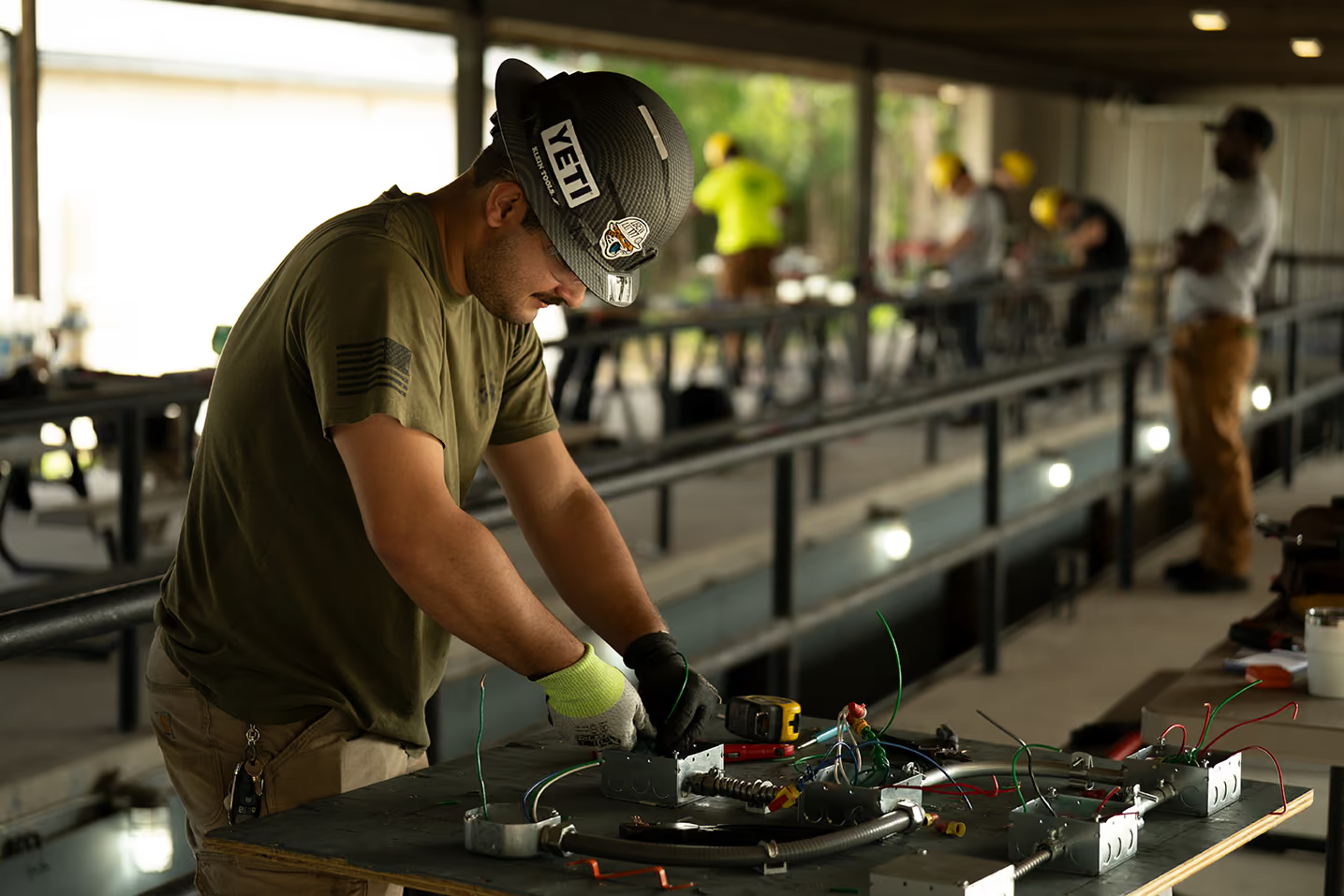
Unlike traditional training pathways that often require previous experience or industry connections, the Trade Pro Academy is structured to provide accessible, hands-on instruction that introduces participants to the fundamentals of electrical work.
The curriculum emphasizes real-world application and jobsite readiness. Participants receive instruction in workplace safety, conduit installation, basic electrical wiring practices, and standard jobsite procedures.
By combining classroom learning with practical exercises, the program aims to help students develop confidence while gaining exposure to the tools, materials, and techniques commonly used in the electrical contracting industry.
This approach aligns with broader workforce development trends that prioritize experiential learning and accelerated training programs as employers seek new ways to address skilled labor shortages.
Since its launch, the Trade Pro Academy has trained more than 470 individuals through 34 program cohorts conducted in multiple cities across the country. The mobile nature of the program allows it to be delivered directly within communities where workforce development opportunities are needed.
For many participants, the academy serves as a stepping stone toward formal apprenticeship programs and long-term employment opportunities within the electrical industry.
Graduates may continue their training through apprenticeship pathways that combine classroom education with paid on-the-job experience, helping workers advance toward skilled craft careers while earning income and industry credentials.
The construction industry continues to face a persistent shortage of skilled labor as experienced workers retire and project demand remains strong across sectors including data centers, manufacturing, healthcare, transportation, and infrastructure.
Programs that introduce individuals to skilled trades and provide structured career pathways have become an important strategy for contractors seeking to strengthen workforce pipelines and support future growth.
Industry leaders increasingly view workforce development investments as critical to maintaining project delivery capacity and meeting long-term labor demands.
For construction owners and contractors, workforce development initiatives such as the Trade Pro Academy can help expand the pool of qualified craft professionals entering the industry. Stronger labor pipelines may improve workforce availability, support project schedules, and reduce labor-related constraints on future construction activity.
As competition for skilled workers remains intense, programs that connect new talent with apprenticeship opportunities and career advancement pathways are expected to play an increasingly important role in sustaining industry growth and productivity.
Source: Miller Electric Company.