As housing costs continue to strain Californians, state lawmakers are shifting attention from zoning reforms to the cost of construction itself — and betting that factory-built housing could help close the gap.
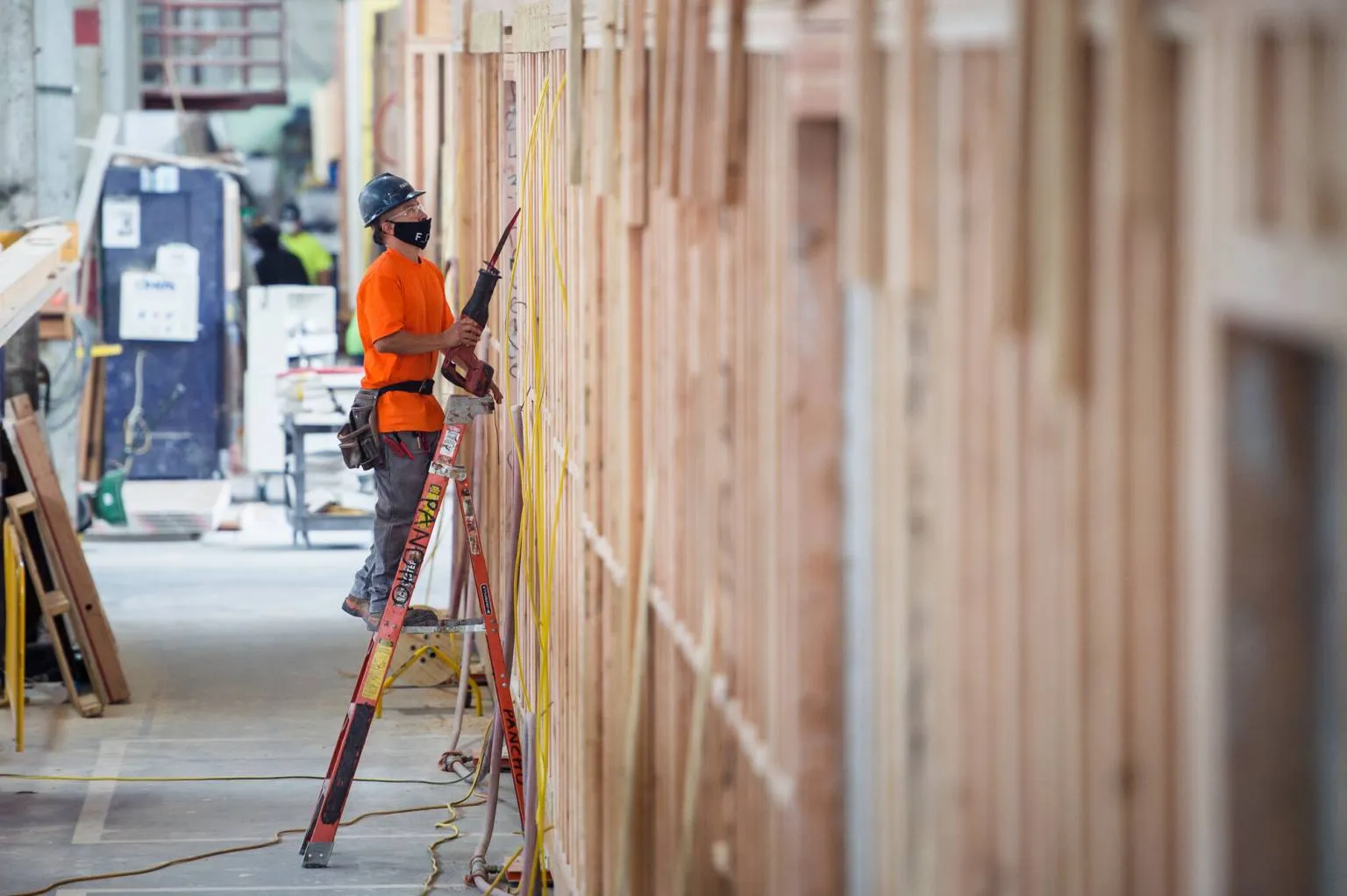
Members of the California Legislature’s Select Committee on Housing Construction Innovation recently held hearings examining how to scale prefab, modular and manufactured housing. Their goal: reduce construction expenses and accelerate development to help the state meet its ambitious target of building 2.5 million homes by 2030.
The effort follows major housing legislation passed last year aimed at streamlining environmental reviews and encouraging development near transit hubs. Now, lawmakers are turning to how homes are built — not just where.
“A key piece of making housing more affordable is bringing down the cost of construction,” Committee Chair and Assemblymember Buffy Wicks, D-Berkeley, said in a statement to KQED. “Factory-built housing is not a silver bullet, but it can be part of the solution to our housing crisis.”
A new report from the Terner Center for Housing Innovation at University of California, Berkeley estimates that factory-built housing could reduce construction costs by up to 20% and cut build times in half.
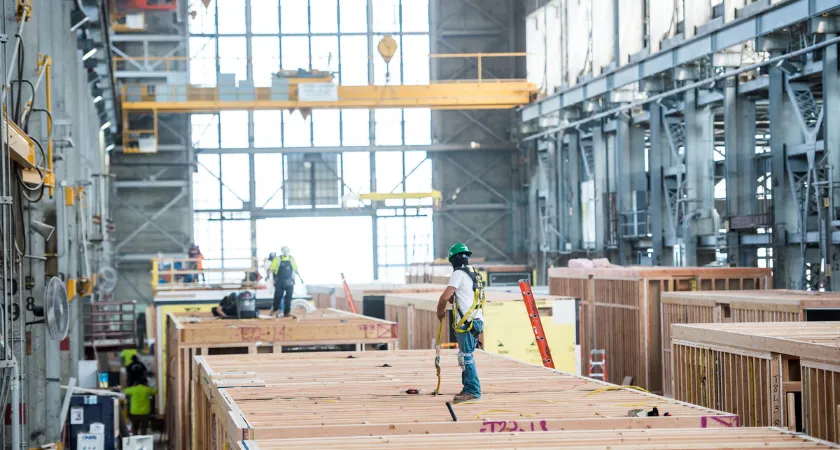
Industrialized construction shifts much of the building process from job sites to centralized factories, where standardized components are manufactured indoors and then assembled on-site. Advocates argue that this approach reduces weather delays, improves quality control and lowers labor inefficiencies.
However, the report also outlines major hurdles that have prevented the industry from scaling. Financing remains one of the largest barriers. Lenders and insurers are accustomed to traditional site-built projects and often lack sufficient data to assess the risk of modular or prefab developments.
Regulatory inconsistencies further complicate expansion. Although California has statewide standards for factory-built housing, local governments often impose additional plan reviews and inspections. These variations can undermine standardization — one of modular construction’s primary cost-saving advantages.
Historically, labor unions have been cautious about factory-built construction, concerned about potential job losses or shifts away from traditional trades. But perspectives appear to be evolving.
Jeremy Smith, deputy legislative director for the State Building and Construction Trades Council of California, acknowledged during a committee hearing that modular housing can expand production capacity.
While the trades prefer on-site construction methods, modular-built housing “provides a solution to building — to actually building — more housing for people of all income levels.”
Smith cited Fullstack Modular, which operates a factory in Carson, California, employing about 200 unionized workers. Factory-based construction, he said, offers predictable hours and stable locations, helping workers manage childcare and transportation challenges.
“Because of the consistent work hours and the factory location within the community, trades workers and more craftspeople are able to consider the trades and still accommodate childcare and other life needs,” he said. “Workers who have not secured reliable transportation, for example, can more easily get to the stationary location of the Carson factory, making their transition into the building trades easier.”
Factory-built housing is not new to California. Companies like Factory OS have attempted to scale production in recent years. Yet several firms have struggled to maintain stable pipelines of projects, leading to factory closures.
Michelle Boyd, chief strategy officer for Terner Labs, a nonprofit incubator affiliated with the Terner Center, argues that the broader construction ecosystem remains rooted in century-old practices.
“The construction industry has worked the way it’s worked for 100 years,” she said. “And there are many different silos. Every player has their own little piece of the puzzle on how you put a house together or an apartment together.”
Industrialized construction consolidates those silos into a single manufacturing process — a shift that disrupts traditional financing and regulatory norms.
Because developers often struggle to secure reliable capital for modular projects, production pipelines can stall. When factories lack consistent orders, Boyd noted, the financial model becomes unsustainable.
“They can’t sustain that because they have to pay the wages, and so they close,” she said.
Boyd suggested the state could play a more active role in stabilizing demand and sharing financial risk.
“One of the main policy areas that we uncovered is a role potentially for the state in helping hold some of that risk, so we’re not really asking these developers to risk losing a lot of money or having the deal go upside down halfway through,” she said.
.webp)
Following the committee hearings, California lawmakers are expected to introduce a package of bills aimed at streamlining approvals and improving access to financing for factory-built housing.
At the federal level, lawmakers are also considering bipartisan legislation to reduce regulatory barriers and modernize safety standards that have historically limited manufactured housing production.
If successful, the reforms could help reposition prefab and modular housing from a niche product to a mainstream development strategy — one capable of delivering units faster and at lower cost.
Taken together, the proposed state and federal changes aim to tackle a central constraint in California’s housing crisis: the high and rising cost of construction. Whether factory-built housing can move from promise to large-scale implementation will likely depend on how effectively lawmakers address financing gaps and regulatory fragmentation in the years ahead.
Originally reported by Adhiti Bandlamudi in KQED.