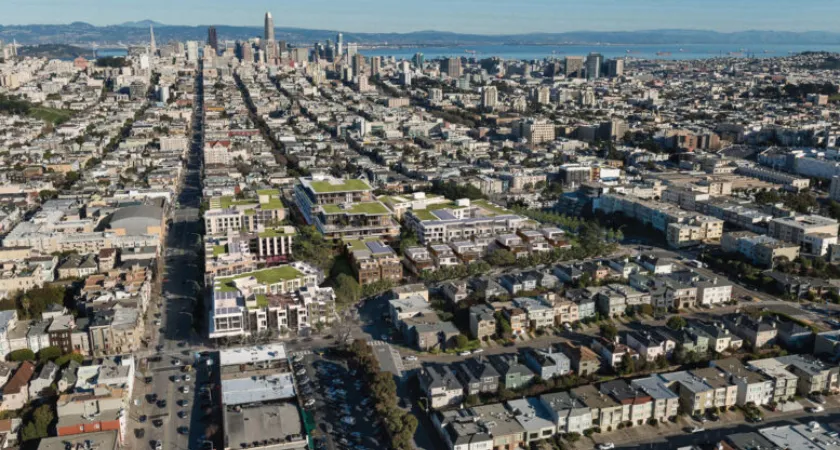
New permits have been filed for the first phase of the major redevelopment at 3333 California Street in San Francisco, marking a significant step forward for the transformation of the former UCSF Laurel Heights campus.

Developers are seeking approval to construct 152 residential units across three new buildings, representing roughly one-fifth of the full build-out planned for the site. The project, known as Presidio Highlands, is being led by Prado Group and SKS Partners.
The newly submitted construction permits cover three separate structures:
Together, the three buildings will introduce 152 new housing units to the Laurel Heights neighborhood, helping address ongoing housing demand in San Francisco’s northern districts.
The architectural design is being led by BAR Architects & Interiors, working alongside Jensen Architects and Solomon Cordwell Buenz. BKF Engineers will oversee civil engineering, while James Corner Field Operations is responsible for the urban planning and landscape design.
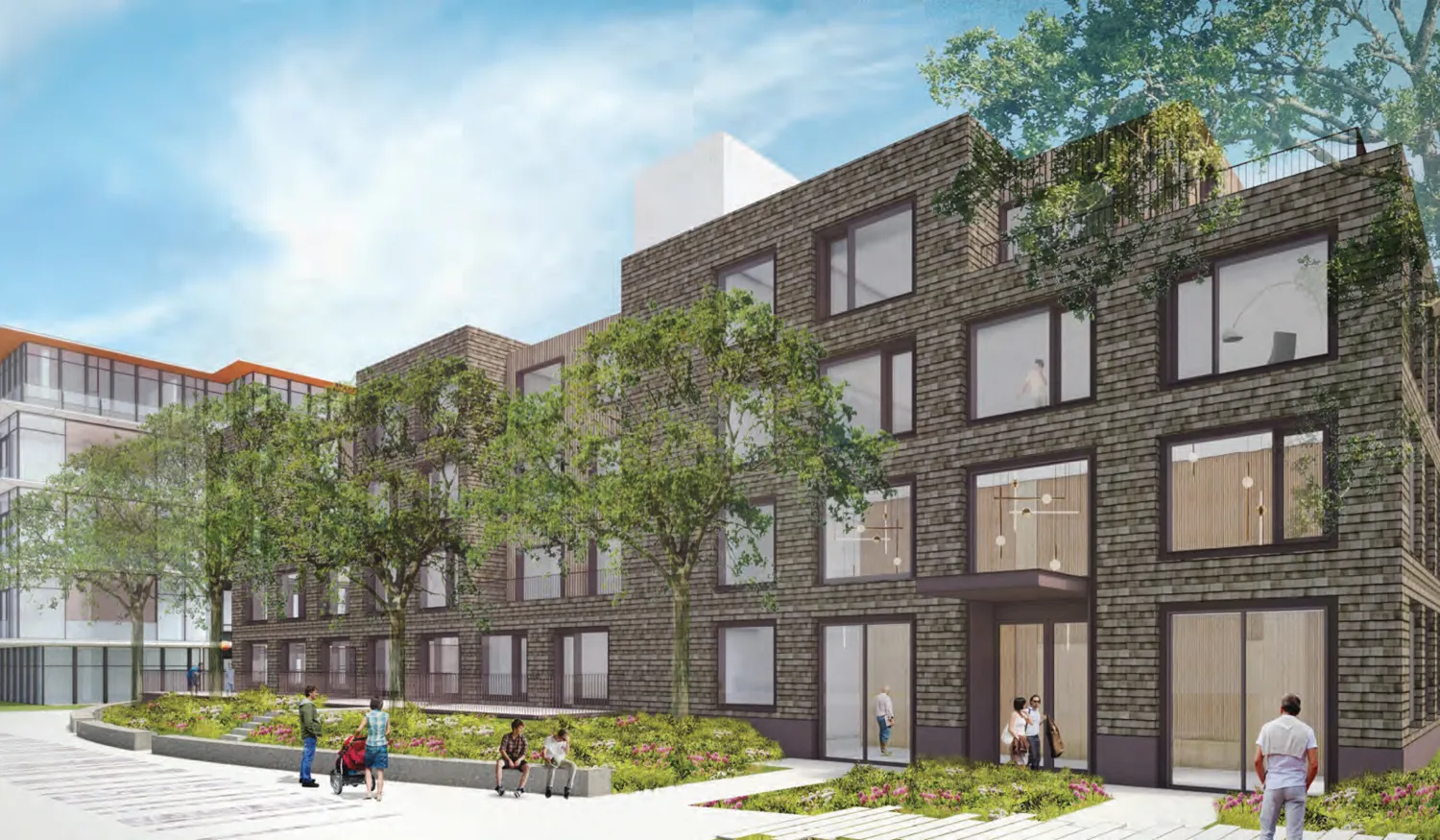
The two 61-unit buildings share a similar architectural approach, featuring articulated façades in cement plaster, fiber cement, and brick veneer. Meanwhile, 538 Laurel Street presents a more regionally inspired design, incorporating metal panels and darkened wood shingles to complement the surrounding neighborhood context.
While the first phase focuses on 152 units, the broader Presidio Highlands redevelopment is far more ambitious. Once fully completed, the project is expected to deliver 744 apartments across approximately 1.4 million square feet of new and adaptively reused space.
Of that total, roughly 1.03 million square feet will be dedicated to housing. The remaining square footage includes 38,100 square feet of retail space and 13,900 square feet allocated for a 175-seat child care facility. Plans also call for parking capacity for up to 820 vehicles and 839 bicycles, supporting both residents and visitors.
One of the most closely watched components of the redevelopment is the Walnut Building. According to the most recent planning documents, the structure is now expected to become a 125-unit affordable senior housing complex — a reduction from the 185 affordable senior units proposed in the 2019-approved version of the plan.
Additionally, the central four-story mid-century modern medical office building on the campus will be divided, expanded to three floors, and converted into residential use. This adaptive reuse component reflects a broader trend across San Francisco of repurposing underutilized institutional and office properties into housing.
The redevelopment has received a financial boost through the city’s approval of an Enhanced Infrastructure Financing District, helping fund public improvements and infrastructure upgrades needed to support the large-scale transformation.
Construction is expected to unfold across four phases, with each phase projected to last between 20 and 36 months. While updated cost estimates have not yet been disclosed, the scale of the project places it among the more significant residential redevelopments underway in San Francisco’s western neighborhoods.
Beyond Presidio Highlands, Prado Group is also managing another master-planned redevelopment at 3700 California Street, located just a few blocks east, further signaling long-term investment in the broader corridor.
As permitting moves forward for the first three buildings, the 3333 California Street redevelopment continues its gradual progression from former academic campus to mixed-use residential community — one that could reshape Laurel Heights over the next decade.
Originally reported by Andrew Nelson in SF Yimby.