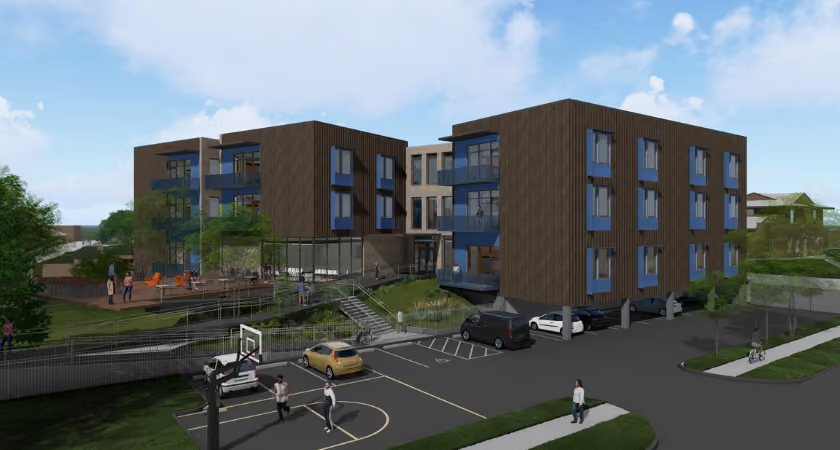
Specialized education facilities are increasingly being designed around the communication, accessibility and workforce needs of the students who use them. At the Texas School for the Deaf in Austin, Flintco has begun construction on a new ACCESS community that will combine residential, educational and life-skills facilities on the active campus.
The ACCESS program serves young adults ages 18 to 22 who have completed high school and are preparing for independent living and employment. The new project will consolidate students who currently live in separate locations across the campus into an apartment-style residence hall.
The residence hall will be connected to an expansion of the existing Kleberg Building. The combined facilities are intended to create a more integrated environment where students can develop employment skills, practice daily routines and prepare for life after graduation.
The Kleberg expansion will include additional classrooms, a wood shop and other instructional spaces. Teaching kitchens and shared gathering areas will connect the residential and educational portions of the development.
The project incorporates Deaf Space design principles, with the design addressing visual communication through elements such as sightlines, lighting, circulation and gathering areas.
Students, Deaf educators, school staff and Deaf Space consultants participated in the design process alongside the project team. Students will also contribute to the finished environment through murals planned for the exterior of the buildings.
The project is funded with support from the Texas Legislature and the Texas Facilities Commission. Construction is expected to take approximately two years, with occupancy planned for the 2028-29 school year.
Because the work is taking place within a historic and active educational campus, construction activities will be coordinated to limit disruption to ongoing school operations.
For education owners and contractors, the project demonstrates the planning requirements involved in delivering specialized facilities within an operating campus. Integrating residential, classroom and workforce-training functions also gives the project a broader role in supporting students as they transition from secondary education into employment and independent living.
Source: Flintco.