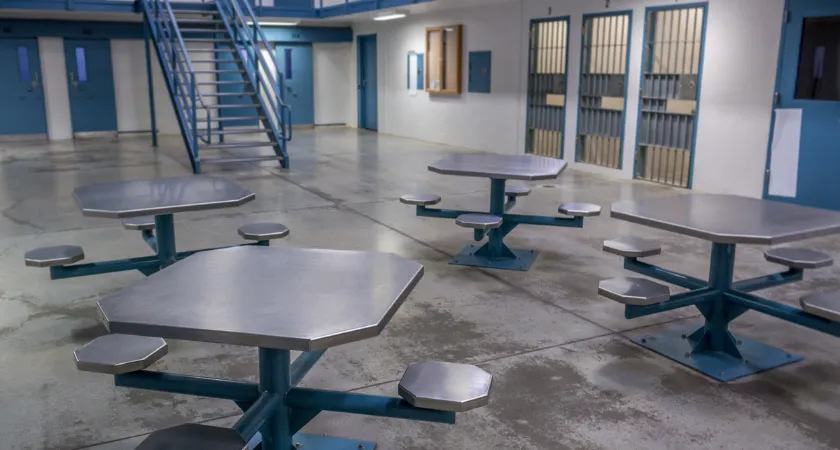
A key House panel in the Florida House of Representatives has advanced a proposal to commit $250 million toward the long-term expansion of the state’s prison system, including planning for a new 4,800-bed correctional facility and an adjoining 600-bed hospital unit.
.webp)
The measure (PCB JUB 26-02), approved unanimously Monday by the House Justice Appropriations Subcommittee, would direct funding to the Florida Department of Corrections to support development of new and existing prison infrastructure through 2067.
There was no debate or discussion before the vote.
In its proposed fiscal year 2026–27 budget, the House allocated $127 million specifically for planning and design of the 4,800-prisoner facility and its adjacent 600-bed hospital unit, which would include dedicated mental health services.
The proposal stems from a 2023 master plan prepared by consulting firm KPMG, which recommended construction of both a 4,800-bed prison and a 600-bed hospital by 2030 to address projected inmate population growth.
Florida’s prison population is expected to rise in the coming decades, prompting lawmakers to evaluate long-term capacity needs.
The Senate’s proposed 2026–27 budget does not include a comparable appropriation at this stage, setting up potential negotiations between the two chambers later in the budget process.
The legislation directs the Department of Corrections to identify available land that meets workforce and economic criteria, including labor market strength, potential staffing pool, commute distance and cost of living considerations.
The KPMG report identified eight possible sites for the new prison and hospital complex:
Final site selection has not yet been determined.
In the broader corrections budget, the House has proposed $4.1 billion for the Department of Corrections, compared with $4 billion in the Senate’s version.
If approved in the final state budget, the $250 million allocation would mark one of the most significant capital commitments to Florida’s correctional infrastructure in recent years.
Supporters argue the investment is necessary to meet anticipated capacity demands and improve access to mental health and medical services within the prison system. However, with the Senate omitting the funding in its proposal, the ultimate scope and timing of the project will depend on budget negotiations in the weeks ahead.
Originally reported by Mitch Perry in Florida Phoenix.