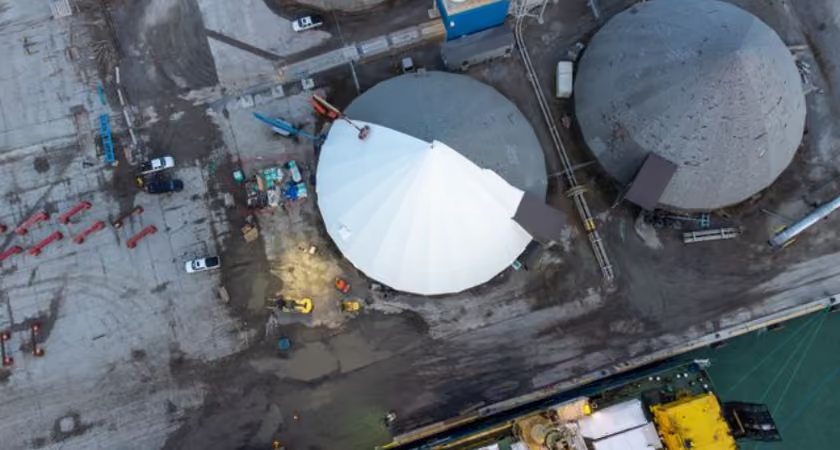
A joint venture led by Fluor Corporation and JGC Corporation has received authorization to begin preliminary work on the proposed second phase of the LNG Canada export facility, marking another step forward for one of North America's largest energy infrastructure developments.
The limited notice to proceed allows the JGC Fluor BC LNG II joint venture to initiate planning, engineering, and other early-stage activities ahead of a potential final investment decision on the expansion project.
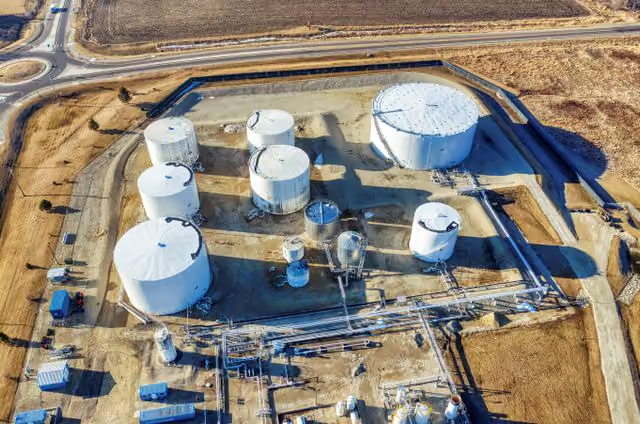
Located in Kitimat, British Columbia, the LNG Canada facility is a key component of Canada's strategy to expand liquefied natural gas exports to international markets, particularly in Asia.
The proposed Phase 2 development would build upon the existing facility, which began operations following the completion of its first two liquefaction trains and supporting infrastructure.
If approved, the expansion would effectively double the plant's production capacity, strengthening Canada's position in the global LNG market and increasing demand for engineering, procurement, construction, and industrial services.
The project benefits from access to western Canada's natural gas resources and a strategic Pacific Coast location that offers shipping access to international customers.
Large-scale LNG developments generate substantial construction activity across multiple sectors, including civil construction, structural steel, mechanical systems, electrical infrastructure, marine facilities, and industrial fabrication.
The initial phase of LNG Canada involved extensive construction of processing facilities, storage infrastructure, transportation assets, utility systems, and export capabilities, creating significant economic activity throughout the region.
A second phase would likely extend opportunities for contractors, specialty trade firms, equipment suppliers, and workforce development programs supporting major industrial projects.
Global demand for natural gas and energy security initiatives continue to drive investment in export infrastructure projects worldwide. While many countries pursue long-term decarbonization strategies, LNG remains an important component of energy transition planning in several international markets.
Major energy producers are increasingly evaluating capacity expansions at existing facilities, where established infrastructure and operating systems can provide cost and schedule advantages compared with entirely new developments.
The proposed LNG Canada expansion reflects ongoing industry efforts to meet future demand while leveraging existing assets and supply chain networks.
For owners, developers, and contractors, the limited notice to proceed signals continued momentum in the North American energy infrastructure market. Although a final investment decision remains pending, early project authorization indicates that stakeholders are advancing planning efforts and evaluating execution strategies.
Should the expansion move forward, it would create substantial opportunities for engineering firms, industrial contractors, equipment manufacturers, and skilled labor providers while reinforcing the importance of large-scale energy projects in supporting regional economic growth and long-term infrastructure investment.
Source: Flour News Room.