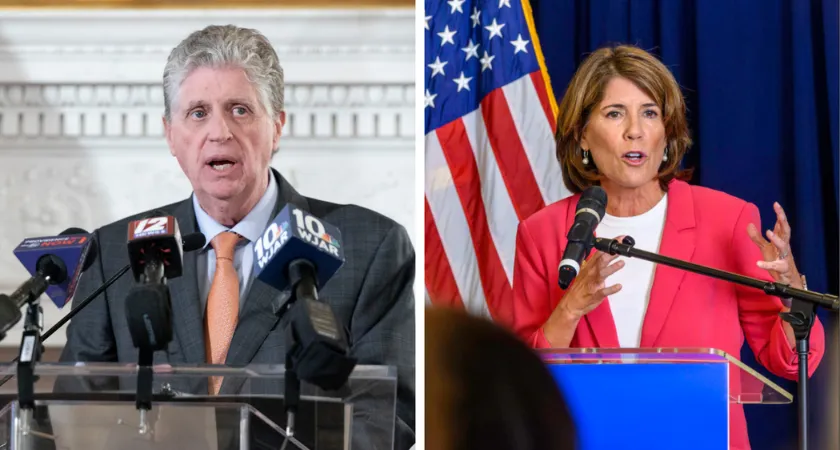
Democratic gubernatorial challenger Helena Buonanno Foulkes is backing a proposed millionaire’s tax — but unlike incumbent Dan McKee, she wants every dollar of the new revenue dedicated to housing production.
.avif)
Foulkes on Monday unveiled a housing plan calling for an 8.99% tax rate on personal income above $1 million. Her campaign estimates the tax would generate more than $1 billion over eight years, funding construction of 20,000 homes and apartments statewide through a new revolving loan fund dubbed the “Rhode Home Program.”
“It’s a bold plan that will make a big difference for Rhode Islanders,” Foulkes said in an interview. “This was always the beauty of Rhode Island — that you could afford to live here.”
While McKee has proposed a 3% surtax on income over $1 million to be deposited into the state’s general fund, Foulkes said the new revenue should be constitutionally protected and used exclusively for housing.
To ensure that millionaire’s tax revenue is used solely toward housing, Foulkes called for a constitutional amendment to place that money in a protected reserve. The reserve would be audited by an independent inspector general — an office lawmakers on both sides of the aisle have sought to create over the years.
“If you’re doing all the right things, you shouldn’t be afraid of having someone come in and look inside and make sure that all the money you’re spending is really going to the people who need it,” Foulkes said in an interview.
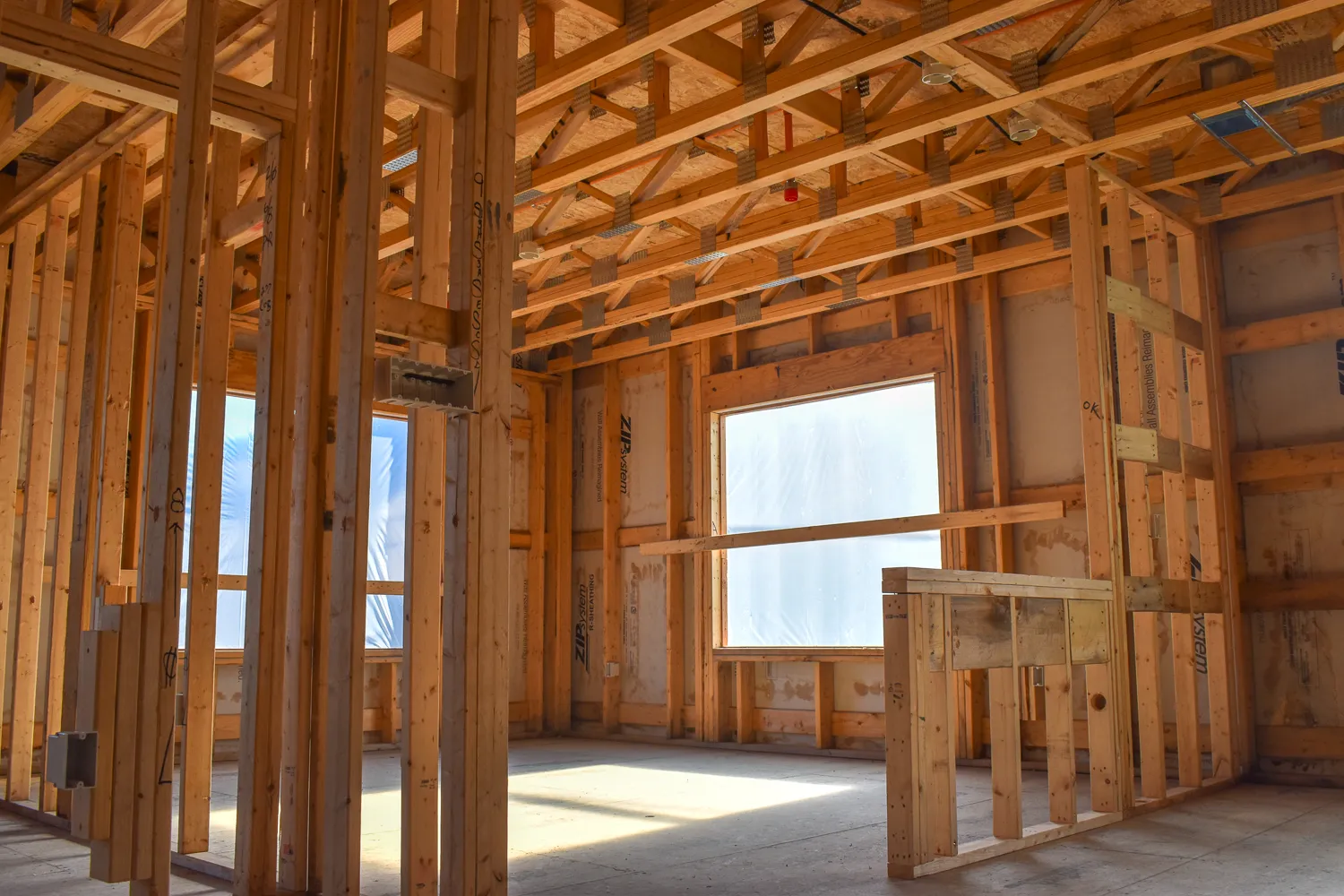
Under her plan, the Rhode Home Program would function as a revolving fund, recouping investments through rents or property sales once projects are completed. The initiative would finance low- and middle-income housing, accessory dwelling units, prefabricated and modular construction, and restore funding for Rhode Island’s Historic Preservation Tax Credit.
Five percent of the program’s funding would be allocated to short-term rent relief.
“Rhode Islanders are struggling with rent in the short term,” Foulkes said. “The Rhode Home Program will set aside dollars for immediate rent support for families in need who cannot wait years for prices to come down to afford housing now.”
Funding for rental support would decrease as supply increases and prices stabilize, according to her policy outline.
Foulkes’ proposal also emphasizes cutting permitting barriers that state leaders have blamed for slowing construction. She said redevelopment of vacant or blighted properties could help address both housing shortages and community revitalization.
“These eyesores can turn into housing, reducing crime and putting this land to productive use generating additional revenue for the state,” Foulkes said. “If someone is willing to take a risk on a project like this, they will have an advocate in the governor, and we will work together to ensure that red tape doesn’t keep housing from being built.”
Still, resistance to large-scale projects remains strong in some communities. Legal battles in Johnston and Westerly over major housing proposals illustrate ongoing tensions between state-level housing goals and local control.
Foulkes said she would prioritize development in municipalities willing to collaborate.
“I’m a big believer that when you’re trying to create big change, lean into the people who want it first,” she said in an interview. “There’s ways to address needs in all these towns, but the thing we have to produce is 20,000 new units — we have to move fast, we don’t have time to waste.”
She added that success in participating towns could eventually persuade skeptics elsewhere.
McKee’s campaign criticized Foulkes’ proposal as derivative.
“Governor McKee isn’t governing in concepts — he’s been rolling up his sleeves and getting housing built, passing the largest housing bond in state history in 2024 and proposing another $120 million housing bond in this year’s budget,” Christina Freundlich, a spokesperson for McKee’s campaign, said in a statement late Monday morning.
Foulkes rejected the characterization.
“There’s nothing about this that’s a copycat,” she said. “We have a long way to go to really meet the needs of Rhode Islanders. My advice to the governor is to read my plan.”
Progressive housing advocates also raised concerns. Dan Denvir, co-founder of Reclaim RI, questioned references in Foulkes’ proposal to redeveloping substandard public housing into mixed-use, mixed-income projects, pointing to lessons from the federal HOPE VI program of the 1990s.
“If Foulkes is going to adopt the language of our proposal, she should adopt its substance as well,” Denvir said.
At the same time, Denvir acknowledged potential upside in the revolving loan concept.
“It’s beyond clear that the private sector cannot solve Rhode Island’s housing crisis on its own,” he said.
Republican candidate Aaron Guckian opposed the tax approach outright.
“Rhode Islanders are already paying so many taxes and fees,” Guckian said in a statement. “People feel it everywhere, permits, registrations, fines, and even speed cameras. At some point, government has to stop looking for new revenue and start working smarter.”
Business groups have similarly warned that higher taxes on top earners could undermine economic competitiveness. Michael DiBiase, president and CEO of the Rhode Island Public Expenditure Council, said the state’s issue is spending, not revenue.
“Rhode Island does not have a revenue problem — it has a spending problem in that we continue to desire to spend beyond our means,” he said in an email. “A tax on high earners would disadvantage small businesses and hurt Rhode Island’s ability to attract and retain business activity and investment.”
Despite criticism, polling suggests public support for a millionaire’s tax. A Feb. 24 survey by the University of New Hampshire found two-thirds of respondents supported McKee’s proposal to include such a tax in the state budget.
Foulkes argued that without bold intervention, rising housing costs could push middle-class residents out of Rhode Island, harming both communities and employers.
“Often I hear from small businesses and even big businesses that it’s very hard for them to recruit people here because people look at what they’ll be making in salary relative to the cost of finding an apartment to rent or a home to buy,” she said. “It’s really gotten out of whack.”
She framed the proposal as a fairness issue amid broader federal tax policy changes.
“By using the revenue from the millionaire’s tax, we will be able to save on financing costs and invest even more in housing without making Rhode Islanders struggling with the cost of housing pick up the tab,” she said.
With the 2026 Democratic primary shaping up as a rematch, housing affordability — and how to pay for it — is emerging as a defining issue in the race for governor.
Originally reported by Christopher Shea in Rhode Island Current.