Joint venture led by Traylor, Walsh and Skanska will deliver the project’s longest tunnel-boring segment beneath the Hudson River.
The Gateway Development Commission has advanced one of the nation’s largest transportation infrastructure programs with the award of a $1.3 billion contract for a key segment of the Hudson Tunnel project connecting New Jersey and New York.
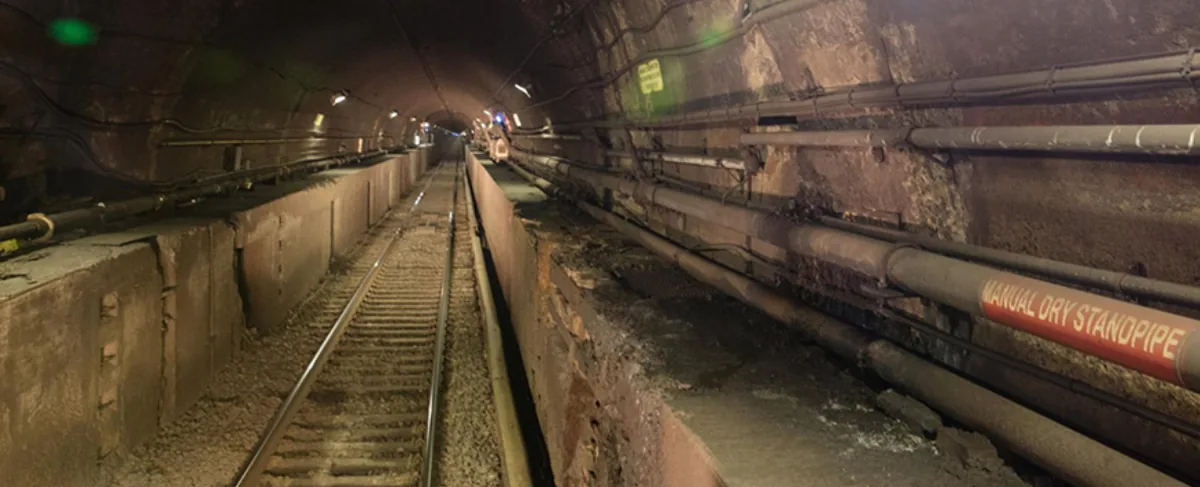
The newly awarded package covers the longest tunnel-boring portion of the overall rail expansion effort and represents another milestone in the broader Gateway Program aimed at modernizing passenger rail capacity in the Northeast Corridor.
The contract was awarded to a joint venture consisting of Traylor Bros. Inc., Walsh Group and Skanska AB. The consortium will oversee excavation and construction of twin rail tunnels beneath the Hudson River linking Weehawken, New Jersey, with Manhattan’s west side.
Each tunnel tube will extend roughly 7,250 feet and will be excavated using specialized mixed-face tunnel boring machines designed to operate in complex subsurface conditions beneath the river.
In addition to tunnel excavation, the package includes construction of nine underground cross passages connecting the twin tubes. The scope also calls for stabilization work beneath portions of the Hudson Bergen Light Rail system where the new alignment will pass underground.
The project further includes installation of permanent underground structural supports intended to reinforce sections of the Willow Avenue Bridge during and after tunnel construction activities.
For heavy civil contractors and infrastructure owners, the award reflects continued momentum in large-scale transit and rail investment across the United States. Tunnel construction packages of this size are expected to drive demand for specialty trades, underground engineering expertise, geotechnical services and large-scale project management capabilities over the next several years.
The Gateway Program remains one of the most closely watched transportation initiatives in the country because of its importance to the Northeast Corridor, which supports a substantial share of U.S. passenger and commuter rail traffic. Existing tunnel infrastructure beneath the Hudson River has faced growing reliability concerns tied to age, storm-related damage and rising passenger demand.
By moving forward with additional construction packages, project leaders are attempting to accelerate long-term capacity improvements while reducing future operational risks for regional rail service.
The latest contract award means six of the project’s 10 major construction packages have now been awarded, signaling that the program is transitioning deeper into full-scale execution.
Construction activity on the newly awarded segment is expected to begin in the coming months.
The Hudson Tunnel contract underscores the scale of public infrastructure opportunities emerging from federally backed transportation programs across the United States. For construction owners, developers and infrastructure investors, the project signals sustained demand for large, technically complex civil works involving tunneling, bridge support systems, rail infrastructure and underground utilities.
The project is also likely to increase competition for skilled labor, tunnel engineering specialists and heavy construction materials across the Northeast market over the coming years. Owners managing other transportation or urban infrastructure developments may face rising procurement costs and tighter subcontractor availability as major public projects continue to move into active construction phases.
At the same time, the Gateway Program could create long-term economic and development benefits around regional mobility, transit-oriented construction and commercial real estate growth tied to improved rail connectivity between New Jersey and New York City.
Originally reported by Batrak Oleksandr — Editor-in-Chief at Railway Supply in Railway Supply.