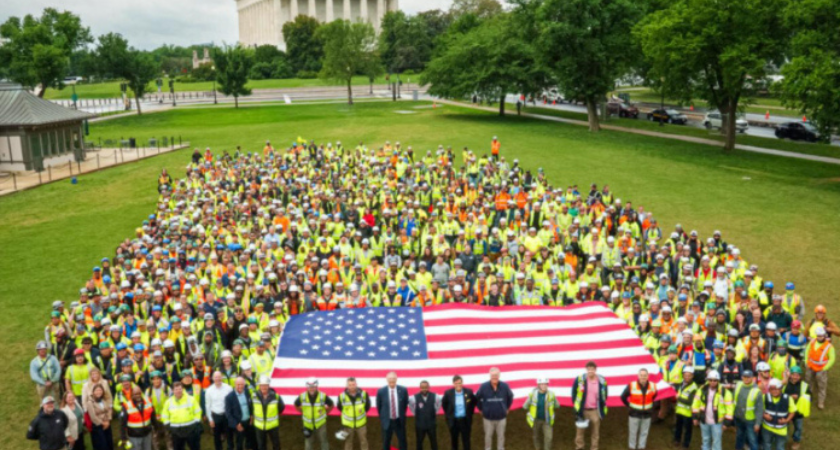
WASHINGTON — Nearly 1,000 construction professionals gathered on the National Mall this week as Gilbane Building hosted a major Construction Safety Week 2026 event and formalized a new alliance with the Occupational Safety and Health Administration aimed at strengthening jobsite safety across the construction industry.
.jpg)
The event, held Wednesday during Construction Safety Week, also coincided with the 13th annual National Safety Stand-Down to Prevent Falls in Construction, a nationwide initiative designed to reduce fall-related injuries and fatalities among construction workers.
Industry leaders said the newly formed alliance between Construction Safety Week organizers and OSHA represents a significant step toward improving collaboration between contractors, government agencies and safety professionals throughout the construction sector.
“The alliance with OSHA is an important step forward in unifying the industry,” said Adam Jelen, president and CEO of Gilbane Building and chair of Construction Safety Week 2026. “When industry and government come together, we can drive stronger engagement, awareness, common frameworks, and better education.”
The partnership is expected to focus on expanding safety education programs, improving access to workforce training resources and promoting standardized safety practices throughout all stages of construction projects. Organizers said the alliance will also emphasize “Total Worker Health” initiatives intended to support both physical safety and overall worker wellbeing.
This year’s Construction Safety Week theme, “All in Together,” centered on the principles of “Recognize, Respond, Respect,” which organizers described as a framework for identifying and addressing high-energy and high-hazard work environments where serious injuries and fatalities are most likely to occur.
Construction executives, skilled craft workers, labor representatives, safety managers and federal officials attended the Washington event, reflecting what organizers described as growing industrywide support for improving safety culture and accountability on jobsites.
Jelen said the safety initiative extends beyond active construction sites and includes every stage of the project lifecycle.
“Construction Safety Week’s vision focuses on unifying and deepening the culture of care, grounded in a deep respect for the skilled craft,” Jelen said. “This vision comes with a responsibility that spans all team members and across every phase of a project: design, planning, construction, and operations — the entire built environment ecosystem.”
Falls remain the leading cause of death in the construction industry, according to federal workplace safety data. The National Safety Stand-Down initiative encourages companies across the United States and Canada to pause work activities during the week to reinforce fall prevention practices, conduct safety demonstrations and increase hazard awareness among workers.
As part of this year’s Construction Safety Week programming, organizers also unveiled a new technical bulletin series developed by the organization’s Technical Committee in collaboration with safety experts, contractors and skilled trades professionals.
The bulletins are intended to help construction teams take a more proactive approach to identifying and mitigating high-risk hazards on jobsites. Organizers said the materials align with the “Recognize, Respond, Respect” safety framework and are designed to support ongoing education and communication efforts throughout the industry.
.jpg)
Construction Safety Week has grown into one of North America’s largest coordinated construction safety campaigns. The annual initiative promotes worker safety through training sessions, jobsite events, educational materials and collaboration among contractors, labor organizations and industry stakeholders.
The new alliance with OSHA comes as construction firms continue facing increased scrutiny over worker safety, workforce retention and risk management on large-scale projects across the United States.
Industry leaders said the partnership is intended to create stronger consistency in safety standards while encouraging greater engagement from employers, workers and project teams.
Originally reported by Boston Real Estate Times in Boston Real Estate Times.