Republican lawmakers at the Arizona Capitol are moving aggressively to position the state at the forefront of emerging nuclear technology, introducing a slate of bills aimed at accelerating the construction of small modular nuclear reactors, or SMRs. Supporters say the effort is necessary to meet rising energy demand driven by artificial intelligence and data centers, while critics argue the technology remains years away from practical deployment.
.webp)
Six bills introduced this session would ease regulatory hurdles for SMRs, primarily by limiting county governments’ authority to block construction and by streamlining approval pathways for industrial users seeking to co-locate reactors with energy-intensive operations.
“The future is here, A.I. is here, data centers are here,” said Rep. Justin Wilmeth during a Feb. 12 committee hearing. “We need more energy, and I think (SMRs are) a great approach to be more flexible and create more energy options in the future.”
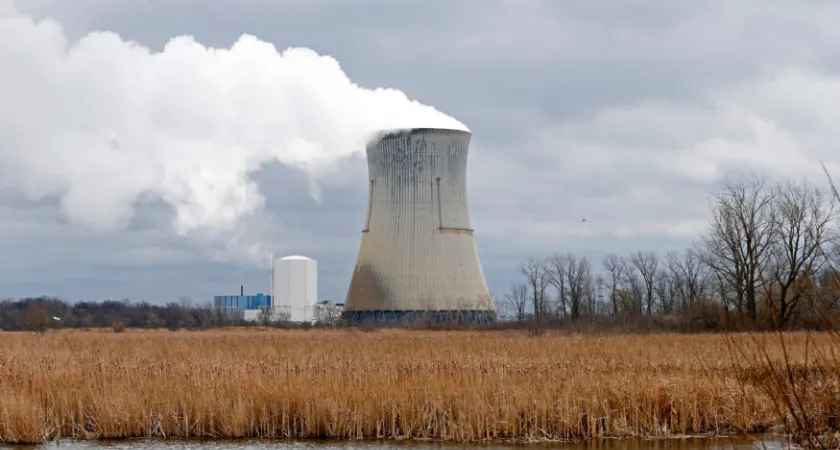
SMRs are significantly smaller than traditional nuclear reactors — generally about one-third the size — and can generate between 50 and 300 megawatts of electricity. According to Stanford University’s Precourt Institute for Energy, a 300-megawatt reactor can power roughly 300,000 homes. Proponents say the modular design allows reactors to be factory-built and assembled on-site, potentially reducing costs and construction timelines compared to conventional nuclear plants.
Currently, only two SMRs are operational worldwide — one in Russia and one in China — but dozens more are under development across multiple countries.
Wilmeth, a Republican from Phoenix, introduced two measures designed to speed up SMR deployment. One would require counties to allow large industrial energy users, such as data centers, to co-locate with SMRs. The other would mandate that counties include land use planning for SMRs in their comprehensive development plans.
Similar proposals have been introduced by Rep. Michael Carbone, R-Buckeye, and Sen. Frank Carroll, R-Sun City West. Carroll’s bill would permit electric utilities to replace coal- or natural gas-fired generating units with SMRs, or to co-locate an SMR with a data center, without undergoing additional environmental review.
Rep. James Taylor, R-Litchfield Park, is sponsoring legislation requiring counties to approve facilities that manufacture SMRs or produce components necessary for their construction. Rep. Teresa Martinez, R-Casa Grande, has proposed directing the Arizona Commerce Authority to study the economic impact of SMRs and data centers in Arizona.
The legislative activity comes amid growing interest in advanced nuclear technology nationwide. Lawmakers argue Arizona must act now to avoid falling behind other states competing for high-tech industry investment.
Nick Myers, chairman of the Arizona Corporation Commission, opened a nuclear energy docket last year to explore SMR deployment. While he supports efforts to reduce regulatory barriers, he has urged caution when it comes to utility-owned reactors.
“Arizona really doesn’t want to be on the cutting edge of nuclear, because then all of the (research and development) costs tend to get put back on to the ratepayers of the utilities, and we don’t want that,” Myers said. “So being fourth, fifth, sixth in line is really where we’re aiming for from a utility standpoint.”
Myers added that he is more supportive of allowing private data center operators to build their own SMRs, since those companies would bear the upfront research, development and construction costs rather than passing them on to utility customers.
Arizona’s three largest utilities — Arizona Public Service, Salt River Project and Tucson Electric Power — are in the early stages of evaluating SMR feasibility. In a December letter to regulators, the companies indicated they have applied for a U.S. Department of Energy grant to pursue an early site permit from the U.S. Nuclear Regulatory Commission. No specific locations or manufacturers have been identified.
Environmental advocates and local government groups remain skeptical. The County Supervisors Association has opposed several of the bills, arguing they erode local control over land use decisions.
Sandy Bahr, director of the Sierra Club’s Grand Canyon chapter, criticized lawmakers for prioritizing a technology that is not yet commercially proven in the United States.
“They’re spending all this time on legislation on something that is not ready for prime time,” Bahr said.
Gov. Katie Hobbs previously vetoed a similar SMR bill in 2025, writing in her April 18 veto letter:
“Unfortunately, this bill puts the cart before the horse by providing broad exemptions for a technology that has yet to be commercially operationalized anywhere in the nation,” Hobbs wrote on April 18, 2025.
Nearly all of this year’s SMR-related bills have advanced out of committee, though proposals that preempt county authority are widely expected to face another potential veto. Even so, some industry advocates believe SMRs could be deployed in Arizona within the next three to eight years if regulatory and financial pathways align.
As Arizona’s population grows and data-driven industries expand, the debate over SMRs reflects a broader tension between innovation and caution — and whether the state should lead, follow or wait in the next chapter of nuclear energy development.
Originally reported by Reagan Priest Arizona Capitol Times in AZ Capitol Times.