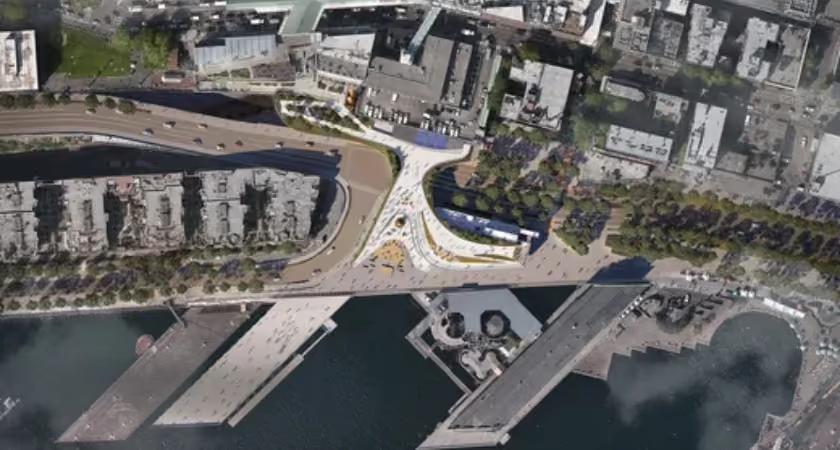
Two years after the Seattle Aquarium’s Ocean Pavilion opened, the project illustrates the coordination requirements involved in delivering complex mechanical systems within a constrained public facility.
The 30,000-square-foot, three-story pavilion was designed around a large aquarium habitat, creating a demanding environment for mechanical and building systems. Hermanson led the HVAC scope, with its teams handling detailing, fabrication and field installation.
The contractor installed more than 45,000 pounds of galvanized and stainless-steel ductwork and recorded more than 9,300 hours across the project.
The mechanical work had to be coordinated with plumbing, fire protection, electrical and life safety systems while maintaining the operational requirements of an aquarium environment. Limited space within the building increased the importance of sequencing, trade coordination and accurate installation.
The work extended beyond the building itself, including underground installations and coordination with roadway and pedestrian improvements surrounding the pavilion.
The Ocean Pavilion demonstrates how specialized facilities can require construction teams to coordinate multiple building systems around a highly specific operational environment.
For owners and contractors, projects involving aquariums, laboratories, health care facilities and other specialized environments can create additional demands during design and construction. Mechanical systems must support occupant comfort while also meeting the environmental and operational requirements of the facility.
Early coordination between design, fabrication and field teams can help reduce conflicts in constrained spaces. Prefabrication and detailed planning can also support installation efficiency when mechanical systems must be integrated into a tightly programmed building.
The pavilion’s continued operation also highlights the long-term importance of designing and installing systems that can support public-facing facilities after construction is complete.
Specialized public and institutional projects are increasingly dependent on coordinated mechanical, electrical and plumbing systems, particularly as owners pursue more efficient, resilient and technically sophisticated facilities.
For contractors, these projects can create opportunities for firms with specialized design-build, fabrication and installation capabilities. They also place greater emphasis on skilled labor, BIM and detailing expertise, prefabrication, quality control and coordination among trades.
The Ocean Pavilion’s performance two years after opening provides a longer-term view of the value of disciplined project delivery. For construction owners, the project underscores the importance of selecting teams capable of managing complex system integration from preconstruction through field installation and facility operation.
Source: Hermanson.