
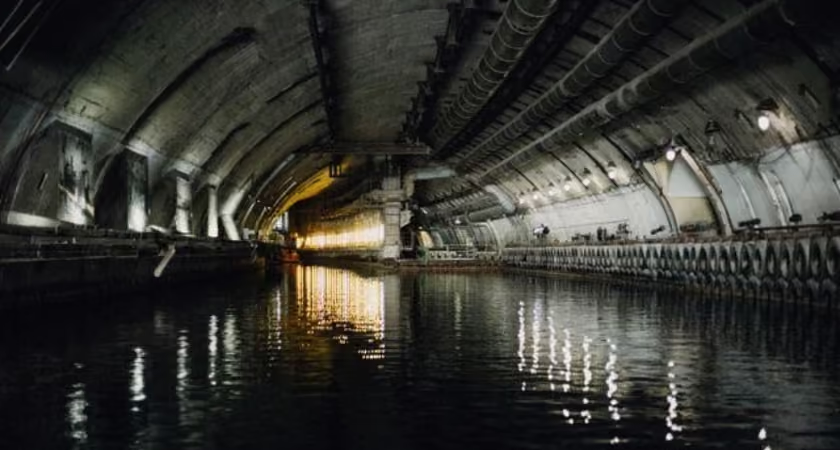
A new underground storage tunnel in Seattle adds infrastructure capacity to manage excess stormwater and wastewater during heavy rainfall, addressing a longstanding challenge in older urban sewer networks. Lane Construction completed the Ship Canal Water Quality Project for Seattle Public Utilities through a partnership involving the City of Seattle and King County.
The $255 million project features a 2.7-mile tunnel measuring 18 feet, 10 inches in diameter, with the capacity to hold more than 29.6 million gallons of stormwater and wastewater. The system captures excess flows during storm events and temporarily stores them until they can be conveyed to a treatment plant.
In neighbourhoods including Ballard, Fremont, Wallingford and Queen Anne, combined sewer systems carry stormwater and sewage through shared pipes. Heavy rainfall can exceed system capacity, resulting in combined sewer overflows that discharge untreated mixtures into nearby waterways.
The new tunnel is designed to reduce these discharges and improve water quality across the Lake Washington Ship Canal, Salmon Bay and Lake Union.
Lane Construction used a tunnel boring machine named MudHoney to excavate the underground structure. The machine had a 20-foot diameter and incorporated disc cutters, knife cutters and buckets to advance through the excavation.
The project reached substantial completion in November 2025, with final completion announced on Oct. 14, 2026. The completed storage system is designed to prevent up to 75 million gallons of polluted stormwater and sewage from reaching local waterways each year.
In addition to reducing pollution, the project is intended to support aquatic habitats and improve the area's ability to manage intense rainfall. The underground storage approach provides temporary capacity for excess flows before they are processed through wastewater treatment infrastructure.
The Seattle project demonstrates the role of large underground storage systems in upgrading wastewater infrastructure in established urban areas. Rather than relying solely on expanding surface-level facilities, the project uses a deep tunnel to manage overflow volumes within a constrained city environment.
For public owners and infrastructure contractors, delivery involved specialised tunnelling equipment, underground excavation and coordination among public-sector partners. These requirements highlight the technical complexity associated with major water-quality improvements in developed urban corridors.
The completed tunnel adds substantial stormwater and wastewater storage capacity to Seattle's sewer network. By reducing combined sewer overflows, the project supports municipal water-quality objectives while illustrating how major underground infrastructure can address pollution challenges in older urban sewer systems.
Source: Lane Construction.