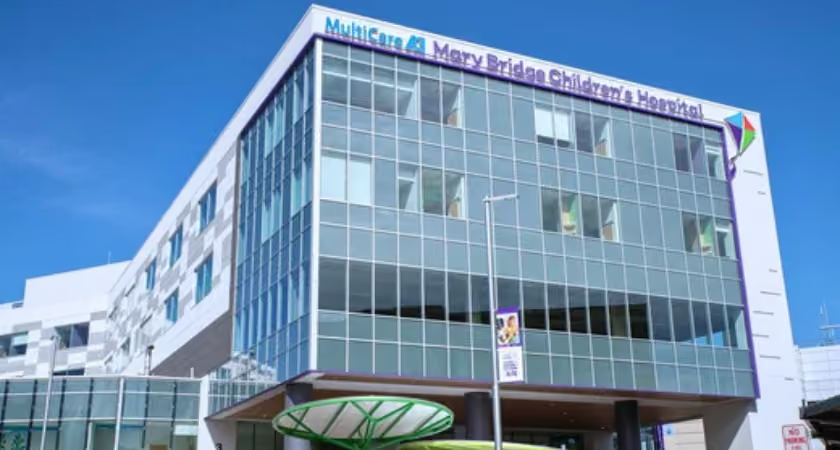
A significant expansion of the Mary Bridge Children’s Hospital campus has reached completion following several years of planning, design, and construction, delivering new facilities aimed at enhancing pediatric healthcare services in the region.
The project adds a new inpatient hospital tower, an ambulatory care facility housing specialty clinics and urgent care services, and supporting parking infrastructure designed to accommodate patients, families, and healthcare staff.
The expanded campus is expected to strengthen healthcare capacity while improving access to specialized pediatric services for communities throughout the area.
Mechanical contractor Hermanson participated in the project beginning in the early planning stages, working with project stakeholders through a design-assist delivery approach.
Under this model, contractors contribute expertise during design development, helping owners and design teams evaluate system options, coordinate construction requirements, and identify opportunities to improve cost efficiency before major construction activities begin.
The approach also supports smoother project execution by reducing coordination conflicts and improving communication among project participants throughout the construction process.
Hospital projects remain among the most technically complex segments of the construction industry due to strict performance requirements, operational constraints, and regulatory standards.
Mechanical systems play a critical role in healthcare environments, supporting ventilation, infection control, patient comfort, and overall facility operations. Early planning and coordination are often essential to ensuring those systems meet long-term performance expectations.
The Mary Bridge project reflects a broader industry trend toward integrated project delivery methods that encourage collaboration among owners, designers, and contractors from the earliest stages of development.
Healthcare providers across the United States continue investing in facility expansions and modernization programs to address population growth, aging infrastructure, and evolving patient care needs.
Children’s hospitals, in particular, are expanding specialty care services and outpatient facilities to improve access while accommodating increasing demand for pediatric healthcare.
New healthcare campuses are also placing greater emphasis on patient experience, operational efficiency, and flexibility to support future medical technologies and treatment models.
For healthcare owners and developers, the completion of the Mary Bridge Children’s Hospital expansion underscores the value of early contractor involvement and collaborative delivery strategies. Design-assist and similar approaches can improve project coordination, support budget management, and reduce risks on highly complex healthcare developments.
As healthcare systems continue investing in modern facilities, contractors with expertise in mechanical systems, healthcare infrastructure, and integrated project delivery are likely to remain in strong demand across the sector.
Source: Hermanson.