Aging dam removal projects continue to gain momentum as states invest in infrastructure that improves public safety, restores ecosystems and strengthens climate resilience. Massachusetts officials have completed the Whitney Pond Dam removal project in Ashburnham, restoring a free-flowing section of the Whitman River while creating new public open space.
The Town of Ashburnham, which owned the aging dam, determined that the structure posed safety concerns and restricted fish passage within a coldwater stream.
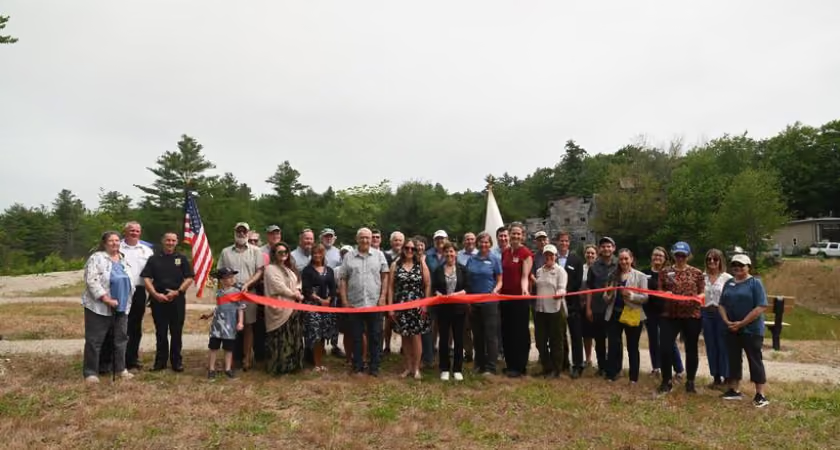
The $1.4 million project involved removing the obsolete dam, stabilizing riverbanks, planting native trees and shrubs, and establishing the Whitney Pond Dam Conservation Area. The new public space includes walking trails, benches and educational signage highlighting the river's history and ecological restoration.
Since the dam was removed, the formerly impounded section of the river has transitioned into a flowing stream, with floodplain wetlands and native vegetation naturally reestablishing along the corridor.
The project was supported by more than $60,000 from the Massachusetts Division of Ecological Restoration, along with funding from the Executive Office of Energy and Environmental Affairs' Dam and Seawall Repair or Removal Program, the Municipal Vulnerability Preparedness Program and the Inland Dredge Pilot Program.
State agencies also provided permitting assistance, engineering support and project coordination throughout design and construction.
Massachusetts reported that 15 dams were removed statewide during 2025, with the Whitney Pond project contributing to the Commonwealth's goal of removing approximately 10% of its roughly 3,000 dams by 2050 to improve biodiversity and reduce infrastructure risks.
For infrastructure owners, environmental contractors and civil construction firms, dam removal projects represent a growing market driven by public safety, environmental restoration and climate adaptation objectives. The Whitney Pond project demonstrates how coordinated state investment can replace aging infrastructure with resilient natural systems while creating new public amenities and reducing long-term maintenance obligations.
Source: Mass. Gov.