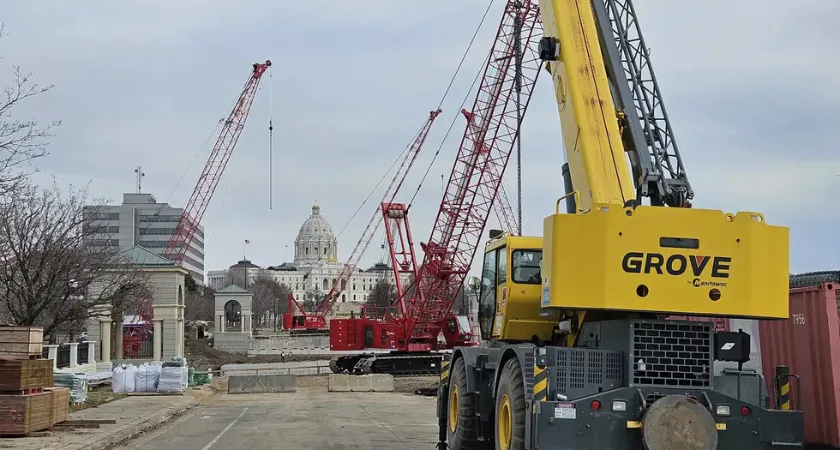
Construction season is officially underway across Minnesota, bringing with it more than 200 planned projects aimed at improving roads, bridges, and transportation infrastructure statewide.
.webp)
As warmer spring temperatures arrive, drivers are already encountering lane closures, orange cones, and traffic slowdowns. Officials from the Minnesota Department of Transportation (MnDOT) say these disruptions are necessary to maintain and upgrade critical infrastructure, though they acknowledge the challenges commuters will face in the coming months.
Major construction activity is expected throughout the Twin Cities and beyond. Projects on Interstates 394 and 94 in Minneapolis are anticipated to continue through November, with lane and ramp closures contributing to congestion. In St. Paul, reconstruction of the John Ireland Boulevard Bridge over I-94 is underway, with completion targeted ahead of the Twin Cities Marathon in October.
Additional projects include closures along Highway 280, Shepherd Road, and Highway 12, along with several other road and bridge improvements scheduled across the metro area and Greater Minnesota.
Safety remains a top concern for transportation officials. According to the Minnesota State Patrol, more than 13,000 work-zone crashes occurred between 2019 and 2024, resulting in 58 fatalities—most involving drivers rather than workers. Authorities emphasize that speeding and distracted driving are the leading causes of these incidents.
“Impatient and risky driving behaviors are not tolerated, and they can put lives at risk,” officials warned, urging motorists to slow down and remain alert in construction zones.
Labor leaders echoed these concerns, highlighting the shared responsibility between drivers and workers. “We share the same goal as every driver on this road — to go home safely at the end of the day,” said Joel Smith, president of LIUNA Minnesota and North Dakota.
To help residents navigate construction disruptions, MnDOT recommends using tools such as real-time traffic updates via 511 services and its official website. Officials also advise drivers to plan ahead, expect delays, and practice safe driving behaviors like zipper merging.

While some road closures may appear inactive at times, officials stress that these measures are often necessary to ensure worker safety. Additionally, although nighttime construction can reduce daytime traffic impacts, it introduces concerns related to noise and reduced visibility, making daytime work generally safer.
Despite short-term inconveniences, transportation leaders emphasize the long-term benefits of these projects. Improvements are expected to enhance road safety, reduce congestion, and support economic activity across the state.
“It takes a lot of work to keep our roads in top shape,” MnDOT officials said, noting that Minnesota’s climate limits most construction work to the warmer months. “We appreciate the public’s patience as we work to deliver safer and more reliable infrastructure.”
With projects spanning highways, bridges, and transit systems—including upgrades to Metro Transit lines—the 2026 construction season marks a significant effort to modernize Minnesota’s transportation network.
Originally reported by Feven Gerezgiher in MPR News.