Lawmakers in Missouri are scaling back politically driven construction spending as mounting fiscal pressures force a more restrained approach to budgeting.
.webp)
The Missouri House gave initial approval to four capital spending bills totaling $2.5 billion, a significant addition to the state’s $50.4 billion operating budget. However, unlike previous years, the number of earmarked projects—funds directed toward specific local initiatives—has been drastically reduced.
Instead of hundreds of earmarks seen in recent budgets, lawmakers approved just 10 this year, reflecting tighter financial conditions and growing concern over long-term revenue projections.
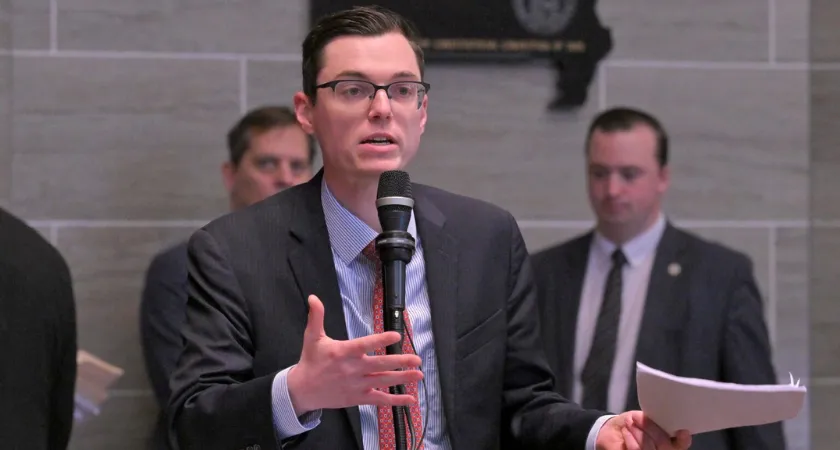
“We don’t have a revenue problem, we have a spending problem, and that’s what it comes down to today,” said Tony Harbison. “We don’t have the money to fund these projects.”
The reduction in earmarks comes as the state faces a shrinking budget surplus. Missouri’s surplus peaked at $8 billion in fiscal 2023 but is projected to fall sharply to approximately $265 million by mid-2027 due to declining revenues and slower economic growth.
A large portion of the current construction funding—about $1.3 billion—comes from remaining allocations under the American Rescue Plan Act, along with $324 million in general revenue. These funds are primarily being used to complete projects that were already approved in prior years.
Another $638 million is earmarked for maintenance and upgrades at existing state facilities, underscoring a shift in focus from new construction to preserving existing infrastructure.
“Unlike the last several years, we’re seeing less of these,” said Dirk Deaton. “That’s going to be expected just because of the fiscal budgetary constraints we’ve talked about.”
Spending on new construction projects has dropped significantly, with just $123.8 million allocated—one of the smallest totals in recent years. Of that amount, only $27.3 million comes from general revenue.
The largest single project included is $104.1 million for renovations to the state Capitol building. Meanwhile, several smaller projects from a previously failed spending bill were revived but at reduced funding levels. These include support for a rebuilt workshop in Salem, the Springfield Discovery Center, and redevelopment efforts in Cape Girardeau.
Additional new earmarks include funding for a career and technology center in Sikeston, a wellness center in St. Louis, a Ronald McDonald House in Kansas City, and a law enforcement training center in Lee’s Summit.
Despite the scaled-back approach, some lawmakers argue that even the reduced number of earmarks is too high given the fiscal outlook.
State Rep. Stephanie Hein raised concerns about continuing to fund projects that have yet to begin, noting that millions of dollars remain tied up in inactive initiatives.
“As we move into tough financial times,” Hein said, “I would encourage future bodies to really keep an eye on this bill as we are holding general revenue in place for some of these projects to get off the ground.”
.webp)
The sharp reduction in earmarks signals a broader shift in Missouri’s fiscal strategy as policymakers prepare for leaner years ahead. During periods of surplus, earmarks often expanded rapidly, allowing lawmakers to direct funds toward local priorities and community projects.
Now, with revenues tightening, the emphasis is shifting toward completing existing commitments and addressing critical maintenance needs rather than launching new initiatives.
This transition may also reflect growing scrutiny over discretionary spending and the long-term sustainability of state budgets, particularly as federal pandemic-era funding winds down.
For the construction sector, the changes could mean fewer publicly funded new projects in the near term, but continued opportunities tied to infrastructure maintenance and previously approved developments.
Originally reported by Rudi Keller in Missouri Independent.