The changing economics of college athletics are reshaping how universities plan and invest in sports facilities. As institutions adapt to new revenue-sharing models and evolving athlete recruitment dynamics, facility projects are increasingly being designed to generate income, support campus development and deliver long-term value beyond game days.
Mortenson said athletic departments are placing greater emphasis on facilities that function as financial assets rather than solely as competition venues.
The company noted that modern projects increasingly incorporate premium seating, hospitality spaces, sponsorship opportunities and event venues capable of supporting concerts, community gatherings and other non-athletic programming throughout the year.
Mixed-use development is also becoming a larger component of campus planning, with universities using stadiums, arenas and training centers as anchors for surrounding retail, housing, hospitality and entertainment districts.
According to Mortenson, construction schedules have become increasingly important as universities seek to complete projects in time to support recruiting cycles, attract transfer athletes and begin generating revenue sooner.
The company also highlighted growing demand for flexible facility designs that can accommodate athletic competition while adapting to changing operational and commercial needs over time.
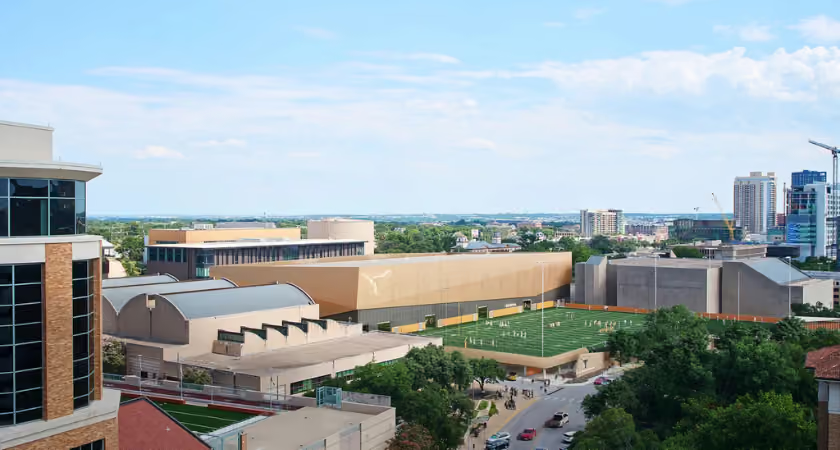
Examples cited by Mortenson include recent projects at the University of Texas, University of Washington, Arizona State University and the University of Minnesota, where facilities integrate athlete development with premium fan experiences, donor engagement and expanded event capabilities.
For construction owners, developers and higher education institutions, collegiate sports projects are increasingly evaluated on their long-term financial performance as well as their athletic function. The trend is driving demand for facilities that combine competition spaces with hospitality, commercial uses and adaptable infrastructure, creating opportunities for contractors and design teams experienced in delivering complex, multi-purpose sports developments.
Source: Mortenson.