New York City continues to expand its long-term coastal protection strategy with a major infrastructure effort focused on strengthening its East Side waterfront against future flooding and storm-related risks. The initiative blends large-scale civil engineering with urban landscape redesign, creating a hybrid system that serves both protective and public use functions.

The effort is part of the city’s East Side coastal resilience program led through municipal infrastructure planning and design coordination involving the New York City Department of Design and Construction alongside engineering and planning support from firms such as AKRF.
With major segments already opening, the project is transitioning from heavy construction into long-term public integration phases.
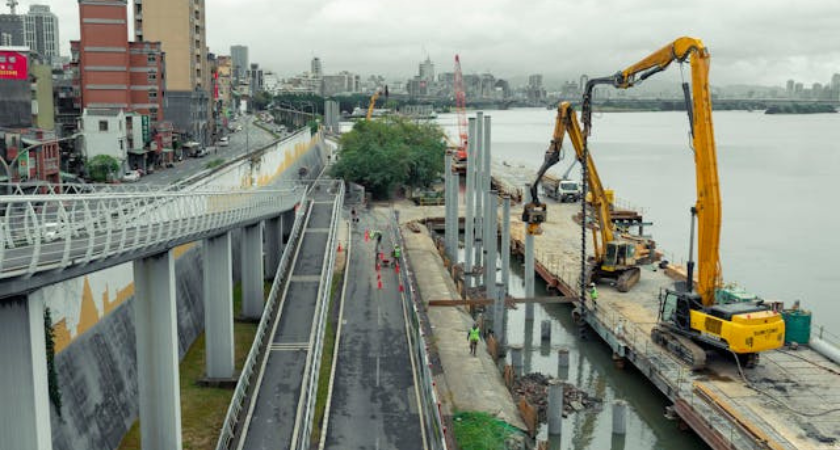
The project is structured around elevating and reinforcing the waterfront edge while maintaining continuous public access. Construction work includes elevated park systems, pedestrian bridge connections, redesigned circulation routes, and reinforced coastal barriers intended to reduce flood exposure during extreme weather events.
Unlike traditional seawall-only approaches, the design emphasizes dual-purpose infrastructure—supporting both climate protection and daily recreational use.
This approach has required coordination across civil contractors, landscape architects, and infrastructure engineers working within constrained urban shoreline conditions.
Large-scale coastal resilience programs are becoming a growing segment of public infrastructure investment across major U.S. cities. These projects typically involve complex sequencing, environmental permitting, and long-duration construction phases that extend across multiple funding cycles.
For contractors, this type of work requires specialized capabilities in marine-adjacent construction, deep foundation systems, flood mitigation structures, and public realm integration. It also increases demand for interdisciplinary project teams that can manage both engineering performance and community-facing design outcomes.
As climate risk intensifies, coastal cities are increasingly shifting capital toward infrastructure that can absorb flood impacts while maintaining urban functionality. This has accelerated investment in hybrid projects that merge traditional civil works with parks, mobility corridors, and public amenities.
The East Side initiative reflects a broader trend where infrastructure planning is no longer limited to utility protection, but is also designed to enhance urban livability and long-term land use value.
For owners, developers, and contractors, the project signals several key market shifts:
As cities continue investing in climate adaptation, contractors positioned in coastal infrastructure and urban civil works are likely to see sustained project opportunities tied to resilience-driven redevelopment programs.
Originally reported by Urban Design Forum.