Kathy Hochul announced that more than $15 million has been awarded to 13 workforce development projects across nine regions of New York, aiming to train thousands of residents for jobs in high-demand industries.
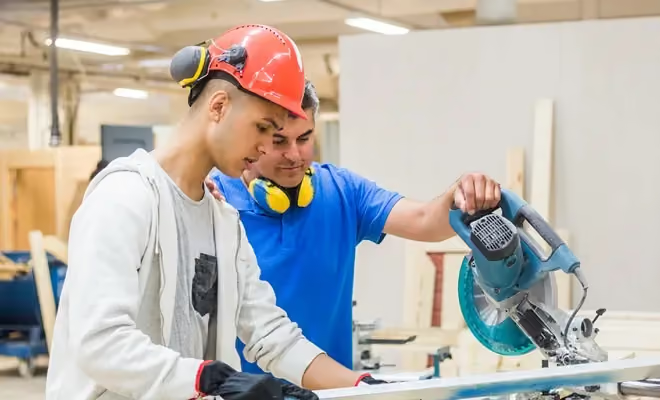
The funding, distributed through Empire State Development and its Office of Strategic Workforce Development, will support workforce training initiatives expected to benefit over 5,700 New Yorkers. The programs are designed to prepare workers for careers in sectors such as construction, advanced manufacturing and emerging clean-energy industries.
“Reshaping New York's approach to workforce training has been a pillar of my economic development strategy — and we're seeing the results,” Hochul said. “By working with employers in target industries, more New Yorkers are learning the skills needed for high-demand jobs, while receiving the support they need to promote greater success. These projects represent an investment in New Yorkers and the future of our state's economy.”
Since the creation of the Office of Strategic Workforce Development in 2022, New York has significantly expanded investments aimed at preparing residents for modern job markets.
Through nine rounds of funding, the state has now awarded more than $83 million to 91 workforce programs, supporting training opportunities for over 20,000 residents statewide.
Officials say the programs prioritize industries that face labor shortages or are expected to grow rapidly in the coming years.
Hope Knight said strengthening the state’s talent pipeline is central to the administration’s economic strategy.
“Developing and building our skilled workforce to meet the demands of high-growth industries has been a priority of Governor Hochul's administration. Through the Office of Strategic Workforce Development, we continue to invest in projects and programs that will further grow the statewide capacity to train more New Yorkers in the jobs of tomorrow.”
The grants will support both operational and capital investments for training providers, helping institutions expand programs, upgrade facilities and deliver job-ready skills.
Among the largest awards is a $3.7 million grant for University at Buffalo to create a network of career centers in partnership with regional BOCES districts. The project aims to strengthen career placement services and create standardized tracking systems for graduates entering the workforce.
Other projects include workforce initiatives in New York City, Long Island and the Finger Lakes region that will train workers in construction trades, advanced manufacturing, coding and clean-energy technologies.
Roberta Reardon said the funding will help address workforce shortages while creating opportunities for residents across the state.
“The funds awarded today are a win for workers and employers. High-demand industries require cutting edge skills, and these grant programs will help bring innovative training programs to more New Yorkers. I applaud Governor Hochul for her continued investment into the state’s future, and the Department stands ready to address critical workforce needs in today and tomorrow’s fast-growing sectors.”
Several funded projects specifically target sectors expected to drive economic growth in the state, including advanced manufacturing, construction trades and technology.
Training programs will provide participants with industry-recognized credentials, hands-on technical instruction and job placement support. Many also offer wraparound services such as transportation assistance, childcare support, stipends and career coaching to help participants complete training and transition into employment.
Officials say these services are particularly important for workers from underserved communities who may face barriers to entering high-skill careers.
The grants will fund a variety of initiatives across the state, including:
Several initiatives also incorporate emerging technologies such as virtual reality simulators to enhance hands-on training for heavy equipment operators and welders.
State officials say the workforce development investments are also aligned with major economic projects expected to create thousands of jobs in New York.
For example, upcoming advanced manufacturing and semiconductor projects across the state are expected to require large numbers of skilled workers, increasing the need for training programs in engineering, manufacturing and construction trades.
Christopher Ryan highlighted the importance of preparing workers ahead of major industrial developments.
“Investing in workforce development means investing in the long-term strength of our communities and our economy. As Central New York prepares for the Micron facility to open, this funding will help ensure that people throughout the region have the training, tools, and support they need to step into careers in construction and advanced manufacturing. I thank Governor Hochul for helping Central New York develop and maintain a skilled workforce and strengthening the pathway from education to good-paying careers.”
State leaders say the grants will help expand training capacity, modernize facilities and strengthen partnerships between educational institutions and employers.
Al Stirpe said the programs will help ensure workers can benefit from economic growth in emerging industries.
.webp)
“As our region continues to attract advanced manufacturing and fast-growing industries, we must ensure that our workforce in Central New York is growing alongside it. The funding awarded to Local 195’s Liverpool training facilities and Onondaga Community College will increase enrollment capacity in related workforce development programs, offering credentials that directly open doors to new careers. Today’s investments bring us closer to our goal of expanding workforce opportunities while enhancing our region’s economic competitiveness. I thank Governor Hochul for her continued commitment towards aligning workforce development efforts with twenty-first century labor needs.”
Officials say the initiative reflects a broader strategy to ensure that New York’s workforce can meet the needs of rapidly evolving industries.
By expanding training programs, strengthening employer partnerships and investing in modern workforce infrastructure, the state aims to create a sustainable pipeline of skilled workers who can support economic growth while securing stable careers.
As demand for technical and trade skills continues to rise nationwide, state leaders say workforce training programs like these will play a critical role in preparing the next generation of workers.
Originally reported by Governor New York Government.