Five East Coast offshore wind projects have resumed construction after securing court victories over the Trump administration. However, industry leaders warn that the broader pipeline of planned offshore wind developments is likely to stall for years.
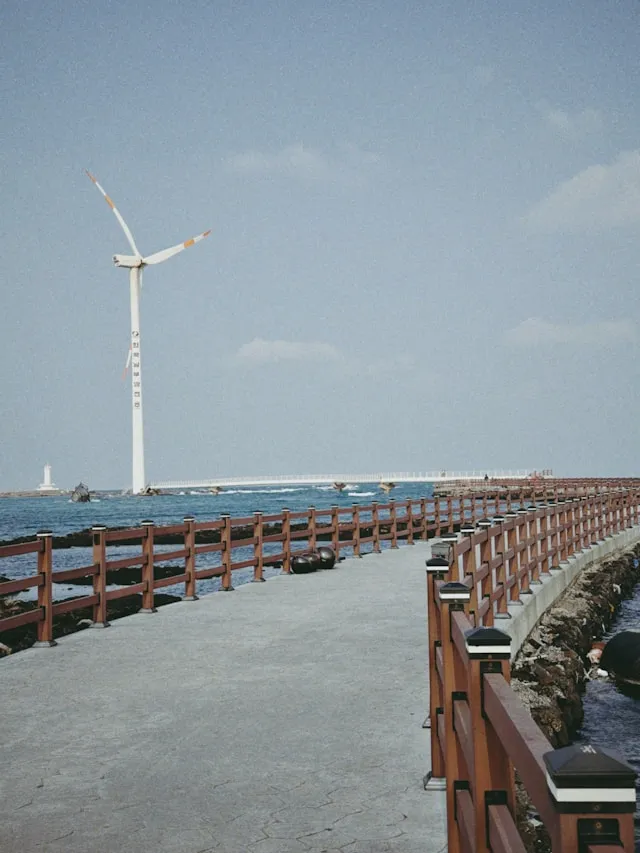
The projects, located off the coasts of Connecticut, Massachusetts, New York, Rhode Island and Virginia, represent only a fraction of Atlantic states’ long-term offshore wind ambitions. While construction is moving forward on these five sites, analysts say dozens of additional proposals face steep political and regulatory headwinds.
“If you were going to make the best estimate of what’s going to happen, it would be that no other projects other than these five are going to move forward over the next three years,” said Warren Leon, executive director of the Clean Energy States Alliance, a nonprofit coalition of state energy agencies.
In December, the Trump administration issued stop-work orders for the five offshore wind projects already under construction, citing classified national security concerns. Developers and affected states filed lawsuits challenging the federal actions.
Judges who reviewed the classified materials determined the concerns were insufficient to justify halting construction. They also cited the significant economic harm and financial losses that would result from prolonged delays.
In one of the key rulings, Judge Royce Lamberth of the U.S. District Court for the District of Columbia granted an injunction blocking the federal order affecting the Sunrise Wind project off New York.
“Every court to review this question has now found that the loss of specialized vessels and resulting delays amounts to irreparable harm,” Lamberth said from the bench, according to the East End Beacon. “I agree.”
The projects are expected to deliver nearly 6 gigawatts of electricity — enough to power roughly 2.5 million homes — providing a significant boost to grid reliability across the East Coast.
“These projects are so close to the finish line and putting electricity on the grid,” said Sam Salustro, senior vice president of policy and market affairs with Oceantic Network. “Every single time we get another turbine up, it gets harder to justify stopping the industry from moving forward.”
New York state Sen. Andrew Gounardes emphasized the urgency of bringing new energy online amid surging electricity demand.
“We absolutely need this energy, and we need it yesterday,” he said. “The fact that now we are back on track and anticipating energy to start coming through by the end of this year is enormously exciting and enormously beneficial.”
The court victories highlight a fundamental tension in offshore wind development: projects operate in federally controlled waters and rely on federal leasing, permitting and regulatory approvals. That structure makes them particularly vulnerable to shifts in presidential administrations.
Former President Donald Trump has long opposed offshore wind, criticizing its cost, reliability and environmental impact. His administration attempted to halt construction despite years of prior federal review that found no national security risks.
“This administration has had fervent and frequent opposition to offshore wind and has demonstrated a retaliatory posture when they lose in court,” said Timothy Fox, managing director at ClearView Energy Partners LLC. “We could see the administration trying to stop these projects again.”
Analysts note that while courts allowed construction to resume, future legal or administrative challenges could arise once the turbines begin generating electricity.
Eight East Coast states have committed to developing more than 45 gigawatts of offshore wind by 2040 — enough to power more than 30 million homes. These commitments have driven billions of dollars in port upgrades, vessel construction, manufacturing facilities and workforce training programs.
However, even strong supporters acknowledge that those timelines are now unlikely to be met.
“You’re going to have to change the timeframe,” said New Jersey state Sen. Bob Smith. “I don’t think there’s any way you can avoid that.”
Since returning to office, the Trump administration has halted new offshore wind leases and permits, canceled $679 million in related funding, ended certain clean energy tax credits, and announced plans to revoke approval for a Maryland project.
Maryland Del. Lorig Charkoudian acknowledged the likely impact on state goals.
“I don’t want to downplay the damage that this administration is causing, but we’re resilient,” Charkoudian said. “We’ll be a couple of years delayed for sure, but we do have a path forward.”
Supporters argue that growing electricity demand — fueled by data centers, artificial intelligence infrastructure, and electrification trends — will ultimately require large-scale renewable generation sources like offshore wind.
Smith expressed optimism about the industry’s durability.
“The more wind farms that are up and the more they’re providing electricity for America, the more they prove the value of the concept,” he said. “My bet is that in two years and 11 months [when Trump is out of office] we’re going to have a very robust wind program in the U.S.”
.webp)
Massachusetts state Sen. Jamie Eldridge echoed that view.
“Massachusetts is facing high utility bills, brownouts and blackouts as energy use goes up,” he said. “Offshore wind is a very dependable source of energy, and projects coming online will provide assurances for that power in times when there’s significant energy needs on the grid.”
Still, some analysts caution that political instability may discourage investors even beyond the current administration.
“A Democratic administration could revert right back, but if you saw a pivot among the Republican party to a more traditional all-of-the-above energy ethos, favoring state rights, that could provide the four-plus year stability that may be necessary to rebuild this industry,” Fox said.
For now, the five projects back under construction represent both a legal victory and a reminder of the sector’s fragility. While turbines may soon spin off the East Coast, the broader future of U.S. offshore wind remains closely tied to political winds in Washington.
Originally reported by Stateline in Euraia Review.