A state-funded initiative designed to expand access to child care facilities across Oregon is coming to a close, marking the end of a short-term but impactful construction grant program.
.webp)
The Child Care Infrastructure Fund, launched in 2024 under Tina Kotek, aimed to help providers offset the high costs associated with building, renovating and maintaining child care centers. State officials announced this week that the final round of funding has now been awarded, effectively winding down the program.
“Access to affordable child care is essential for working families and for Oregon’s economy,” Kotek said in a statement. “When parents can count on safe, reliable care, they can show up to work and build stability for their families.”
Despite the program’s conclusion, demand for funding significantly outpaced available resources. More than 500 applications were submitted, collectively requesting over $255 million — far exceeding the $50 million allocated through lottery-backed bonds approved by the state legislature.
In total, more than 180 projects across every county in Oregon — as well as eight federally recognized tribal nations — received funding support. The grants were administered in partnership with agencies including Business Oregon.
Most applicants sought assistance for smaller-scale renovations, but a substantial share of funding was directed toward new construction and major upgrades, reflecting broader infrastructure gaps in the child care sector.
A large portion of grant funding was directed toward rural communities, where access to child care remains particularly limited. However, more densely populated areas such as Multnomah County and Washington County recorded the highest number of awarded projects overall.
Even with recent improvements, Oregon continues to face steep affordability challenges. The average annual cost of child care per child is approximately $18,000, according to the First Five Years Fund. For many families, especially single-parent households earning median income, that cost can consume nearly half of monthly earnings.
Grant recipients were required to provide matching funds, ensuring shared investment in each project. Improvements funded through the program ranged from upgraded play areas to full facility expansions.
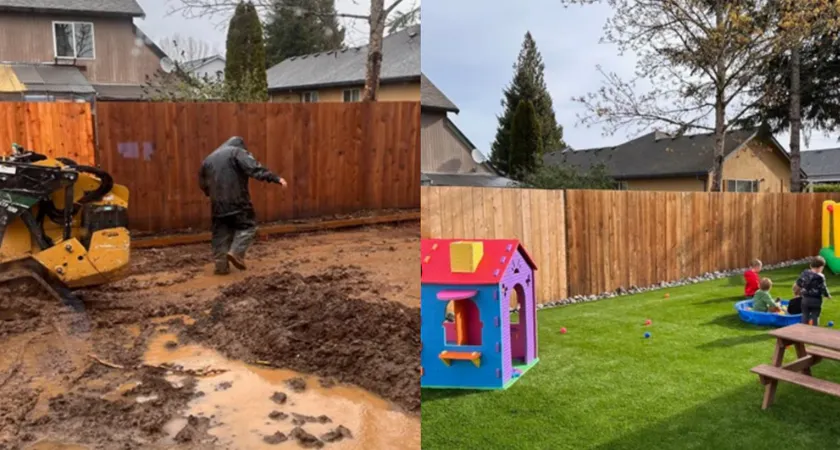
One example includes The Learning Nest in Scappoose, which received $30,000 to enhance its outdoor play space — demonstrating how even modest investments can improve service quality and capacity.
While the construction grant program is ending, state leaders are continuing efforts to address child care shortages. Earlier this year, Gov. Kotek convened a group of early learning experts tasked with developing a long-term strategy to deliver affordable, universal preschool access across all Oregon counties.
The conclusion of the infrastructure fund underscores a broader issue: while capital investment can expand physical capacity, sustained policy solutions are needed to address staffing shortages, operational costs and long-term affordability.
.webp)
The Child Care Infrastructure Fund reflects a growing recognition nationwide that child care is not just a social service but also critical economic infrastructure. Without adequate facilities, workforce participation — particularly among parents — can be significantly constrained.
From a construction perspective, the program also highlights the challenges of delivering small- to mid-scale community projects. Many child care providers operate on tight margins, making it difficult to fund capital improvements without public assistance.
Additionally, the overwhelming demand for funding suggests that future programs — whether at the state or federal level — may need to be larger in scope or more targeted to maximize impact.
As Oregon transitions from this initial investment phase to longer-term planning, the focus will likely shift toward sustainable funding models, workforce development in early education, and policies that balance affordability with provider viability.
Originally reported by Alex Baumhardt, Oregon Capital Chronicle in Oregon Live.