As population growth, industrial development and infrastructure strain continue to pressure municipal systems across the U.S., Baytown, Texas, is advancing a major utility expansion that reflects a broader shift in how construction owners are approaching long-term resilience planning.

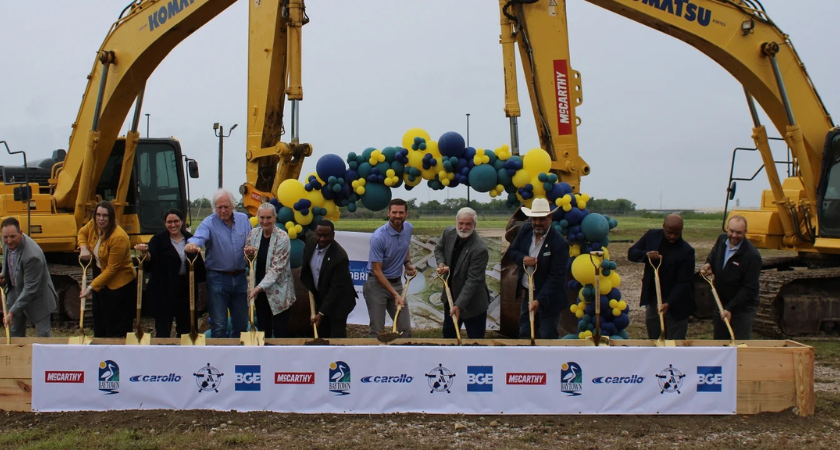
Baytown Area Water Authority has officially broken ground on the second phase of its East Surface Water Treatment Plant, a project that will double the facility’s treatment capacity and expand regional water supply infrastructure over the next several years.
The buildout will add an additional 6 million gallons per day of treatment capacity to the existing plant, bringing total production to 12 MGD by summer 2028. For owners and developers, the project underscores how water infrastructure is increasingly becoming a foundational economic development asset rather than a back-end utility consideration.
Delivered through a progressive design-build framework, the project reflects growing adoption of collaborative delivery models for technically complex public infrastructure. Under this approach, the owner, engineer, builder and advisor align earlier in planning to improve constructability, manage cost exposure and reduce schedule disruption — particularly important when expanding active treatment facilities that must maintain service continuity.
For contractors, progressive design-build continues to gain traction in water and wastewater sectors because of its ability to accelerate preconstruction coordination while minimizing risk associated with phased expansions, operational constraints and evolving regulatory requirements.
The Baytown project also highlights a larger market dynamic: as communities compete for industrial investment, housing growth and commercial development, utility capacity is increasingly linked to economic competitiveness. Surface water treatment investments can influence future site readiness, manufacturing attraction and resilience planning, particularly in fast-growing Gulf Coast and Sun Belt markets.
Beyond supply expansion, projects of this scale often carry layered operational priorities, including system redundancy, emergency preparedness, operator safety and environmental stewardship. For public owners, that means capital planning is increasingly tied not just to immediate demand, but to lifecycle system performance.
The involvement of major national construction and engineering firms also reflects the specialized nature of advanced water infrastructure, where technical expertise in treatment systems, phased construction and regulatory integration can significantly affect project outcomes.
For owners, developers and public agencies, Baytown’s expansion reinforces the importance of utility infrastructure as a strategic enabler of growth.
Whether planning industrial campuses, housing developments or municipal upgrades, water capacity and system resilience are becoming central to long-range project viability. Owners may increasingly benefit from delivery models that prioritize early collaboration, technical integration and operational continuity — especially in sectors where infrastructure constraints can directly affect economic opportunity.
The broader takeaway: critical infrastructure investment is no longer just about replacing aging systems. In many markets, it is now a growth strategy — and construction leaders positioned around resilient delivery may be best equipped to capitalize.
Source: Mccarthy.