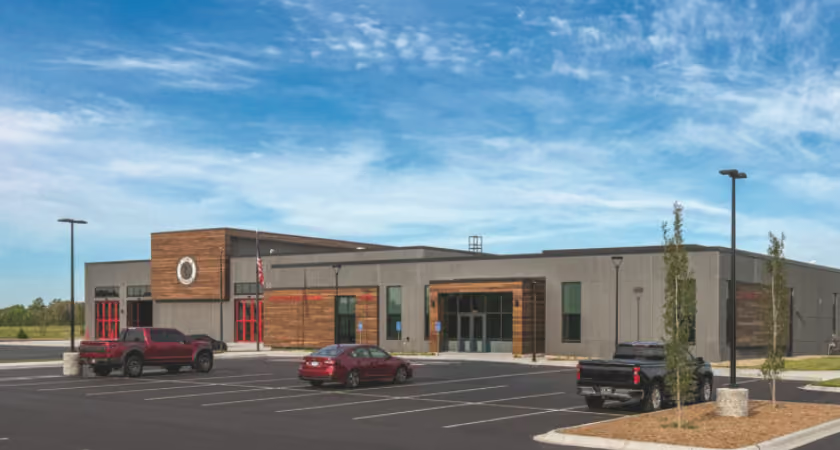
The City of Otsego has expanded its public safety infrastructure with the completion of a new $18.8 million fire station designed to support emergency response operations and accommodate future community growth.
Built by Kraus-Anderson, the new facility spans approximately 35,000 square feet and provides modern operational, training, and community spaces intended to enhance service delivery for residents and businesses throughout the area.
Strategically positioned within the city, the station is designed to improve response times by providing firefighters with efficient access to key service areas. The facility includes large apparatus bays, equipment storage areas, and operational layouts intended to streamline deployment during emergency incidents.
A major component of the project is its ability to support around-the-clock staffing. Dedicated living quarters allow firefighters to remain on-site during extended shifts, helping ensure continuous emergency preparedness and rapid mobilization when calls are received.
The facility also includes specialized training environments where personnel can conduct ongoing education and skills development. Classrooms and training spaces provide opportunities for firefighter instruction while also supporting public safety initiatives.
City officials and project stakeholders expect the building to serve as both an operational hub and a community resource, hosting educational programs focused on emergency preparedness, CPR certification, and safety awareness.
The project incorporates sustainable design features intended to reduce long-term operating costs and support municipal environmental goals. Energy-efficient lighting systems and water-conserving fixtures were integrated throughout the facility as part of the overall building strategy.
As public agencies continue investing in resilient infrastructure, many new fire stations and emergency facilities are being designed with greater emphasis on operational efficiency, sustainability, and workforce support.
Municipal investment in emergency services infrastructure has remained strong across many U.S. communities as population growth, service demands, and aging facilities drive replacement and expansion projects.
For construction firms specializing in civic and public safety buildings, projects like the Otsego fire station reflect ongoing demand for facilities that combine operational functionality with community-focused amenities and sustainable building practices.
The Otsego project highlights how local governments are approaching public safety investments with a long-term perspective. Modern fire stations increasingly serve multiple roles, functioning as emergency response centers, training facilities, and community engagement spaces.
For public-sector owners, integrating sustainability features, workforce accommodations, and flexible training environments can help maximize the value of capital investments while supporting evolving operational requirements for emergency services.
Originally reported by Kraus-Anderson