Palantir Technologies has introduced Chain Reaction, a new operating system built to support the nation’s rapidly expanding AI infrastructure. As demand for power, compute and hyperscale data centers surges, Palantir is positioning the platform as a foundational tool for the next era of U.S. industrial growth.
The company says the real bottleneck to AI progress is no longer the models themselves, but the energy and compute capacity required to run them at scale. Chain Reaction is designed to bridge this gap by linking utilities, energy producers, construction firms, and data center operators through a unified system built for unprecedented load and operational complexity.
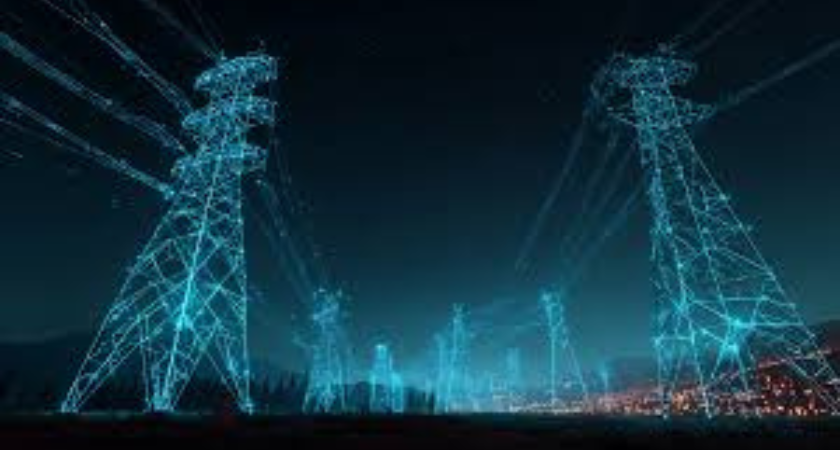
According to Palantir, the platform is engineered to help transform outdated generation resources into high-uptime systems, stabilize the grid under massive new demand, speed up construction of new generation and transmission assets, and standardize future hyperscale data center design.
“The energy infrastructure buildout is the industrial challenge of our generation,” said Tristan Gruska, Palantir’s Head of Energy and Infrastructure. “But the software that the sector relies on was not built for this moment. We have spent years quietly deploying systems that keep power plants running and grids reliable. Chain Reaction is the result of building from the ground up for the demands of AI.”
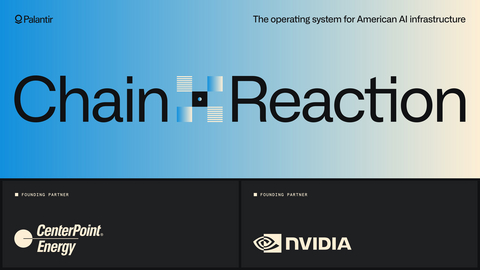
CenterPoint Energy — serving roughly 7 million customers across Texas, Indiana, Minnesota, and Ohio — is one of the platform’s founding partners. After Hurricane Beryl’s impact in 2024, the utility ramped up investments in resilience, selecting Palantir as its software backbone. Now, CenterPoint is leveraging Chain Reaction to accelerate “speed-to-power” and gain deeper operational visibility across its system.
“Never before have technology and energy been so intertwined in determining the future course of American innovation, commercial growth, and economic security. In the Greater Houston region, our energy consumption is projected to increase by nearly 50% in five years and double by the mid 2030s. This exponential growth is being driven by a diverse set of sectors, including high tech, healthcare, energy, industrial, pharmaceutical, and fleet, and is accelerating job creation across the communities we are privileged to serve. We are excited to team with Palantir and our other Chain Reaction partners to enable this future sooner,” said Jason Wells, Chair & Chief Executive Officer of CenterPoint Energy.
NVIDIA, already collaborating with Palantir on operational AI systems, is expanding its involvement through Chain Reaction. By integrating NVIDIA’s accelerated computing stack — including Nemotron models, CUDA-X libraries, and Palantir’s AIP and Ontology — the initiative aims to streamline the complex supply chain behind gigawatt-scale “AI factories.”
“A new industrial revolution has begun—one where intelligence is manufactured at scale through an extraordinarily complex supply chain of AI infrastructure, now being built across America to strengthen our economy, workforce and security,” said Vladimir Troy, vice president, AI Infrastructure, NVIDIA. “By partnering with Palantir and our ecosystem, we are accelerating this transformation—powering the engines of the AI age, transforming data into intelligence and securing America’s technology leadership for decades to come.”
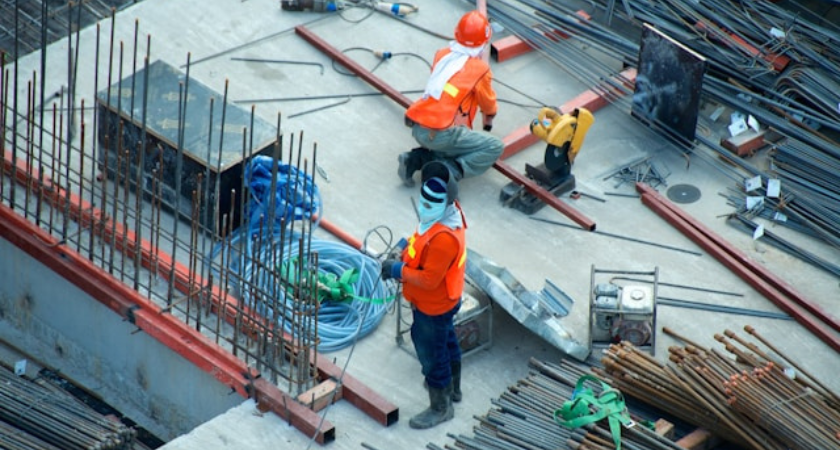
Chain Reaction sits at the intersection of energy, construction, and digital infrastructure. The platform’s goal is to unify real-time operations, planning, and predictive analytics so that new power plants, transmission lines, and data centers can be built faster and operated with fewer disruptions.
Palantir framed the launch as a turning point for America’s ability to meet future AI-driven electricity demand. With load forecasts climbing rapidly — often by triple digits in fast-growing regions — utilities and developers are looking for tools that help compress timelines and improve reliability.
The company stresses that Chain Reaction is designed for reproducibility, enabling standardized hyperscale builds across multiple locations. By coordinating permitting, supply chains, construction, and grid interconnection in a single system, Palantir says developers can move from concept to megawatts more efficiently.
The announcement also underscores Palantir’s broader push into critical infrastructure, government systems, and industrial AI deployments. As energy systems become more digitally intertwined with compute infrastructure, Palantir is positioning itself as one of the key software players shaping the backbone of America’s AI economy.
Originally reported by Palantir in Business Wire.