PC Construction has recognized the team behind a major water treatment rehabilitation project in High Point, North Carolina, with its 2026 Innovation Project of the Year award.
The Frank L. Ward Water Treatment Plant Filters Rehabilitation project involved an overhaul of four aging filters while maintaining plant operations. The project team focused on field-driven solutions that addressed safety, constructability, schedule and cost visibility.
Each of the four filters measures approximately 28 feet by 28 feet and includes backwash troughs and limited ladder access into the work area.
Because the existing hollow-core precast concrete ceiling could not support a suspended load, the team evaluated several material-handling options before selecting a davit crane. The crane is rated for more than 2,000 pounds at a 10-foot radius and was positioned to provide the operator with direct visibility of the load.
Additional engineering was required to connect the crane supports to the existing platform structure while accounting for embedded reinforcing steel.
The equipment also has a planned future use for rigging work associated with replacement of a 36-inch butterfly valve.
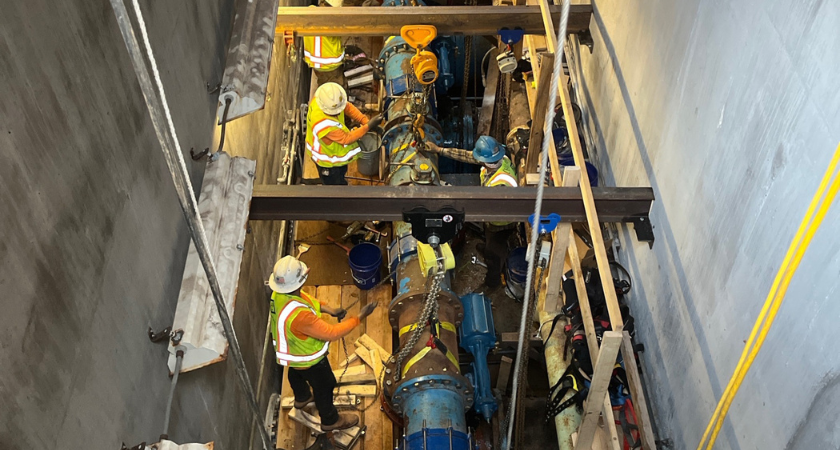
The rehabilitation included replacement of four 16-inch butterfly valves beneath a flanged header. Rather than completely dismantling the approximately 60-foot-long header assembly, the project team developed a method to temporarily support and lift the entire assembly.
Temporary steel supports and overhead beams allowed the header to be moved clear of the work area while the valves were replaced. PC Construction performed initial calculations, obtained professional engineering and fabricated the supporting steel system.
The approach saved approximately one week on the filtration shutdown critical path while reducing the number of aging bolts and potential pinch points involved in the work.
PC Construction also piloted a cost-management approach using field production data to update project forecasts.
With more than 25,000 labor hours involved, daily production information was incorporated into cost forecasting. This allowed project management to compare projected remaining costs with budget information while work was progressing rather than relying solely on periodic estimates.
The project team also addressed vendor invoicing requirements and North Carolina sales tax considerations as part of the financial management process.
Water treatment rehabilitation projects often require construction teams to work around active infrastructure, confined spaces and shutdown windows. Field-driven engineering solutions can reduce disruption while improving worker safety and schedule control.
PC Construction’s High Point project demonstrates how material-handling innovation, temporary structural systems and real-time cost information can be combined to address operational constraints on complex water infrastructure upgrades.
Source: PC Construction.