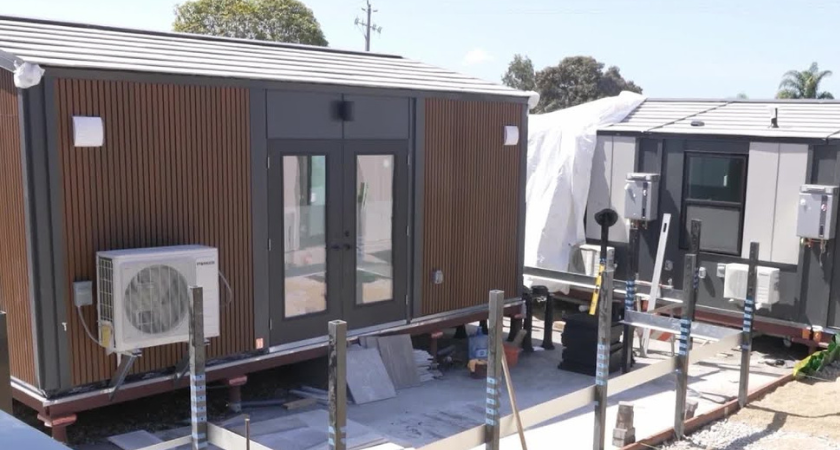
SAN LUIS OBISPO, Calif. — Construction on a $10.5 million supportive housing development in San Luis Obispo is nearing completion, marking a significant milestone in efforts to address homelessness through innovative building methods and comprehensive support services.
.jpg)
The Welcome Home Village, located off Johnson Avenue, is designed to provide permanent supportive housing for individuals currently living along the Bob Jones Trail. Funded through a state grant, the project combines modern construction techniques with social services aimed at long-term stability.
The development includes 40 permanent housing units and 14 interim units. Each permanent unit is equipped with a kitchenette, bathroom and sleeping space, while the interim units feature shared kitchen and bathroom facilities — a design choice intended to foster community among residents.
Project leaders emphasize that the development goes beyond simply providing shelter. According to Project Manager Margaret Shepard-Moore, the integrated support services are central to the project’s mission.
"The benefit of having permanent supportive housing is the supports that come with it," Shepard-Moore said. "Case management, medical navigation, counseling, and nursing, things of that nature that really help people get back up on their feet."
The Good Samaritan Shelter will oversee both outreach and ongoing operations. Its team has been actively engaging with individuals living along the Bob Jones Trail since October, working to build trust and prepare future residents for the transition.
Director of Homeless Services Kirsten Cahoon highlighted the importance of that outreach effort.
"It's been a lot of relationship building, a lot of trust building, getting to know folks that are living on the Bob Jones Trail, just to develop the trust that they're going to need in order to trust moving into a project like this," Cahoon said. "So it has been incredibly successful."
Once residents move in, programming will focus on life skills and stability, including budgeting, cooking and recreational activities.
"Alongside recreational activities, we always have a day habilitation program that we offer," Cahoon said. "We offer a curriculum every day during the week where they can learn budgeting, we do crafts, we do cooking classes."
In addition to its social impact, the project incorporates environmentally conscious construction practices. The housing units were built using 3D printing technology and recycled materials, reflecting a growing trend in sustainable construction.
"The 3D printed aspects of the units are made from 60% durable recycled materials," Shepard-Moore said. "We estimate around 6 million water bottles have been kept out of landfills with this project."
The use of 3D printing not only reduces waste but also improves construction efficiency, potentially serving as a model for future affordable housing developments.

Move-in is expected to begin in June, with familiar outreach staff present to help ease the transition for incoming residents.
While some neighbors previously raised safety concerns, project officials say those issues are being addressed through security measures, including cameras, on-site staff and monitoring systems.
"We are very adamant about being the best neighbor we can be," Cahoon said.
As the project approaches completion, Welcome Home Village stands as an example of how construction innovation and social services can work together to address one of California’s most pressing challenges.
Originally reported by Karson Wells in KSBY.
.png)


.png)