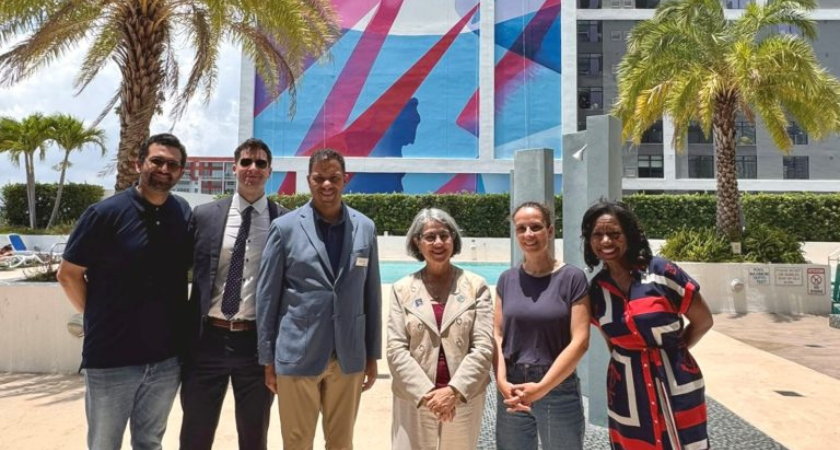
Large-scale public art installations are increasingly being incorporated into mixed-use and multifamily developments as developers seek to differentiate urban projects and strengthen neighborhood identity. In downtown Miami, Shawmut Design and Construction recently completed coordination work supporting a four-panel mural installation on the Excel Miami residential tower developed by Clearline Real Estate.
Project stakeholders said the installation extends roughly 245 feet along the building’s south elevation, creating what is believed to be the tallest mural in the United States.
Excel Miami is a 24-story residential rental development that includes 427 housing units, retail space, and integrated public art features.
Shawmut Design and Construction managed construction activities for the ground-up tower while coordinating installation requirements tied to the exterior artwork. The mural spans multiple building elevations, with the largest section installed along the south-facing façade.
The installation required coordination between the construction team, development partners, design consultants, and the artist’s production team to maintain construction sequencing and site safety requirements.
Miami-Dade County officials and project representatives participated in a public unveiling event marking completion of the mural installation.
The mural was created by German artist Claudia Walde, known professionally as MadC, whose work focuses on large-scale urban contemporary art and abstract compositions.
Developers across major urban markets have increasingly incorporated public-facing art installations into residential, hospitality, and mixed-use projects as part of broader placemaking and community engagement strategies.
In dense urban environments, large-scale visual installations can also influence project branding, pedestrian activity, and streetscape activation, particularly in mixed-use districts with significant tourism and residential growth.
For developers and construction owners, integrating public art into large-scale projects often introduces additional coordination requirements involving façade access, installation sequencing, specialty coatings, safety logistics, and stakeholder approvals.
As multifamily competition continues in major Sun Belt markets, projects that incorporate distinctive architectural or cultural elements may help support neighborhood visibility and long-term asset positioning.
The Excel Miami project also reflects continued construction activity in South Florida’s residential sector, where developers are combining housing delivery with experiential and community-oriented design features.
Source: Shawmut.