Construction companies are increasingly using internship programs to expose emerging professionals to operational challenges and technology-driven problem solving. Shimmick and Axia Electric recently used their summer internship program to have interns develop and present solutions aimed at improving business processes and project performance.
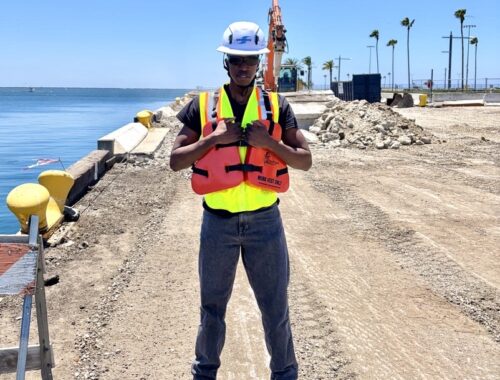
The innovation challenge required interns to prepare presentations of five to seven minutes for a panel representing multiple areas of the organizations. Participants identified opportunities for improvement and developed proposed solutions with potential applications to company operations.
Entries were evaluated across several factors, including creativity, analysis, recommendations, business relevance, potential impact and presentation quality.
Anuva Shekar, an intern in Shimmick's Northwest Division and a University of California, Berkeley student, received first place. Her proposal centered on a company-owned timecard application intended to streamline daily timecard collection and improve the consistency of digital records.
Charles Kiragga, an Arizona State University student working in Shimmick's Southwest Division, received second place. His proposal examined the application of marginal-gains principles to engineering productivity and project performance, focusing on how incremental process improvements could accumulate over time.
Alexander DeLeon, an intern with Axia Electric and a California State University, Fullerton student, placed third. His proposal called for a digital commissioning platform designed to standardize documentation and simplify the creation, management and use of project records.
The winning proposals addressed several areas relevant to construction operations, including timekeeping, engineering productivity and commissioning documentation.
Digital timekeeping systems can affect the collection and organization of workforce records, while standardized commissioning platforms can support documentation workflows during project closeout and turnover. The challenge also gave interns an opportunity to evaluate operational processes and develop technology-based responses.
The program previously used a safety video competition as its central intern challenge. The updated format shifts the focus toward innovation, process improvement and problem solving while giving participants an opportunity to present proposals to company leadership.
The competition provides an example of how construction internship programs can incorporate practical business and technology challenges alongside traditional workplace experience.
For contractors and construction owners, exposing interns to real operational issues can provide early experience with digital workflows, process analysis and project performance considerations. The challenge also gives emerging professionals a structured setting to examine how technology and incremental process changes can affect construction operations.
Source: Shimmick.