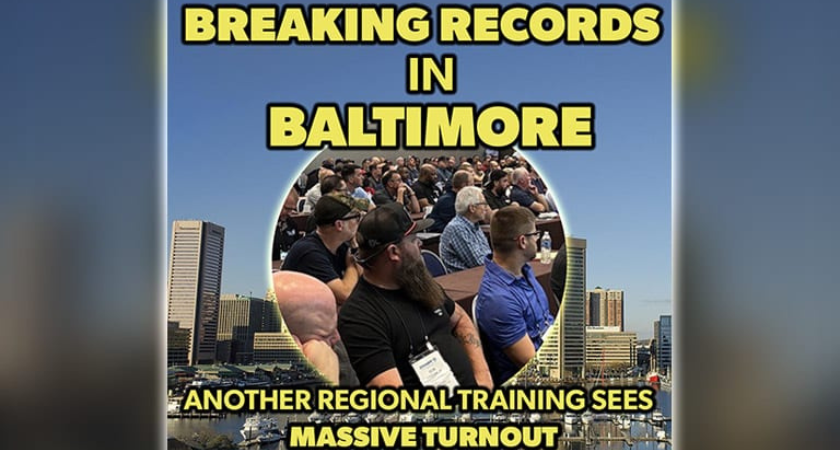
The latest Regional Training Seminar in Baltimore brought together 360 transportation workers for leadership, safety and workplace representation training, highlighting the role of structured education in preparing rail, bus and transit workers for evolving jobsite challenges.
The Baltimore seminar continued SMART-TD's expanded regional training program, which has been updated since 2019. Sessions were designed to strengthen the skills of local officers handling union meetings, hearings, financial responsibilities and member representation.
Maryland State Safety and Legislative Director David Pendleton also highlighted recent state-level transportation safety measures, including Maryland's two-person freight crew law and transit safety legislation.
A specialized session addressed assaults involving bus and passenger rail workers. Bus & Transit Assault Prevention & Safety Committee Chair Cole Czub and Vice Chair Brian Eden covered strategies for managing threatening or abusive passenger behavior and responding to workplace incidents.
The training also encouraged workers to report assaults through SMART-TD's confidential reporting system, providing a mechanism for documenting safety concerns and supporting broader workplace protections.
The seminar also recognized transportation safety officials for their legislative work. New Jersey and Delaware State Safety and Legislative Director Ron Sabol was honored for his role in advancing state rail safety legislation addressing train length and two-person freight crews.
National Safety and Legislative Director Jared Cassity was also recognized for his involvement in transportation safety initiatives, including efforts supporting Maryland's two-person crew requirements and protections related to transit assaults.
Regional training programs give transportation workers and local leaders opportunities to strengthen safety knowledge, administrative skills and member representation. The Baltimore event also demonstrates how workforce education can connect operational safety concerns with legislative and organizational initiatives across the rail and transit sectors.
Source: Smart.