Solar energy deployment in the United States saw a notable decline in 2025, even as the sector continued to lead new power generation capacity additions, according to new federal data.
.webp)
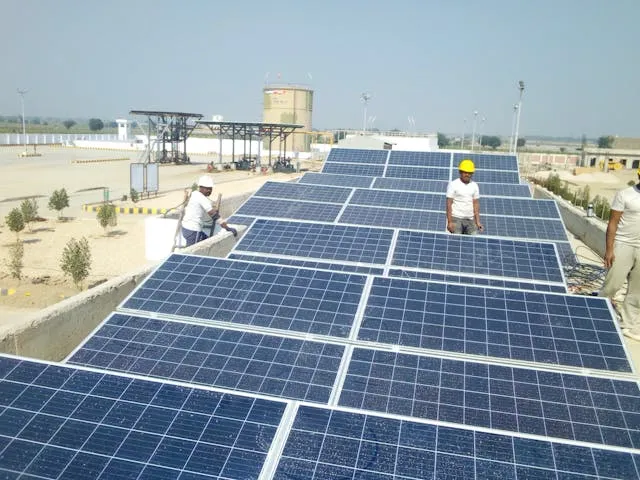
Figures from the Federal Energy Regulatory Commission show that developers installed 26.5 gigawatts (GW) of solar capacity last year, a 22% drop from the 33.8 GW added in 2024. Despite the slowdown, solar remained the top source of new electricity generation capacity.
As of December 2025, solar accounted for 12.2% of the nation’s installed generating capacity—ranking behind natural gas at 42.2% and coal at 14.3%.
The Solar Energy Industries Association attributed the decline to a combination of policy changes, trade pressures and shifting developer strategies.
“In 2025, the U.S. solar industry ‘navigated unprecedented change, ranging from numerous trade actions to the reversal of renewable energy tax credit policy,’” the group said in a March report. “Many projects stayed on track, but the market and policy uncertainty took a toll, leading to project delays and cancellations across all segments.”
While installation activity remained relatively steady through most of the year, the fourth quarter experienced a sharp drop-off.
SEIA noted that installations during the final three months of 2025 declined significantly compared to the same period in 2024.
“but in the fourth quarter, volumes fell by nearly 40% year-over-year. By the end of 2025, installations totaled just under 35 GW as many utility-scale projects were delayed into 2026 and 2027.”
A key factor behind the slowdown was the industry’s response to evolving federal policy, particularly changes tied to incentives under the Inflation Reduction Act. Developers increasingly shifted toward “safe harbor” strategies—locking in tax credit eligibility for future projects rather than rushing to complete installations before deadlines.
“As developers shifted their focus towards safe harbor strategies, there was less urgency to bring late-stage projects online by year end,” SEIA said. “This weakened fourth quarter deployment but created a more robust near-term pipeline for 2026 and 2027.”
Despite solar’s decline, other energy sources showed mixed performance. Natural gas developers added fewer units overall—84 in 2025 compared to 122 in 2024—though total installed capacity still increased by 1.5 GW. Wind energy also saw steady gains, with 5.7 GW added during the year.
Notably, no new nuclear generation capacity came online in 2025, following a 1.1 GW increase in 2024 tied to the completion of Plant Vogtle Unit 4.
The broader takeaway for the renewable sector is one of transition rather than decline. While short-term installation figures dipped, many delayed projects are expected to move forward over the next two years, potentially boosting future totals.
Industry analysts suggest that the combination of policy clarity, grid demand growth and continued investment in clean energy infrastructure could support a rebound. However, ongoing regulatory uncertainty and supply chain challenges remain key risks.
In the near term, the solar industry appears to be recalibrating—prioritizing long-term project pipelines and financial certainty over rapid year-end deployment, a shift that could reshape installation patterns through 2027 and beyond.
Originally reported by Diana DiGangi, Reporter in Utility Dive.