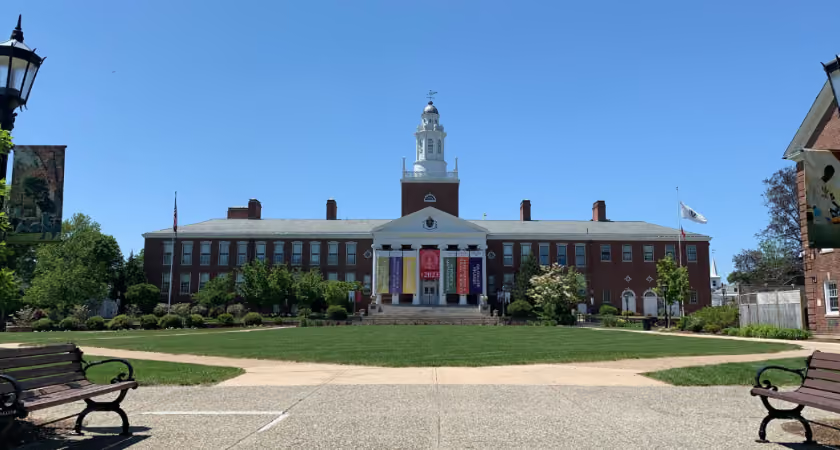
For higher education owners managing aging campus infrastructure, long-term energy planning is becoming increasingly important as institutions balance decarbonization targets, operating costs and uninterrupted campus operations. STV has developed a 25-year energy roadmap for Bridgewater State University in Massachusetts that outlines a phased transition from legacy steam infrastructure to a lower-carbon district energy system.
The plan was developed through STV’s work with the Massachusetts Division of Capital Asset Management and Maintenance and Bridgewater State University under a statewide engineering services contract focused on energy, water, climate and resilience projects.
Bridgewater State’s existing energy infrastructure includes aging steam systems that are approaching the limits of their performance. Rather than relying solely on repairs and replacements, the university and its project partners evaluated a broader transformation of campus energy infrastructure.
STV engineers worked with university facilities personnel and state officials to understand existing operating conditions, seasonal requirements and campus priorities before developing potential solutions.
The resulting roadmap calls for replacing the legacy steam network with a low-temperature hot water system. Geothermal bore fields would provide renewable thermal energy for heating and cooling, while upgrades to boilers, chillers and building systems would be sequenced over time.
The phased approach is intended to coordinate capital investments with university budget cycles and the academic calendar, reducing potential disruption to students, faculty and staff.
The proposed energy strategy extends beyond emissions reductions. The roadmap considers how infrastructure investments can improve campus resilience, indoor environmental conditions and long-term operating performance.
Geothermal-supported district energy is a central component of the proposed system. The university could also strengthen resilience against extreme weather while modernizing infrastructure to accommodate future campus needs.
STV and state officials used workshops, design sessions and discussions with university facilities and administrative teams to evaluate potential approaches. This process helped incorporate operational requirements into the engineering recommendations.
The broader strategy reflects a growing challenge for colleges and universities with aging central utility systems. Large campus energy upgrades often require construction sequencing around occupied buildings, existing utility networks and academic schedules, making early planning critical.
Bridgewater State’s roadmap comes as colleges and universities across the country examine ways to reduce fossil-fuel consumption while addressing aging infrastructure. Massachusetts has also increased investment in public-campus decarbonization as part of its broader climate strategy.
For owners, projects of this type can require coordination among engineers, facilities teams, utilities, contractors and campus leadership well before construction begins. Phased implementation can also help institutions align major infrastructure spending with available funding and minimize impacts on campus operations.
The Bridgewater State plan demonstrates how long-range energy studies can establish a framework for future construction packages rather than treating individual equipment replacements as isolated projects.
Campus decarbonization programs are creating new opportunities for mechanical, electrical, civil and specialty contractors involved in central utility systems, geothermal infrastructure, controls and building modernization. For higher education owners, developing a long-term roadmap can help identify infrastructure dependencies, prioritize capital work and coordinate energy upgrades with broader campus development plans.
Source: STV.