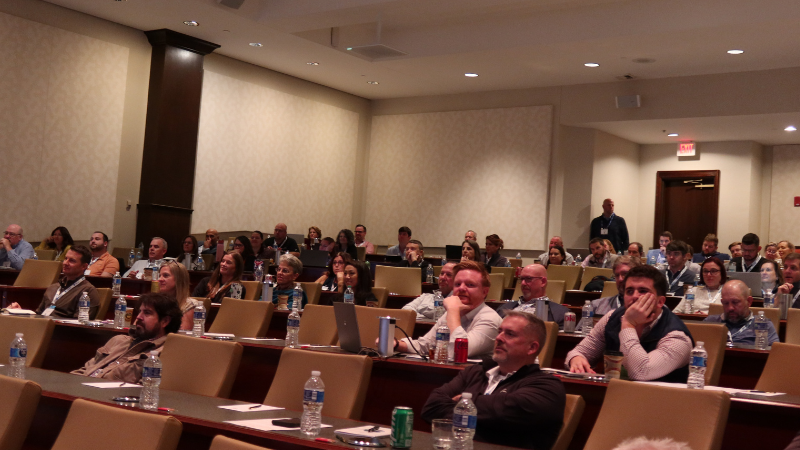
Construction finance leaders spent October 18 to 20 at the historic Hotel Roanoke, and the message they took home was clear: people drive the numbers.
The Blue Ridge and Central Virginia chapters of the Construction Financial Management Association (CFMA) co-hosted the 2026 Virginias Construction Conference against the backdrop of the Blue Ridge Mountains.
Constructionowners.com served as the official media partner. Editor Caroline Raffetto recorded live CO Pod episodes with speakers and walked the expo floor to talk with exhibitors.
The sessions covered pay, leadership, AI, acquisitions, and bonding. Yet nearly every conversation came back to the same point. The soft side of construction (culture, communication, and how leaders treat their people) shows up directly on the financial statements.
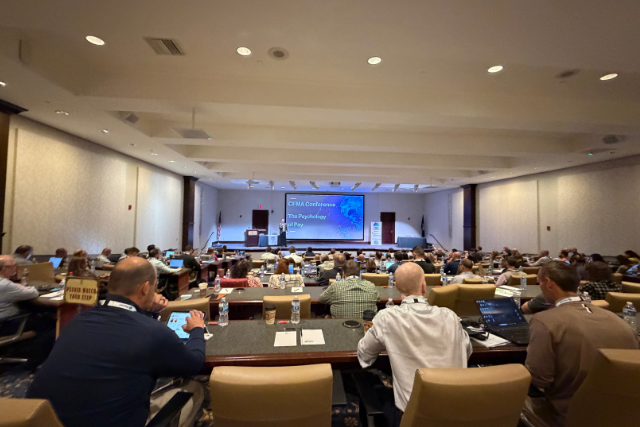
The conference packed 17 sessions and up to 15.5 CPE credits into two and a half days. The audience included CFOs, VPs of finance, controllers, owners, accountants, construction CPAs, bankers, insurance and surety professionals, and attorneys.
A Monday-only Leadership Track gave presidents, VPs, and owners a full day of leadership content for $175. Full registration ran $350 for CFMA members and $450 for non-members. Attendees confirmed CPE credit with a code word announced in each session.
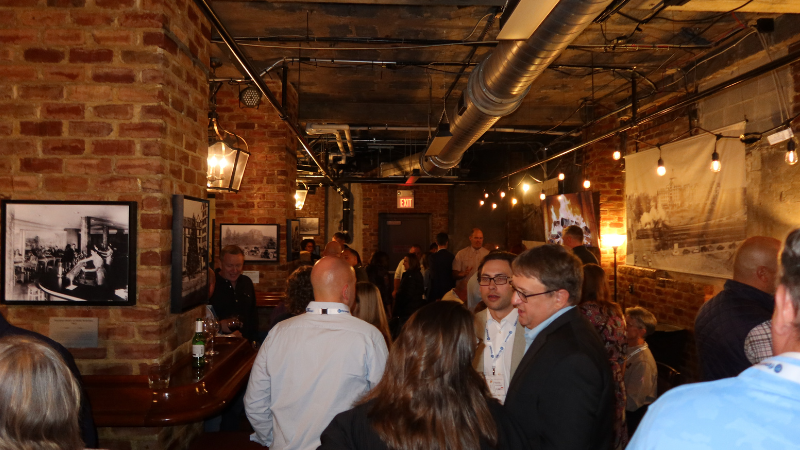
The social calendar kept people talking between sessions:
The program moved from optional workshops on Sunday to a leadership-heavy Monday and a Tuesday of hands-on breakouts.
Sunday opened with two workshops. Stacy Shiflet of Blauch Brothers showed how to build financial literacy on WIP, cash flow, and financials across an organization. Brant Somma of MarshMMA walked attendees through their own loss data to test whether a captive insurance program fits.
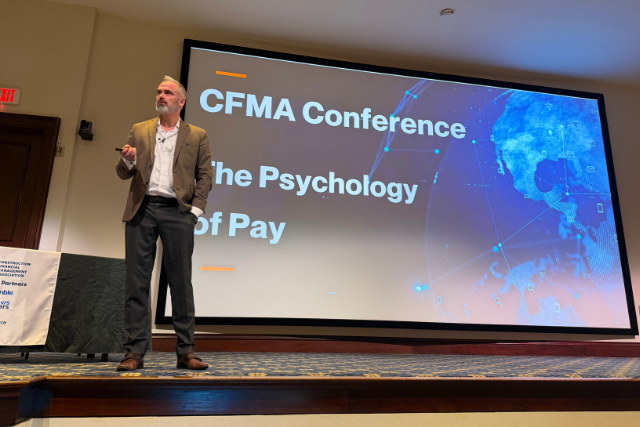
Monday set the tone. Former Navy SEAL John Choate of SA-720 Strategies delivered the opening keynote on cross-functional teamwork and strategic planning drawn from the Special Operations community. Kevin Monaghan followed with "The Psychology of Pay." John Lewis of Lewis Wealth Partners gave the economic update, covering policy trends, 2026 tax changes, and the midterm outlook.
Stacy Gissal took the stage for “Lead Yourself First.” Spencer Wiegard delivered the legislative update at lunch, presented by Atlantic Union Bank. Tyler Enslin's interactive afternoon keynote, “Achievement Now! Elevate Your Success,” sent attendees home with written goals and an action plan.
Laura Jansen of ADP tackled the multi-generational workforce, focusing on attracting and keeping Gen Z workers. Kathryn Schneider of Forvis Mazars closed the day with "The Contractor's AI Playbook," joined on stage by a contractor CFO.
Tuesday started with Billy Robinson of Brown Edwards on equipment and fleet cost management. Paired breakouts followed:
Christian Burger closed the conference with "IT Trends in Construction," a guide to evaluating systems in a crowded software market.
Caroline Raffetto sat down with five speakers for live CO Pod episodes. Each one tied a people problem to a financial result.
Kevin Monaghan, founder of Intuitive Compensation Group, argued that pay is far more emotional than most owners admit. Short-term incentives can look like they work while turning teammates into competitors over half a percent.
His alternative is delayed gratification built around clear “big wins,” starting with one key person or team. He sees two common stories in construction:
"Story is more powerful than dollars. Money is the worst leader."
Read the interview here
Stacy Gissal, stress specialist and founder of Evolve Beyond Limits, returned to the leadership track to take on the self-sacrificing leader. Leaders who put themselves last, she said, give their teams the leftovers.
Her CLEAR and FILL framework helps leaders drop what drains them and add what restores them. Leaders who make it stick pick one thing to clear and one to fill, put both on the calendar, and ask someone to hold them to it.
"By taking care of me, I'm not giving somebody less of me."
Read the interview here
Kathryn Schneider, director of consulting at Forvis Mazars, cut through the AI fatigue with a clear order of operations: governance first, then data, then the outcome you want, and only then the tool. Her own firm spent about a year getting its data ready before putting a large language model on top.
She pointed to agents handling AP and lien waivers, and to one contractor's HR agent that answers field employees' policy questions. Culture matters as much as technology: one owner runs a 20-minute AI toolbox talk every Friday where anyone can share what they tried.
"Start small, fail fast, and take it on."
Read the interview here
Jody Williams, CFO of Case Floors and former CFO of Skyline Roofing, has seen acquisitions from both sides. Williams noted that 75 to 80% of acquisitions fail to deliver the value buyers expect, usually because the culture never fits.
At Skyline, the team bought a local competitor with insurance and 401(k) eligibility ready on day one. They lost no one to a competitor in the first year. Advice to buyers: clean up the financials, then focus on the people, confirm the systems can talk, and treat your existing team fairly.
"Culture creates value. So many companies miss that."
Read the interview here
Julie Brown, CPA, CMA, CSCA, of Faulconer Construction, showed how jobsite habits flow into the financial statements. Honest forecasts, timely billing, fast change orders, and getting off the jobsite all build the credibility lenders and sureties look for.
Her approach is finding the “qualified yes” between finance and the field, backed by regular meetings so each side understands the other's goals. On AI, she expects jobs to change rather than disappear, with project managers gaining better data to make decisions.
"Every day you spend on the jobsite is money against the job."
Read the interview here
Every break in the program was a chance to meet exhibitors, and both mornings opened with breakfast on the floor. A sticker raffle gave attendees extra reason to make the rounds: collect 10 sponsor stickers for a chance at $250. Here's who we caught up with.
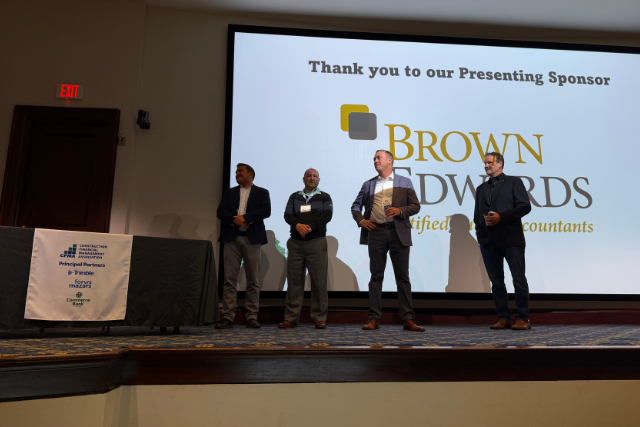
Brown Edwards returned as a top-tier sponsor, marking its third year supporting the conference. The regional CPA firm has a deep construction practice led by partner Billy Robinson, who serves on the CFMA executive board and opened Tuesday's program.
Services range from audit, tax, and employee benefit plan audits to outsourced CFO, bookkeeping, and payroll support, plus operational advice on running a successful construction firm.
Siteline helps subcontractors manage billing, pay apps and lien waiver collection in one place. Contractors set their requirements once, and the platform guides each submission while tracking cash flow. Siteline also led Tuesday's breakout on conquering lien waivers.
Enterprise Fleet Management works with many CFMA member companies on their vehicles, one of their largest cost centers. The focus is lowering total cost of ownership and using data analytics to manage the fleet, a natural companion to Billy Robinson's fleet cost session.
Pixydocs uses AI to automate accounts payable. Instead of staff matching each invoice to the vendor, job and phase by hand, the platform handles the matching and approvals, then books the invoice to the contractor's accounting system. It's the kind of low-value work Kathryn Schneider said AI should take off people's plates.
Trimble's ePayments team works with contractors using Vista and Spectrum. Trimble ePayments lets general contractors pay and track payments to vendors and suppliers without leaving their ERP or juggling separate AP systems.
SWK Technologies is a national firm headquartered in New Jersey. It provides Acumatica and Sage Intacct ERP software to help contractors with accounting, project management, and field service needs.
Three of the six booths focused on AP and payments. That mirrors what speakers said on stage about where contractors are automating first.
Across the general sessions, breakouts, and exhibit hall, three themes emerged consistently.
First, workforce and culture function as financial levers. John Choate addressed teamwork and accountability, Kevin Monaghan examined compensation design, Stacy Gissal focused on self-leadership, and Jody Williams discussed cultural fit in acquisitions. Each speaker made a similar case: the way a company manages its people directly affects retention, profitability, and enterprise value.
The second is a measured approach to artificial intelligence. Kathryn Schneider advised contractors to establish governance and organize their data before selecting tools, and to begin with narrowly defined use cases. Julie Brown noted that AI will reshape roles rather than eliminate them. Exhibitors including Pixydocs, Trimble and Siteline demonstrated targeted automation in accounts payable, vendor payments and lien waiver management.
The third is the need for stronger alignment between field operations and finance. Julie Brown emphasized regular communication between project teams and accounting. Christian Burger's closing session addressed how contractors can evaluate and implement systems that support that flow of information. Together, these sessions underscored that reliable financial reporting depends on accurate jobsite data.
The 2026 Virginias Construction Conference proved that a regional event can punch well above its size. Attendees left Roanoke with CPE credits, new contacts, and practical ideas on pay, leadership, AI, and growth.
As Stacy Gissal put it, getting in the room with people who are striving to grow is part of leading well. Catch the full CO Pod episodes and photos on the Constructionowners.com event hub, and connect with your local CFMA chapter through CFMA.org.