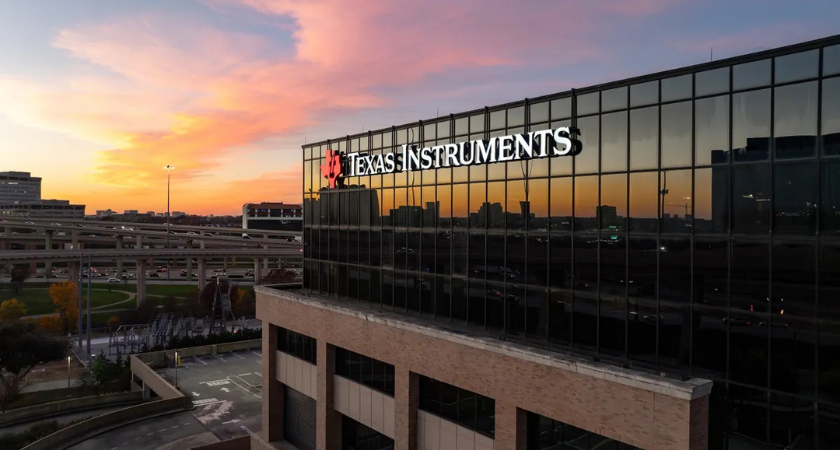
Texas Instruments reported strong first-quarter 2026 earnings, driven in large part by continued growth in data center and industrial demand, signaling ongoing momentum in the semiconductor sector.
.jpg)
The Dallas-based chipmaker posted $4.8 billion in revenue for the quarter, marking a 9% increase from the previous quarter and a 19% rise year over year. The results exceeded the company’s guidance, reflecting sustained demand tied to artificial intelligence infrastructure and broader industrial recovery.
Net income reached $1.55 billion, while gross profit totaled $2.8 billion, underscoring the company’s strong operating performance.
Company executives pointed to data center expansion as a key factor behind the gains, as hyperscale computing and AI workloads continue to drive semiconductor consumption.
Texas Instruments President and CEO Haviv Ilan said the company is well positioned to capitalize on the ongoing recovery in the semiconductor market.
The company has also made significant investments to support long-term growth. Over the past 12 months, Texas Instruments allocated $3.9 billion toward research and development as well as selling, general and administrative expenses, while investing an additional $4.1 billion in capital expenditures.
In addition, Ilan highlighted a recently announced acquisition of Silicon Labs, expected to close in the first half of 2027. The deal “enhances our global leadership in embedded wireless connectivity, expands TI’s portfolio and leverages TI’s internally owned technology and manufacturing and reach of market channels,” he said.
The company’s Analog segment generated $3.9 billion in revenue during the quarter, up 22% compared with the same period last year. Meanwhile, the Embedded Processing segment reported $723 million in revenue, reflecting a 12% year-over-year increase.
Texas Instruments’ operating profit rose to $1.8 billion, representing 37% of total revenue and a 37% increase compared with the first quarter of 2025.
Looking ahead, the company expects second-quarter revenue to range between $5 billion and $5.4 billion, according to Senior Vice President and CFO Rafael Lizardi.
“We will stay focused in the areas that add value in the long term,” Lizardi said. He added that the company will “continue to invest in our competitive advantages,” including “manufacturing and technology, a broad product portfolio, reach of our channels and diverse and long-lived positions.”
.jpg)
“We will continue to strengthen these advantages through disciplined capital allocation and by focusing on the best opportunities, which we believe will enable us to continue to deliver free cash flow per share growth over the long term,” he said.
The company’s strong performance builds on momentum from late 2025, when it reported similar gains tied to data center demand. Texas Instruments has also been expanding its domestic manufacturing footprint, announcing plans last year to invest more than $60 billion in U.S. semiconductor production.
Those investments include partnerships with major technology and industrial firms such as Apple, Ford, Medtronic, Nvidia and SpaceX. More recently, the company announced a collaboration with Nvidia aimed at accelerating the development of next-generation physical AI technologies.
As data center expansion continues to reshape global demand for semiconductors, Texas Instruments appears positioned to benefit from sustained growth across both its industrial and technology segments.
Originally reported by Jeffrey Kinney, Editor in Manufacturing Dive.
.png)


.png)