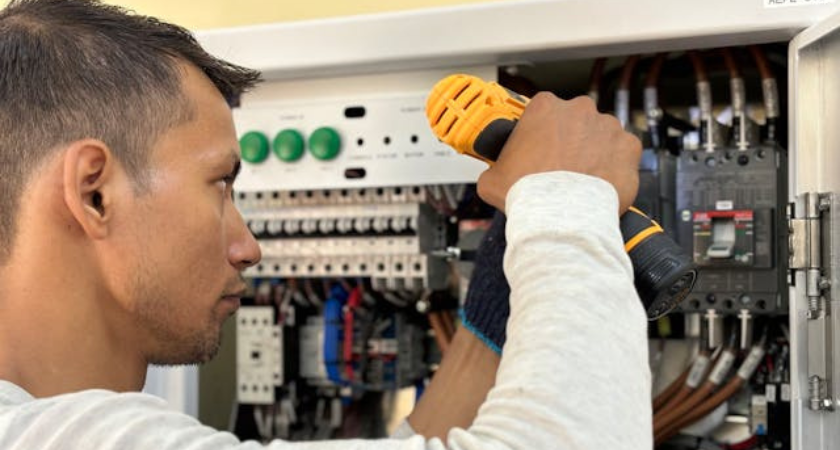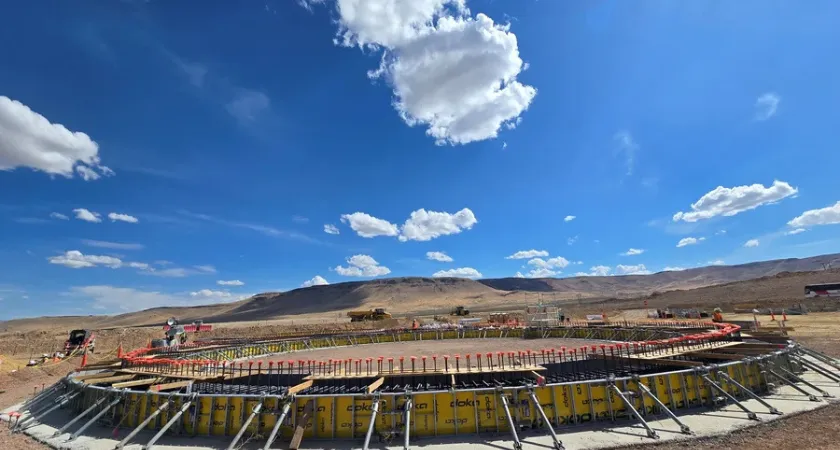
Lithium Americas is accelerating construction at its flagship Thacker Pass lithium project in northern Nevada, reaching a key milestone as engineering design nears completion and on-site activity intensifies.
.webp)
The $2.23 billion development—one of the largest mining construction projects currently underway in the United States—has now achieved 93% completion in detailed engineering design, marking a major step toward full-scale production.
As the U.S. looks to secure domestic sources of critical minerals, Thacker Pass is emerging as a cornerstone project aimed at reducing reliance on imported lithium while supporting the rapid growth of electric vehicles and electrified construction equipment.
Lithium extracted from the site will feed into lithium-ion battery production, a sector experiencing sustained global demand growth as industries transition toward lower-emission technologies.
The project’s engineering progress reflects thousands of technical deliverables required to guide construction, including detailed drawings, system layouts, and infrastructure planning.
Procurement is also advancing steadily, with approximately 60% completion achieved. Key long-lead equipment—awarded in late 2024—is currently under fabrication and scheduled for delivery through the second half of 2026.
More than 60% of the project’s structural steel, sourced internationally, is already in transit or has arrived on-site, underscoring the scale and complexity of global supply chain coordination required to sustain the build schedule.
“Construction at Thacker Pass is progressing rapidly, with safety as our highest priority,” explains Jonathan Evans, President and Chief Executive Officer of Lithium Americas.
“Peak construction activity is expected in 2026, and our workforce continues to expand, with approximately 1,800 skilled craftspeople anticipated on site by late 2026.”
The company reported nearly $982.8 million in capitalized construction spending during Q4 2025, with total Phase One capital expenditure projected between $1.3 billion and $1.6 billion through 2026. Mechanical completion remains targeted for late 2027.
Construction activity at Thacker Pass has scaled significantly over the past year, with approximately 950 workers on-site by the end of 2025. This includes a mix of craft labor, technical staff, and project support personnel.
As construction peaks, the workforce is expected to nearly double—reaching 1,800 workers by late 2026—placing additional demands on site infrastructure and logistics.
The scope of work spans multiple disciplines, including:
Coordinating these activities in a remote Nevada location presents logistical challenges, from material transport to workforce housing and equipment staging.
To support this expansion, the project has already delivered key infrastructure such as the Workforce Hub, which provides accommodation and essential services for workers. Additional investments include transportation systems, catering, and on-site welfare facilities.
Beyond the jobsite, Lithium Americas has also contributed $14.1 million toward the construction of a new Orovada K-8 school, reflecting broader community investment tied to the project.
Thacker Pass is being developed at a time when U.S. lithium production accounts for less than 1% of global supply, highlighting the urgency of domestic resource development.
The project is expected to play a critical role in strengthening supply chains for battery manufacturing, particularly as demand for electric vehicles continues to rise. Each EV requires roughly 8–10 kilograms of lithium carbonate equivalent, reinforcing the importance of large-scale, reliable production facilities.
“2025 marked a transformative year for Thacker Pass. Construction is advancing at full pace, and we are carrying that strong momentum into 2026,” Jonathan adds.
“We are grateful for the continued support of the US Administration and the Department of Energy. With the second loan drawdown in February 2026, we have meaningfully de-risked the Project and reinforced our path forward.”
Financially, Lithium Americas reported approximately $905.6 million in total cash and restricted cash at the end of 2025, supported in part by funding from a U.S. Department of Energy loan program.
While rising costs, workforce demands, and supply chain pressures remain ongoing challenges, the project continues to track toward its late-2027 mechanical completion target.
“We remain on track for mechanical completion of Phase 1 in late 2027, positioning Thacker Pass to play a central role in securing America's energy and national security future,” Jonathan says.
“Together with our partners, we are advancing energy independence, strengthening domestic supply chains and building a more resilient future.”
Originally reported by Georgia Collins in Construction Digital.