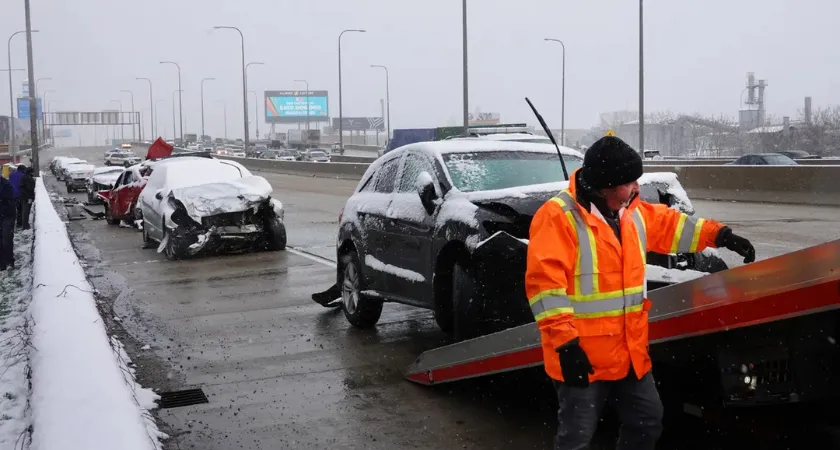
U.S. traffic fatalities declined sharply in 2025, according to preliminary estimates released by the National Safety Council (NSC), even as safety advocates warn that drowsy driving remains a largely underrecognized threat on American roads.
.webp)
The NSC estimates 37,810 motor vehicle deaths occurred in 2025, down 12% from a revised 42,789 deaths in 2024. The decline marks one of the most significant year-over-year drops in recent years, signaling potential progress in nationwide road safety efforts.
In an email statement, the organization cited “increased adoption of safety technologies, expanded use of evidence-based enforcement strategies, infrastructure investments stemming from federal and state safety initiatives, and strengthened collaboration through the Road to Zero Coalition” as key contributors to the improvement.
The Road to Zero Coalition — an initiative led by the NSC in partnership with the U.S. Department of Transportation and other stakeholders — promotes the Safe System Approach to eliminate roadway deaths.
According to NSC data, nine states and the District of Columbia experienced traffic death reductions of 15% or more in 2025. However, eight states recorded increases ranging from 3% to 25% over the same period.
The NSC’s preliminary figures do not break down fatalities by road user type, such as pedestrians, bicyclists or vehicle occupants. Safety experts say more detailed data will be critical to understanding where interventions are most effective and where risks remain elevated.
Despite the overall progress, officials stress that dangerous driving behaviors continue to contribute to thousands of preventable deaths each year.
A new report from the Governors Highway Safety Association (GHSA) highlights drowsy driving as a significantly undercounted factor in fatal crashes.
Using a model developed by the AAA Foundation for Traffic Safety based on 2017–2021 data from the U.S. Fatality Analysis Reporting System (FARS), researchers determined that 17.6% of fatal crashes involve a drowsy driver.
Applying that model to 2023 data, the report estimates 6,326 deaths were linked to fatigued driving — roughly 10 times higher than raw FARS data suggests.
“It’s a serious issue, and we’re not talking about it … like we talk about drug impaired [or] drunk driving, [or] even distracted driving,” said Caroline Cash, GHSA chief communications officer.
Drowsy driving often goes underreported due to the lack of physical evidence following crashes and because drivers are typically awakened upon impact.
According to the report:
The GHSA emphasizes that fatigue-related crashes are preventable. Recommended strategies include improving sleep hygiene through exposure to natural light, limiting alcohol and caffeine before bed and maintaining a cool, dark sleeping environment.
For long-distance travel, experts advise regular rest breaks and meal stops.
Modern vehicles increasingly feature advanced driver assistance systems such as lane-keeping assist, automatic emergency braking and driver-monitoring systems capable of detecting yawning, excessive blinking or erratic steering patterns.
“Drowsy driving is preventable,” Cash said.
The GHSA report also calls for broader public awareness campaigns, workplace policies that promote adequate rest and infrastructure improvements such as rumble strips to alert inattentive drivers.
While the overall decline in fatalities offers cautious optimism, safety officials say sustained investment, behavioral change and technological innovation will be necessary to maintain momentum and address persistent risks like fatigued driving.
Originally reported by Dan Zukowski Senior Reporter in Smart Cities Dive.