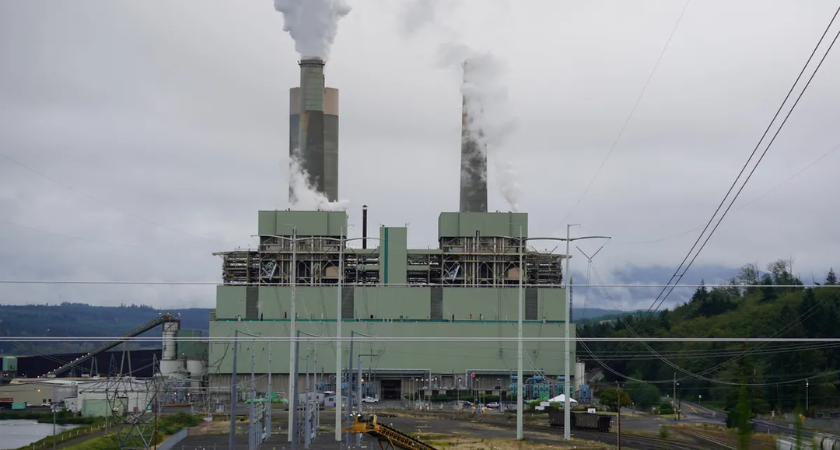
TransAlta is seeking to recover $19.9 million from ratepayers after maintaining operations at its coal-fired Centralia power plant in Washington under a federal emergency order, despite the facility producing no electricity during the period.
The Calgary-based independent power producer filed its request with the Federal Energy Regulatory Commission, outlining costs incurred while complying with a U.S. Department of Energy directive to keep the 730-MW plant available instead of retiring it as scheduled.
The Centralia facility had been slated for closure on Dec. 31, 2025, “with a plan to promptly begin work to convert the unit to natural gas-fired operations,” the company said. However, DOE intervened using its authority under Section 202(c) of the Federal Power Act, issuing a 90-day emergency order that required the plant to remain operationally ready through mid-March. A second 90-day order was issued immediately after the first expired.
During the initial emergency order period, the Centralia plant did not generate electricity, but TransAlta incurred ongoing fixed costs to maintain readiness. These expenses included staffing, insurance and material costs necessary to ensure the plant could operate if called upon.
The company stated that additional expenses could follow. If DOE continues issuing emergency orders, TransAlta estimates it will need to spend another $23 million to repair the plant to ensure it remains capable of operating.
Operational costs would also be significant if the plant is dispatched. TransAlta estimates startup costs of $577,377 per event, excluding the first startup, which would cost $201,627. Once online, operating expenses would total $83.44 per MWh for initial generation levels, rising to $113.49 per MWh beyond a specified threshold.
DOE has argued that keeping the plant available is necessary to address potential grid reliability concerns in the Pacific Northwest. However, the agency’s position has been challenged by Washington state officials and environmental groups.
In filings opposing the order, the state’s attorney general and a coalition including the Sierra Club contend that DOE has not demonstrated a legitimate emergency requiring the plant to remain online. They also note that the federal directive conflicts with a Washington state law mandating the plant’s closure by the end of 2025.
Under DOE’s orders, TransAlta was required to keep the Centralia facility available for dispatch by multiple grid operators, including the Bonneville Power Administration and the California Independent System Operator. Subsequent directives shifted oversight to other reliability coordinators.
Despite these requirements, TransAlta said it has not reached agreements with any of the relevant entities regarding compensation for maintaining the plant’s availability. The company has proposed a pricing structure that includes both a fixed charge for readiness and a variable charge if the plant is called into operation.
The $19.9 million filing reflects only the fixed costs associated with the first emergency order. TransAlta indicated it plans to revise its tariff filings to account for additional costs tied to future DOE directives.
The situation highlights broader tensions between federal emergency authority and state-level energy policies, particularly as aging fossil fuel plants face retirement deadlines amid evolving grid reliability concerns.
Originally reported by Ethan Howland, Senior Reporter in Utility Dive.
.png)


.png)