Construction owners and contractors continue to navigate rising project costs as demand for specialized nonresidential facilities remains strong across several high-growth markets. Turner Construction reported that its Building Cost Index increased during the second quarter of 2026, reflecting ongoing cost pressures tied to labor availability, material pricing and sustained investment in industrial and technology-related construction.
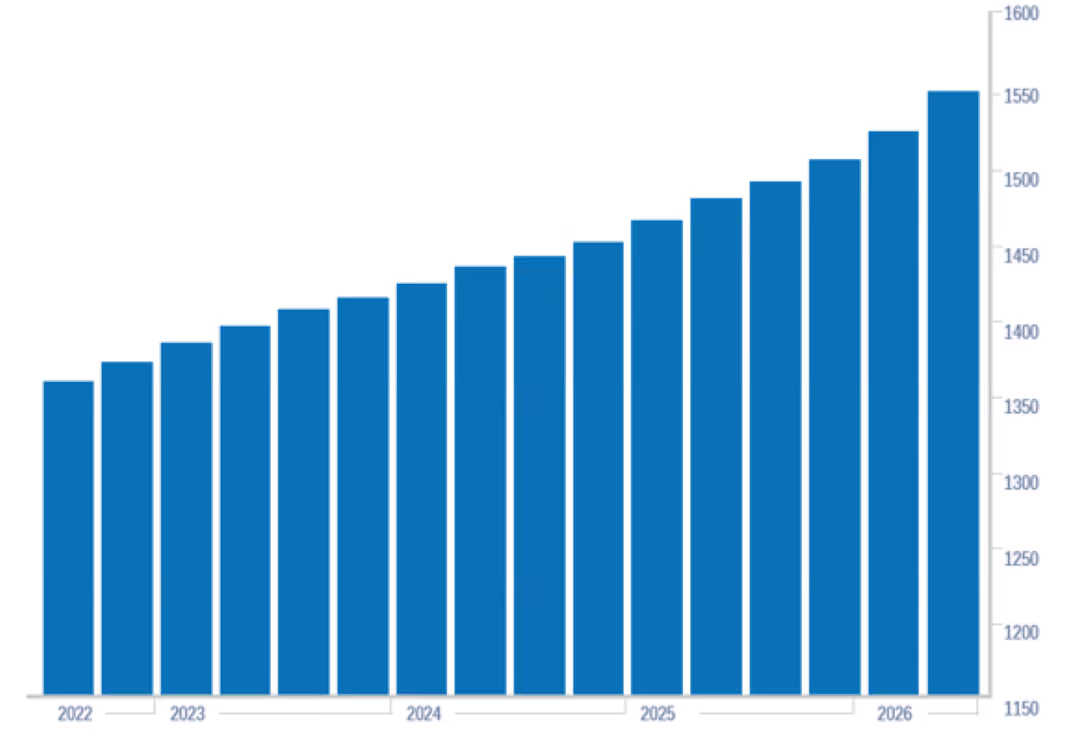
Turner Construction's Building Cost Index rose to 1552 in the second quarter of 2026. The quarterly benchmark recorded a 1.44% increase compared with the first quarter of the year and a 5.15% increase from the same period in 2025.
The index tracks cost conditions across the U.S. nonresidential building market by evaluating factors including labor rates, workforce productivity, material pricing and competitive market conditions. Turner has published the construction cost forecast for more than eight decades, providing a nationwide indicator rather than a measure of regional market performance.
According to Turner, construction activity remains strongest in sectors requiring highly specialized facilities, including data centers, semiconductor manufacturing plants, advanced manufacturing projects and other mission-critical developments. The Midwest and Southeast continue to experience significant activity in these markets.
The company also identified shortages of skilled mechanical and electrical workers as one of the industry's primary constraints. In addition, project teams continue to monitor material costs, tariff policies and supply chain conditions because of their potential effect on project budgets and delivery schedules. These factors are reinforcing the need for early procurement strategies, disciplined planning and proactive risk management throughout project execution.
For construction owners and developers, the latest Building Cost Index underscores the importance of accounting for continued cost escalation when budgeting and planning nonresidential projects. Contractors pursuing complex industrial and technology facilities may also face ongoing competition for skilled mechanical and electrical trades, making workforce availability and procurement planning critical considerations as projects advance.
Source: Turner Construction.