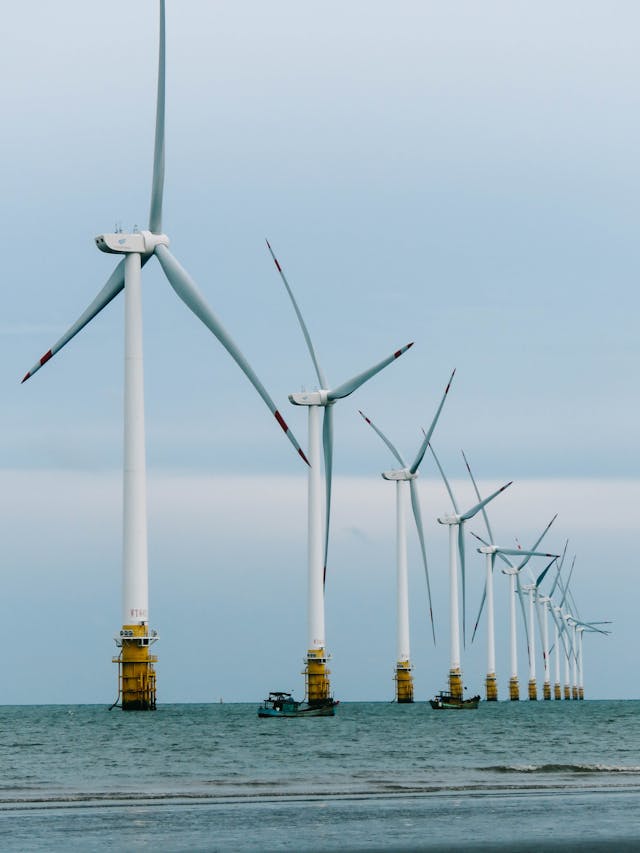
Two large-scale offshore wind projects in the United States, representing up to 4.4 gigawatts of planned capacity, have been canceled after developers reached agreements with the Department of the Interior (DOI), marking a significant shift in federal energy policy and project development strategy.
.jpg)
The DOI announced April 27 that the developers behind the Bluepoint Wind project off New York and the Golden State Wind project off California “each separately agreed to voluntarily end their offshore wind leases” and will not pursue new offshore wind development in the U.S. The agency estimated the lease values and potential reimbursements at $765 million for Bluepoint and $120 million for Golden State.
Under the agreements, the federal government will reimburse developers for lease acquisition costs—but only after they invest equivalent amounts into U.S.-based liquefied natural gas, oil and other energy infrastructure aligned with current administration priorities.
EDP, a Portuguese energy company with stakes in both projects, confirmed it had “agreed to settle imminent claims.” The company noted that reimbursement is contingent upon reinvestment in alternative U.S. energy sectors and is expected to be completed in 2026.
Interior Secretary Doug Burgum sharply criticized the original offshore wind lease arrangements, stating that companies “were basically sold a product in 2022 that was only viable when propped up by massive taxpayer subsidies.”
“Now that hardworking Americans are no longer footing the bill for expensive, unreliable, intermittent energy projects, companies are once again investing in affordable, reliable, secure energy infrastructure,” Burgum said. “In addition, the agreements resolve the unaddressed national security concerns at both projects.”
The projects involved multiple major stakeholders. Ocean Winds—a joint venture between ENGIE and EDP Renewables—held a 50% stake in both developments. The remaining ownership included Global Infrastructure Partners, part of BlackRock, for Bluepoint, and the Canada Pension Plan Investment Board for Golden State.
Salim Samaha, chair of Midstream & LNG at Global Infrastructure Partners, praised the agreement, stating, “We appreciate the very constructive engagement with Secretary Burgum and the Department of the Interior and are pleased to have reached a practical resolution based on our shared commitment to pragmatic outcomes.”
The agreements mirror a similar deal reached earlier this year with TotalEnergies, which agreed to abandon nearly $1 billion in offshore wind leases in exchange for investing in U.S. gas and power infrastructure.
Despite the administration’s push, the agreements have drawn scrutiny from legal experts and industry advocates. Critics have questioned both the legal structure of the deals and the use of the Treasury Department’s Judgment Fund to finance reimbursements.
Tony Irish, a former DOI attorney, suggested the agreements resemble legal settlements tied to potential litigation. “If so, these two agreements not only share the same general infirmities of the [TotalEnergies] ones, but are even weaker,” he wrote in a LinkedIn post, noting that the urgency behind the agreements appeared linked to developers’ willingness to comply.
The offshore wind industry has also voiced strong opposition. The Oceantic Network, a leading trade group, criticized the administration’s approach.
“Unable to defend its offshore wind actions in court, the administration is using taxpayer dollars to buy foreign companies out of legally executed offshore wind leases,” said Sam Salustro, the group’s senior vice president of policy and market affairs.
“The economic damage and costs to consumers’ pocketbooks are staggering,” he added. “Communities should be celebrating cost savings and homegrown power — not paying more because viable American energy projects are being canceled.”
Salustro also pointed to contrasting developments in Massachusetts, where the state recently activated contracts for the approximately 800-MW Vineyard Wind project. Officials estimate the project will save customers $1.4 billion on electricity bills over the next 20 years.
While no lawsuits have yet been filed challenging the federal agreements, legal experts continue to debate whether potential challengers would have standing to do so.
Originally reported by Meris Lutz, Senior Editor in Utilities Dive.