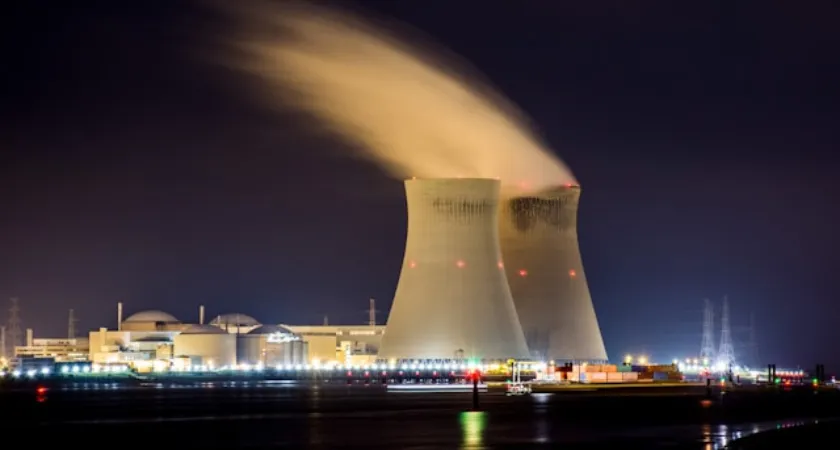
The U.S. Nuclear Regulatory Commission has issued its first construction permit for a commercial nuclear reactor in eight years, clearing the way for a next-generation reactor project backed by Bill Gates.
.webp)
The permit allows TerraPower to begin building a sodium-cooled nuclear reactor in western Wyoming. Construction is expected to start within weeks, with the project targeted for completion by 2030.
“We have spent thousands of manpower hours working to achieve this momentous accomplishment,” said Chris Levesque.
The advanced reactor is expected to cost up to $4 billion and will be located near the town of Kemmerer, roughly 130 miles northeast of Salt Lake City.
The planned facility will use a sodium-cooled reactor design, rather than the water-cooled systems used by most commercial nuclear plants around the world.
The 345-megawatt reactor is expected to generate up to 500 megawatts of electricity at peak output, enough to power approximately 400,000 homes, according to TerraPower.
The reactor is part of the company’s effort to develop next-generation nuclear energy technology designed to improve safety and efficiency compared with traditional reactors.
The project will be constructed near a coal-fired power plant that is currently being converted to operate using natural gas, allowing the region to maintain energy production while transitioning to newer power technologies.
The approval represents a significant milestone for the U.S. nuclear energy sector. According to the Nuclear Regulatory Commission, it is the first construction permit issued for a non-light-water commercial reactor in more than 40 years.
Most nuclear plants around the world use light-water reactor technology, which relies on water to control the nuclear reaction and transfer heat to produce electricity.
The last commercial non-light-water reactor operating in the United States was the Fort St. Vrain Nuclear Generating Station, which operated from the 1970s until it shut down in 1989.
The commission last issued a permit for a conventional light-water reactor in 2018 to Florida Power and Light for a project south of Miami, though that facility has not yet been built.
Interest in advanced nuclear technology has increased as electricity demand rises, particularly from data centers and artificial intelligence infrastructure.
Gates has previously highlighted nuclear energy as a potential solution to meet growing electricity needs from technology companies.
In October, Gates said nuclear power could play a major role in supporting energy-intensive computing facilities.
“I wish I could deliver nuclear fission like three years earlier than I can, because then we’d have a perfect match to the current demand pattern of these data center guys,” he said.
The TerraPower reactor will rely on a highly enriched form of uranium fuel, which in recent years has primarily been supplied by Russia. The company has been working to secure alternative sources of fuel production in the United States and South Africa.
While federal leaders continue promoting nuclear energy as a low-carbon electricity source, the U.S. government still faces long-standing challenges related to nuclear waste management.
Thousands of tons of spent fuel remain stored at nuclear plants across the country, and a permanent national disposal solution has yet to be finalized.
Earlier this year, the U.S. Department of Energy announced plans to explore partnerships with states to modernize the nuclear fuel cycle, including potential approaches for fuel recycling and long-term waste disposal.
Supporters say the Wyoming reactor could serve as a model for future nuclear plants designed to provide reliable electricity with lower carbon emissions.
TerraPower also says its reactor design could produce less nuclear waste than traditional reactors, potentially improving the long-term sustainability of nuclear energy.
If the project proceeds as planned, it would represent one of the most significant developments in the U.S. nuclear power sector in decades and could help shape the next generation of commercial nuclear energy technology.
Originally Reported by The Associated Press in Construct Connect News.