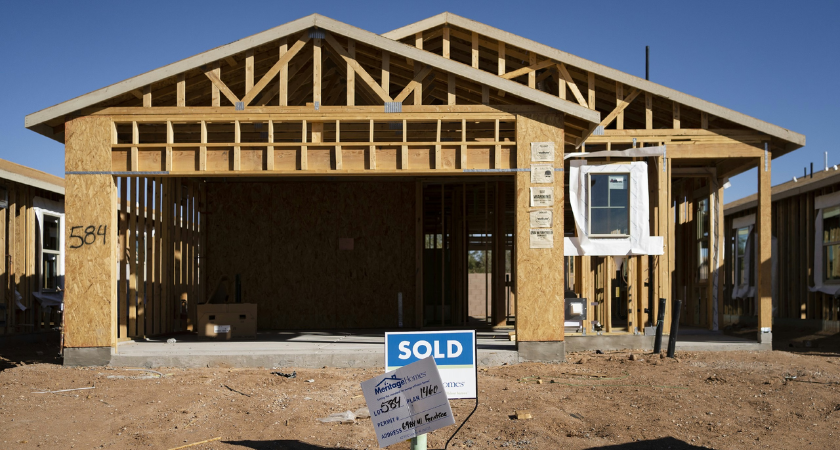
Newly built homes in urban markets across the United States are commanding significantly higher prices than existing housing stock, highlighting the growing affordability challenges tied to limited city development opportunities and rising construction costs.
.jpg)
A new quarterly New Construction Insights analysis from Realtor.com found that only 10% of new-construction homes currently listed for sale are located in urban areas, compared with 30% of existing homes. The shortage of newly built urban inventory is helping push prices sharply higher in several major metro areas.
Nationally, the median listing price for a newly constructed urban home reached more than $738,000, compared with roughly $414,000 for existing urban homes — a premium of 78.4%.
The gap is even larger in some markets. In Miami, newly built urban homes carried a premium of more than 300% compared with existing urban homes, according to the report.
The report found Miami-Fort Lauderdale ranked among the nation’s hottest urban new-construction markets, with nearly 70% of all new-construction listings located in urban areas.
However, the metro also posted the nation’s steepest price premium for urban new builds. The median listing price for a new urban home in Miami exceeded $2.57 million, compared with approximately $459,000 for an existing urban property.
“The housing market remains caught in the tension between the underlying demand and constrained affordability,” said Stuart Miller, CEO of Lennar Corp., during a March earnings call.
“Supply is still critically short, and years of underproduction have created a structural deficit that will take years to close,” Miller said. “But we believe the conditions are building for an eventual recovery.”
Other metro areas posting large urban new-construction premiums included North Port-Bradenton, Tampa-St. Petersburg and St. Louis, each showing premiums near or above 200% compared with existing urban homes.
Meanwhile, coastal California markets also continued to post strong urban construction activity. San Francisco-Oakland recorded an urban new-construction share of 68.9% with a 30.1% premium, while Los Angeles posted a 42.4% premium.
The report noted these metros differ from many Sun Belt growth markets where large suburban developments dominate new-home construction.
Housing experts say rising urban home prices are increasing pressure on local and federal policymakers to encourage denser residential development and reduce regulatory barriers.
More than a dozen states are considering or have already approved legislation aimed at easing restrictions on smaller homes, townhomes and infill housing projects. Proposed reforms include reducing minimum lot-size requirements and easing setback rules that can limit development opportunities.
Congress is also debating broader housing legislation intended to reduce regulatory hurdles and improve housing supply, though several provisions remain under negotiation.
.jpg)
Arthur Gailes, a research fellow with the American Enterprise Institute Housing Policy Center, said “light-touch density” strategies are becoming more attractive as affordability pressures intensify.
“On the other end of the spectrum, areas in the Sun Belt, Florida and Texas, have more opportunity via new residential subdivisions,” Gailes said. “Because they're building on more on greenfield land, out from the city cores, and allowing more density in these areas.”
The report also noted that infill housing projects can generate stronger property tax revenue for cities. According to Gailes, newly constructed homes pay approximately 25% more in property taxes than existing homes.
As urban land constraints continue to limit new inventory, analysts expect demand for infill development and higher-density residential construction to remain a key focus for builders and policymakers nationwide.
Original reporting by Tristan Navera for Realtor.com.