Construction has officially wrapped up on the Vineyard Wind offshore wind farm off the coast of Massachusetts, marking a major milestone for the U.S. renewable energy sector and the first large-scale project to reach this stage during President Donald Trump’s current term.

Project officials confirmed that offshore construction concluded Friday night after crews installed the final turbine blades at the site. The completion represents years of development, regulatory battles and construction work to bring one of the nation’s largest offshore wind projects closer to full operation.
Craig Gilvarg, a spokesperson for the project, confirmed the milestone, noting that offshore construction had reached its final phase.
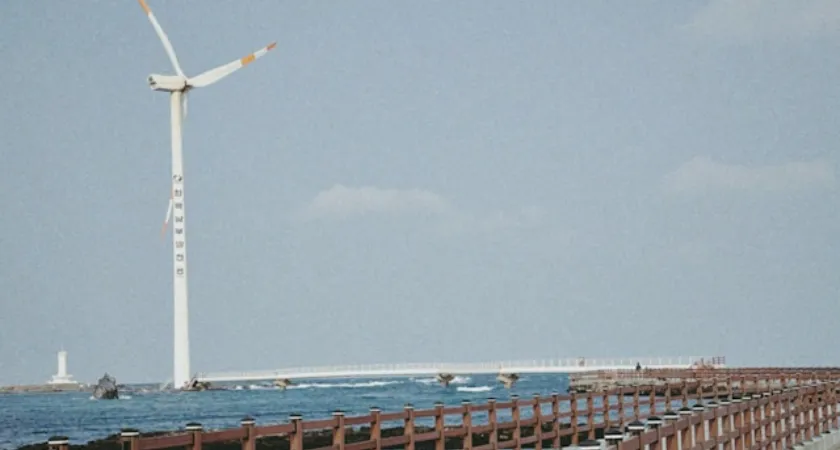
Vineyard Wind is located about 15 miles south of Martha’s Vineyard and Nantucket and includes 62 wind turbines capable of generating 800 megawatts of electricity. That output is expected to supply clean power to roughly 400,000 homes across the region.
The project is a joint venture between Avangrid and Copenhagen Infrastructure Partners and has already been delivering electricity to the New England grid for more than a year as turbines were gradually installed and activated.
Despite its progress, Vineyard Wind has faced a complex path shaped by shifting federal policies and legal challenges.
The project was among five major East Coast offshore wind developments that the Trump administration halted shortly before Christmas, citing national security concerns. The move temporarily stopped construction activities on several large renewable energy projects along the Atlantic coast.
However, developers and state governments filed lawsuits challenging the federal action. Courts ultimately allowed the projects to resume construction after judges concluded that the government had not demonstrated an immediate national security risk significant enough to justify halting the work.
President Trump has long expressed opposition to wind energy projects.
Trump, who often talks about his hatred of wind power, has said his goal is to not let any "windmills" be built.
Another offshore project affected by the federal pause, Revolution Wind, also reached an important milestone recently. The project began sending electricity to the New England grid for the first time and will continue scaling up operations in the coming weeks.
Massachusetts officials have emphasized that projects like Vineyard Wind are important to the state’s long-term energy strategy.
Massachusetts Attorney General Andrea Joy Campbell has said the completion of this project is essential to ensuring the state can lower costs, meet rising energy demand, advance its climate goals and sustain thousands of good-paying jobs.
While Vineyard Wind has moved forward, the project has also faced technical setbacks. In July 2024, a turbine blade failure caused fiberglass fragments to wash onto Nantucket beaches during the height of the tourist season.
The turbine manufacturer, GE Vernova, later reached a settlement agreement and agreed to pay $10.5 million to compensate island businesses that reported economic losses linked to the incident.
The Vineyard Wind project itself has a long development history that dates back nearly a decade.
Developers first submitted project plans in 2017, when Massachusetts began aggressively pursuing offshore wind as part of its renewable energy strategy. The state had already required utilities to solicit proposals for up to 1,600 megawatts of offshore wind power by 2027.
The project nearly stalled in 2019 when federal regulators delayed issuing a key environmental impact statement, raising concerns that the development might not move forward.
Momentum returned in 2021 when the Biden administration approved the project as part of a broader push to expand offshore wind as a climate strategy.
Construction then began onshore in Barnstable, Massachusetts, followed by offshore installation of turbines and infrastructure.
.webp)
The United States has only recently begun building large commercial offshore wind farms. The nation’s first offshore wind installation opened near Rhode Island’s Block Island in 2016, but the project included only five turbines and was not considered commercial scale.
A larger project, South Fork Wind, became the first commercial-scale offshore wind farm in the United States in March 2024. Developed by Danish energy company Ørsted and utility Eversource, the 12-turbine facility operates about 35 miles east of Montauk Point, New York.
As offshore wind projects continue to expand, the debate over renewable energy policy in the United States remains intense.
White House spokesperson Taylor Rogers said Friday night that Trump "reversed course on Joe Biden's costly green energy agenda that gave preferential treatment to intermittent, unreliable energy sources and instead is aggressively unleashing reliable and affordable energy sources to lower energy bills, improve our grid stability and protect our national security."
Despite those policy disagreements, projects like Vineyard Wind continue to move forward, highlighting the growing role offshore wind may play in the nation’s energy mix in the years ahead.
Originally reported by PBS News.



.png)