Lawmakers in Virginia have approved legislation that would allow residents to install small plug-in solar devices without needing approval from their local electric utility.
.webp)
The measure has passed both chambers of the Virginia General Assembly and is now headed to the desk of Gov. Abigail Spanberger, who is widely expected to sign the bill into law.
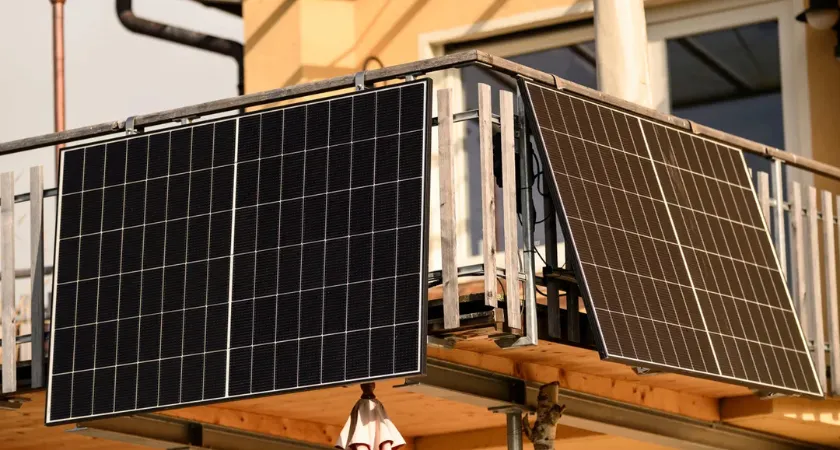
If enacted, the legislation would permit residents to plug in a “small portable solar generation device” with a maximum output of 1,200 watts at a single property. The devices, commonly referred to as balcony solar systems, allow households—particularly apartment renters—to generate small amounts of electricity directly from solar panels connected to standard outlets.
“Balcony solar was on a short list of the Governor’s energy affordability priorities,” the Chesapeake Climate Action Network Action Fund said in a Wednesday release. “The Governor’s administration repeatedly spoke in favor of the measure in committee.”
The legislation was first approved by the Virginia House of Delegates and later passed the Senate with a unanimous 96-0 vote, signaling broad bipartisan support for expanding access to small-scale renewable energy.
Under the new rules, utilities will not be allowed to impose interconnection requirements, charge installation fees related to the devices, or require customers to obtain utility approval before installing or operating the systems.
Supporters say the measure could make solar energy more accessible to apartment residents and tenants, who often cannot install traditional rooftop systems.
Tony Smith, president and founder of Secure Solar Futures, said the legislation represents a growing shift in how consumers generate electricity.
“a growing shift toward ‘permissionless’ customer-generated solar energy that benefits all ratepayers, particularly tenants,” Smith said in an email, adding that the law signals “yet another small step towards a broader transition in Virginia’s energy economy, from its historic reliance on coal toward solar and battery storage.”
If the governor signs the measure, Virginia would become only the second state in the United States to formally allow balcony solar systems, following earlier legislation passed in Utah.
The concept is far more established in Europe, where plug-in solar devices have gained widespread adoption. In Germany alone, more than one million balcony solar systems are registered, according to advocates.
Interest in the technology is also growing across the United States. Reports indicate that around 30 similar bills have been introduced in state legislatures nationwide as policymakers explore ways to expand renewable energy options for residents.
However, some utility companies have raised concerns about safety and grid reliability associated with plug-in systems. For example, Dominion Energy, one of the largest utilities serving Virginia, had not yet issued a public response to the legislation at the time of publication.
To address reliability concerns, the bill includes several technical safeguards governing how the devices can operate.
According to the bill summary, residents must ensure that the solar devices are configured so they cannot export electricity back to the grid during a power outage or disrupt a building’s electrical system.
The legislation also states that utilities will not be liable for any damages or injuries caused by the portable solar devices.
Advocates say the systems are not designed to power an entire household but can help reduce electricity usage and monthly energy bills.
“While they cannot power the household’s entire energy needs, the systems can moderately lower the need for purchasing electricity from the grid, thereby reducing energy costs,” the Chesapeake Climate Action Network Action Fund said. “The legislation comes at a time when many Virginians are facing all-time high energy bills associated with a recent rate hike and cold snap, as well as grid congestion costs associated with data centers.”
Supporters say the timing of the legislation reflects growing concern about rising energy costs across the state.
Recent rate increases, winter cold snaps and increasing electricity demand from data centers have pushed power bills higher for many households. Small-scale solar solutions such as balcony systems are increasingly being viewed as one way to give consumers more control over their energy costs.
Energy analysts say policies like Virginia’s could play a role in expanding distributed energy resources, especially in dense urban areas where rooftop solar installations are limited.
As states search for ways to balance grid reliability, affordability and clean energy goals, balcony solar programs may become a small but growing part of the broader energy transition.
Originally reported by Diana DiGangi, Reporter in Utility Dive.
.png)


.png)