Nfpa 800 Set To Redefine Lithium-Ion Battery Safety As Construction Industry Faces Rising Fire Risk
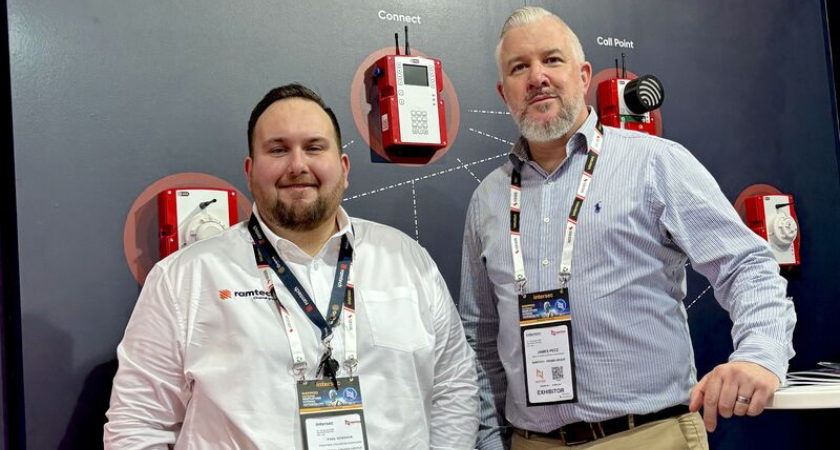
RAMTECH, a global leader in temporary fire detection and site safety solutions, has warned that the imminent release of the National Fire Protection Association’s (NFPA) new Battery Safety Code (NFPA 800) underscores the growing fire risk associated with lithium-ion batteries across construction and infrastructure sectors.
NFPA 800 is the first full lifecycle standard for battery safety, covering manufacturing, transport, installation, operation, emergency response and end-of-life management. The code – which is expected to be published on a provisional basis shortly – follows an accelerated development process driven by the rapid expansion of lithium-ion technologies across construction, energy and industrial sectors.
.png)
When compromised by damage or overcharging, tools and equipment can enter thermal runaway – a state of uncontrollable, self-heating that produces intense heat and flammable gases. On active sites, these risks are amplified by temporary charging setups and evolving storage conditions where supervision and early detection are often inconsistent.
James Pecz, vice president of Ramtech North America and member of the NFPA 72 Temporary Fire Alarm Notification Task Group, said NFPA 800 reflects a turning point in how the industry must address battery risk:
“Lithium-ion batteries are now embedded in almost every aspect of construction activity, from hand tools through to temporary power systems. What has changed is not their presence, but the scale and speed of adoption. That has created a gap between operational reality on site and the consistency of fire safety frameworks designed to manage these risks.
“The challenge is not simply the presence of batteries, but how unpredictably they move through live construction environments. Batteries are not fixed assets – they are constantly being charged, relocated and used across multiple work fronts, often under changing site conditions and shifting supervision. That creates variability in risk control. Without consistent segregation, monitoring and early warning, the exposure can change hour by hour on active projects.”
NFPA 800 introduces energy thresholds and maximum allowable quantities that determine when additional safeguards are required. It also aligns with existing standards including NFPA 241, NFPA 70, NFPA 72 and NFPA 855.
For construction and facilities professionals, these thresholds will directly influence how batteries are stored, charged and managed on active sites.
NFPA 800 is expected to remain valid for two years while it moves through the NFPA’s standard development process. While it is unlikely to immediately become enforceable in building codes, it is expected to influence best practice across construction and infrastructure projects.
Expert contributors within the life safety sector suggest the standard will act as a vital unifying document for the industry.
Kyle Jarvenpaa, VP of business development at Space Age Electronics, said: “I’m seeing NFPA 800 as a consolidation effort, rather than introducing entirely new standards around batteries. It's creating a single ‘road map’ that ties together other existing standards. The impact in the near term will likely be felt most in how Authorities Having Jurisdiction (AHJs) interpret and apply it in their jurisdictions.
“Like any newly developed standard, there will be a large educational gap for awareness and alignment on how to enforce it, especially in an environment like a construction site where batteries are used on many levels, all the way down to hand tools. That’s where the industry needs to come together for more widespread understanding and enforcement of the standard.”
James added that the industry now needs to move from awareness of the hazard to consistent execution of controls at site level:
“The hazard is already embedded across virtually every construction site. We now need to ensure that the controls we know are required are actually applied consistently in practice, particularly during high-pressure phases of construction where multiple contractors and rapid programme changes are involved.”
Ramtech is urging contractors, developers and facilities managers to review site-level battery safety procedures in light of NFPA 800, particularly around storage, charging, detection and emergency response planning.
For more information on Ramtech and its services, visit https://ramtechglobal.com/
For more information, contact Scott Giles or Gemma Cockrell at ramtech@cartwrightagency.com.
About Ramtech
Ramtech designs and develops industry-leading wireless life safety solutions used across construction, infrastructure and industrial environments. With more than 35 years of experience, the company specialises in temporary fire detection, evacuation alerting and site safety systems that help protect people, assets and projects during construction and refurbishment.
Ramtech’s solutions have been deployed in more than 33 countries worldwide, with over 500,000 units installed globally. Combining robust hardware, wireless technology and real-time monitoring capabilities, the company helps organisations improve safety, compliance and operational oversight across complex sites.
Originally reported by Ramtech.