USDA, Army Corps Break Ground on $750M Texas Facility to Combat Screwworm Threat
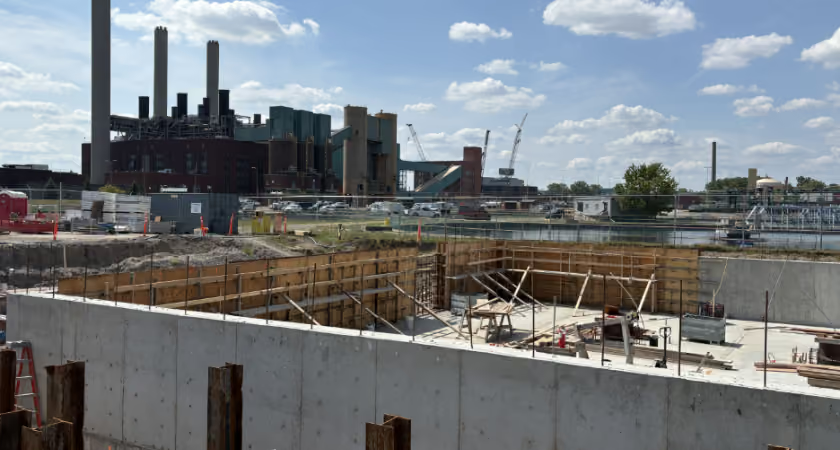
The U.S. Department of Agriculture and the U.S. Army Corps of Engineers have officially broken ground on a $750 million sterile fly production facility in Edinburg, marking a major infrastructure investment aimed at protecting the nation’s livestock industry and food supply chain.
Located at Moore Air Base, the project is designed to strengthen the country’s response to the New World Screwworm, a destructive pest that poses a significant threat to cattle, wildlife and agricultural stability.
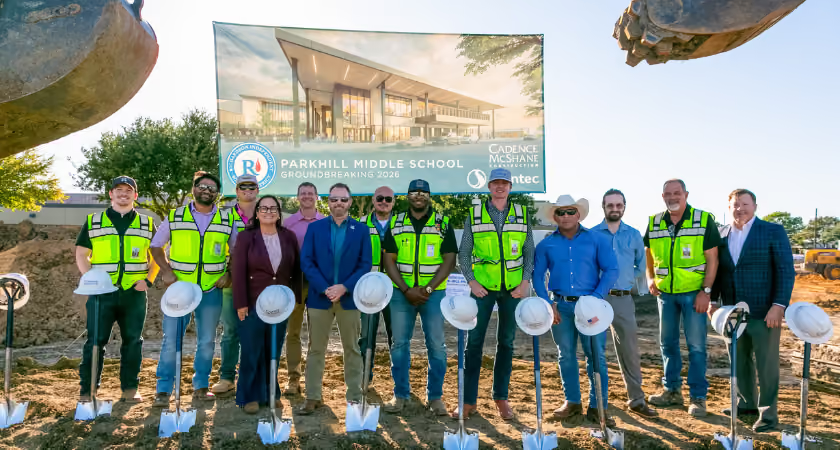
U.S. Agriculture Secretary Brooke L. Rollins and Lt. Gen. William H. Graham led the groundbreaking ceremony on April 17, emphasizing the project’s role in bolstering domestic production capabilities and reducing reliance on international facilities.
“Breaking ground on this facility marks a major investment in safeguarding America’s livestock and the producers who feed this nation. This puts NWS sterile fly production in American hands, so we do not have to rely on other countries for the best offensive measure to push screwworm away from our borders,” said Secretary Rollins. “The New World Screwworm threatens the health of our herds, the stability of rural economies, and the resilience of our supply chain. President Trump and his entire cabinet is committed to leveraging every resource necessary to contain this pest, protect American agriculture, and ensure the long-term security of our food supply chain.”
Construction Timeline and Capacity Expansion
The project is being delivered under an accelerated schedule, with initial operations targeted for November 2027. At that stage, the facility is expected to produce 100 million sterile flies per week, eventually scaling to 300 million flies weekly as construction continues.
USACE is overseeing engineering, design, construction management and contract administration, ensuring the facility meets strict biosecurity and operational standards. Officials said streamlined procurement processes and reduced regulatory barriers are helping fast-track development.
“Our mission at USACE is to deliver engineering solutions, with our partners, to secure our Nation, strengthen our economy, and reduce disaster risk,” said Graham. “That’s why we’re proud to deliver an engineering solution to the New World Screwworm, which represents a direct threat to our nation’s livestock, our food security, and our economy. This new, modern facility is the critical infrastructure we need to secure a defensive line against the New World Screwworm for generations to come.”
Lawmakers also underscored the regional and national significance of the project.
“Today’s groundbreaking is a historic moment for South Texas, and I am thrilled to see this $750 million investment officially begin to take shape for our farmers and ranchers,” said Rep. Monica De La Cruz. “I am incredibly proud to have helped secure this facility and appreciate Secretary Rollins’ commitment to protecting Texas agriculture from the threat of the New World Screwworm. Together, we are taking a vital step to protect our cattle industry and keep our local agricultural community thriving.”
Infrastructure Designed for Long-Term Biosecurity
The sterile insect technique deployed at the facility involves breeding flies in a controlled environment, sterilizing them using irradiation, and releasing them into affected regions. Because female screwworm flies mate only once, pairing with sterile males prevents reproduction and gradually eliminates the pest population.
“The work here today would not be possible without the hardworking Animal Plant Health Inspection Service (APHIS) employees here at USDA. Our partnership with the Army Corps of Engineers is essential, and we are deeply grateful for their unwavering commitment,” said Under Secretary Jenny Lester Moffitt Hoskins. “Together, we are building a modern, resilient capability right here at home—one designed to safeguard U.S. agriculture by countering this threat with speed, scale, and scientific precision.”
The Texas facility will complement existing production operations in Panama and a модерnized plant in Mexico, forming a broader regional defense network against outbreaks.
Once fully operational, the expanded system is expected to enhance response times, reduce risks to livestock producers and strengthen supply chain resilience—making the project a cornerstone of national agricultural infrastructure strategy.
Originally reported by USDA Government.