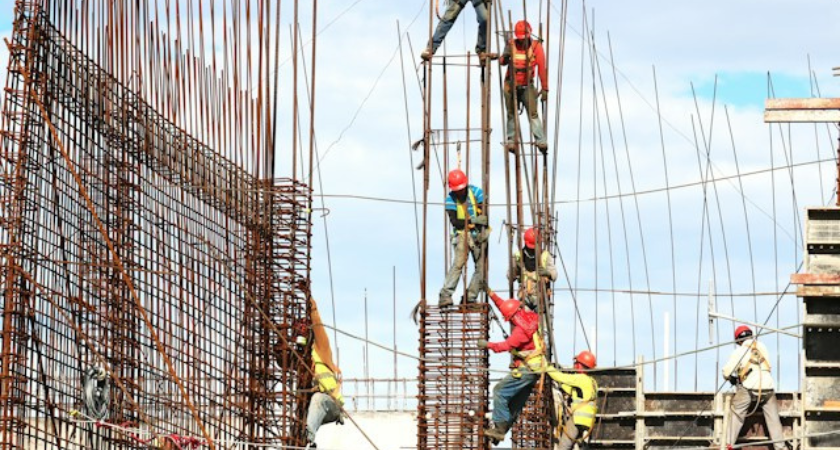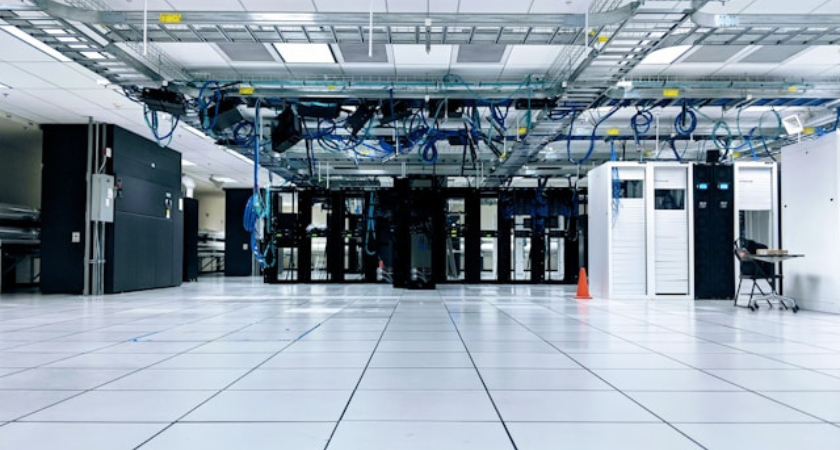
As billions of dollars flow into AI infrastructure projects across the United States, construction owners are confronting a new market reality: Even if they are not building data centers, they are increasingly paying for them.
.jpg)
The rapid expansion of hyperscale facilities by major technology companies is reshaping labor markets, subcontractor availability and project economics across the construction industry. For owners developing schools, hospitals, office buildings, multifamily housing or civic infrastructure, the consequences are becoming harder to ignore.
What began as a niche surge in digital infrastructure has evolved into a broader capital and labor competition that is driving up wages, extending timelines and introducing new uncertainty into construction planning.
The AI data center boom is creating what many industry leaders now describe as a bifurcated labor market.
Specialized projects tied to hyperscale development often offer significantly higher wages for electricians, HVAC technicians, welders and project managers than traditional commercial or institutional projects. As those workers migrate toward premium-paying projects, owners in other sectors are left competing for a shrinking pool of skilled labor.
This dynamic is especially pronounced in trades critical to power distribution and cooling systems, where data center construction demand is strongest.
For construction owners, the result is not simply higher labor costs. It is a broader shift in subcontractor pricing, labor predictability and bidding competitiveness.
Projects that once relied on stable regional labor assumptions are increasingly vulnerable to wage escalation tied to AI-related construction demand.
Owners are seeing the ripple effects in several ways:
For hospitals, universities and municipal agencies working within fixed budgets, these pressures can be especially disruptive.
A school district planning a bond-funded capital project, for example, may face budget inflation not because of local project demand, but because nearby data center developments are absorbing regional labor capacity.
That shift is forcing owners to reevaluate contingency planning and market assumptions.
For many owners, labor inflation is only part of the challenge.
Schedule reliability is emerging as a potentially larger issue as contractors compete for scarce talent in high-demand regions.
Compressed timelines on large-scale AI infrastructure projects often require contractors to prioritize premium contracts, which can strain labor commitments elsewhere. This can increase the likelihood of delayed starts, sequencing disruptions or labor reallocations on traditional projects.
For owners, these delays can trigger downstream financial consequences, including:
In a market increasingly shaped by labor mobility, project scheduling may depend as much on workforce competition as on design or permitting.
Not all markets are affected equally.
Northern Virginia, Texas, Arizona and Ohio remain among the most aggressive AI infrastructure growth zones, with labor competition often strongest around major data center corridors.
In these regions, owners may face significantly more pressure on labor budgets than counterparts in slower-growth areas.
This geographic concentration is creating a new layer of strategic planning for owners:
Build in high-growth corridors and absorb premium costs, or seek lower-pressure markets with potentially reduced labor volatility.
For national developers and institutional owners, location strategy is becoming increasingly tied to labor economics.
Traditional owner models that prioritized lowest bid procurement may prove less reliable in the current environment.
As labor competition intensifies, many owners are shifting toward:
Rather than viewing labor simply as a contractor responsibility, owners are increasingly treating workforce access as a strategic project variable.
This marks a significant shift in construction governance, particularly for organizations managing large capital programs.
The AI data center boom is no longer confined to the technology sector. It is becoming a structural market force that is changing construction economics across nearly every asset class.
For owners, the implications are clear: Pre-2024 assumptions about wage growth, subcontractor capacity and scheduling stability may no longer hold in many regions.
Projects that fail to account for labor competition from AI infrastructure could face underbudgeting, delayed delivery and increased execution risk.
In 2026, construction owners are not simply managing projects. They are competing in a broader market shaped by where capital is flowing fastest.
As AI infrastructure accelerates, owners who adapt procurement, budgeting and labor strategies accordingly may be better positioned to protect project outcomes — while those who do not could find themselves paying more for a workforce increasingly drawn elsewhere.