The One Big Beautiful Bill Act (BBBA) is reshaping the U.S. manufacturing and construction landscape by introducing significant tax incentives tied to capital investment, domestic production and research activity.
.webp)
Signed as part of President Donald Trump’s broader tax and spending agenda, the legislation is designed to stimulate U.S.-based manufacturing capacity and reduce reliance on overseas production.
One of the most impactful provisions is the Qualified Production Property Deduction. Under this measure, companies that build new manufacturing facilities — or significantly expand existing ones — can deduct 100% of eligible capital expenditures, provided construction begins between January 20, 2025 and December 31, 2028. Projects must be placed into service by January 1, 2031.
This accelerated deduction dramatically improves project economics. Instead of spreading depreciation over decades, companies can deduct the full investment upfront, strengthening short-term cash flow and improving internal rates of return.
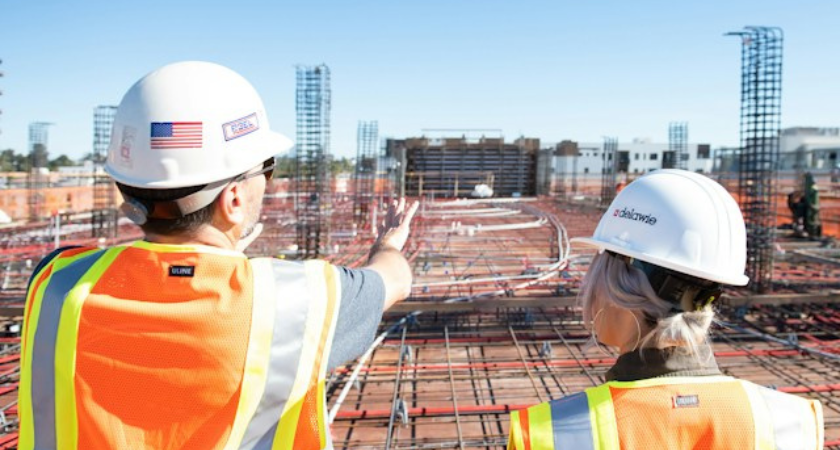
For the construction sector, this creates a narrow but powerful investment window. Industry analysts expect a surge in factory groundbreakings over the next three years as companies race to qualify.
For composites manufacturers and suppliers, the ripple effects could be substantial. Increased factory construction means higher demand for advanced building materials such as fiber-reinforced polymer (FRP) rebar, composite panels, corrosion-resistant structures and lightweight structural components.
In addition to the production property deduction, the BBBA reinstates 100% bonus depreciation for qualifying capital expenditures. Traditionally, capital investments are depreciated over multiple years according to IRS schedules. Under the updated framework, companies can deduct the entire cost of machinery, tooling, and production equipment in the year it is placed in service.
This provision improves liquidity and encourages businesses to modernize production lines, automate facilities and invest in advanced manufacturing technologies.
For the composites industry, this could accelerate:
Beyond construction, R&D-related incentives embedded in the broader tax package are expected to encourage innovation in advanced materials. Composites firms developing lightweight, high-strength and sustainable materials stand to benefit from a more favorable tax treatment of research expenditures.
The timing window built into the legislation is critical. With eligibility tied to construction start dates and service deadlines, companies must act quickly to secure benefits.
Domestic firms considering U.S. expansion now have a tax-advantaged environment to do so. Likewise, international composites manufacturers evaluating North American production footprints may view the current period as an optimal entry point.
The legislation effectively compresses investment decisions into a three- to four-year horizon. That urgency is likely to generate elevated activity across engineering, procurement and construction (EPC) markets.
For suppliers of composite materials used in industrial flooring, bridge decks, wastewater facilities, reinforcement systems and structural retrofits, the anticipated uptick in manufacturing plant construction could translate into steady order growth through the end of the decade.
.webp)
The BBBA’s construction and capital expenditure provisions are not isolated measures; they are part of a broader strategy to strengthen domestic industrial capacity.
If widely adopted, the incentives could:
For the composites industry, the law represents more than a short-term stimulus. It creates structural incentives for reshoring production and investing in advanced materials technologies — positioning the sector to play a central role in the next wave of U.S. industrial growth.
As companies evaluate investment pipelines for 2025–2029, the BBBA’s tax environment may prove decisive in determining where and when new manufacturing capacity is built.
Originally Reported by JEC Composites.