BIG BEND, Texas — A growing dispute is unfolding in West Texas as residents in the Big Bend region say border barrier construction is continuing despite federal claims that work has been halted.
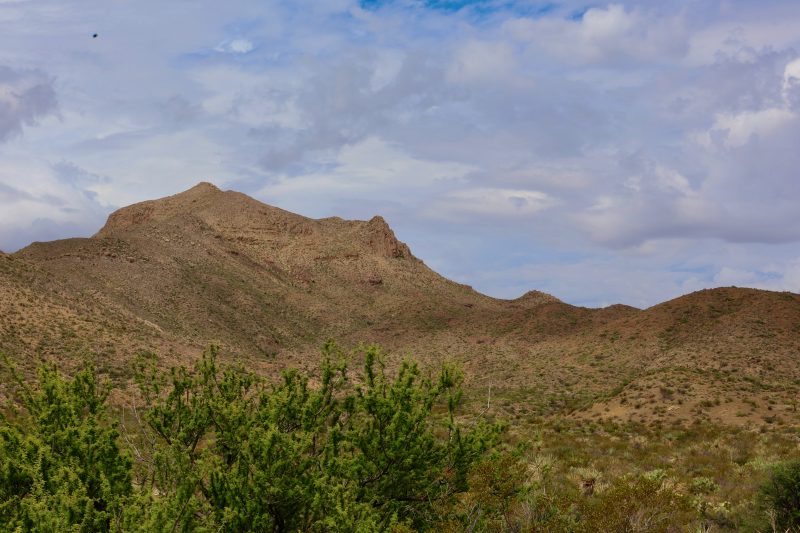
The rugged landscape surrounding Big Bend National Park and Big Bend Ranch State Park has long been considered one of the most remote and ecologically significant areas along the U.S.-Mexico border. But locals now say ongoing construction activity is altering the region without sufficient public input or transparency.
“They’re still preparing to build physical walls and barriers in those areas,” said Michael Ryan, a retired ranger with more than two decades of service in the area. “We don’t trust them.”
Federal officials have maintained that no physical wall is planned for certain portions of the region, instead pointing to “virtual wall” technology that uses surveillance systems to monitor crossings. However, residents argue that visible activity on the ground tells a different story.
Concerns have intensified following recent federal contract awards for border barrier construction. In March 2026, the U.S. Department of Homeland Security awarded nearly $1 billion to Barnard Construction Co. for work along the Rio Grande, while Fisher Sand & Gravel received a $1.2 billion contract for barrier construction in southern Presidio County.
Residents say these contracts, combined with physical evidence such as concertina wire and other materials along the border, indicate that construction is actively progressing.
“They didn’t get a wall; they got wire,” Ryan said. “Razor wire. This is like what you see in prisons, in multiple areas, in the river and on the shore. That’s what we have down in the valley right now.”
Reports have also documented more than 20 miles of concertina wire fencing installed along portions of the Rio Grande, further fueling skepticism about federal statements.
Local opposition has grown as landowners and advocacy groups raise concerns about environmental impacts, property rights and access to land.
In February, the Department of Homeland Security invoked provisions under the REAL ID Act of 2005 to waive multiple environmental and cultural protection laws in order to expedite border construction. Critics say the move bypasses critical safeguards, including the National Environmental Policy Act and the Endangered Species Act.
Residents have also voiced frustration over the use of eminent domain. Some property owners say they have received notices that portions of their land will be seized for the project, with compensation limited to the footprint of the barrier and access roads.
“On my land, it’s still a physical wall on the map,” said Stephen Dempsey. “That is the entire border of Texas they are trying to wall off. They are just taking it.”
Other landowners warn that the construction could cut off access to significant portions of their property, including areas with family history. One resident said their family could lose access to land where relatives are buried.
Advocacy efforts have intensified in recent weeks. Groups such as Save Big Bend have organized protests and outreach campaigns aimed at halting construction and raising awareness.
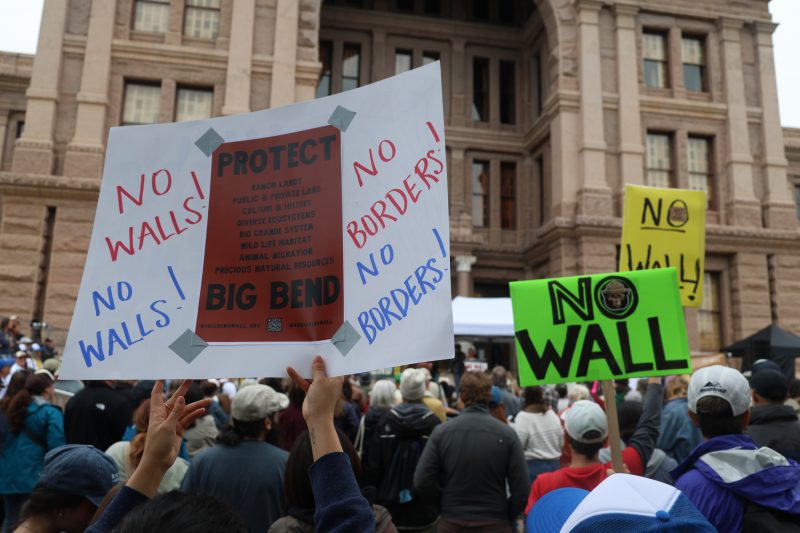
On April 4, thousands gathered at the Texas State Capitol to protest federal actions in the region, with participants emphasizing the importance of preserving the broader Big Bend ecosystem.
Among those speaking out was Amy Lee Nelson, who criticized the project’s impact on both communities and the environment.
“These are our neighbors, and we need each other,” she said. “There’s such a big lie behind building a wall to protect ourselves from people who are our neighbors, our spirit family. And then to destroy nature in the process … we’re supposed to be here so we can get along with each other.”
Residents also argue that the region’s remote geography already serves as a natural deterrent. In 2025, the Big Bend sector accounted for roughly 1% of illegal crossings along the U.S. border, according to available data.
As the debate continues, the situation highlights broader tensions between border security priorities, environmental preservation and property rights — issues that are likely to remain at the forefront as construction plans evolve.
Originally reported by Sheldon Munroe in Reporting Texas.