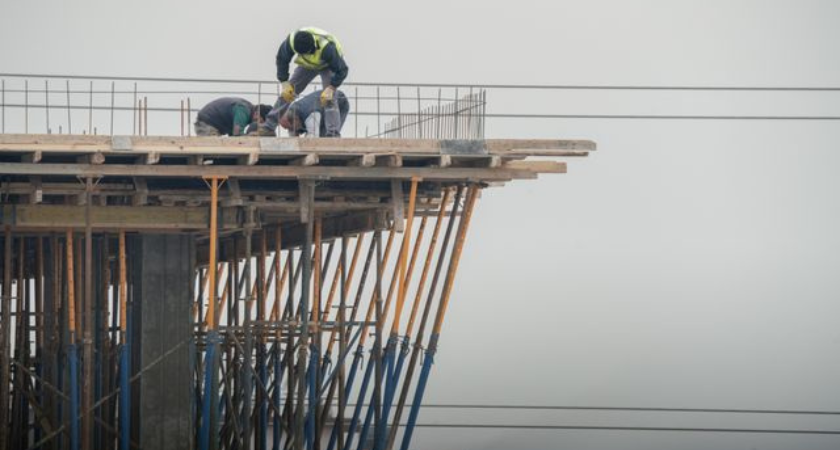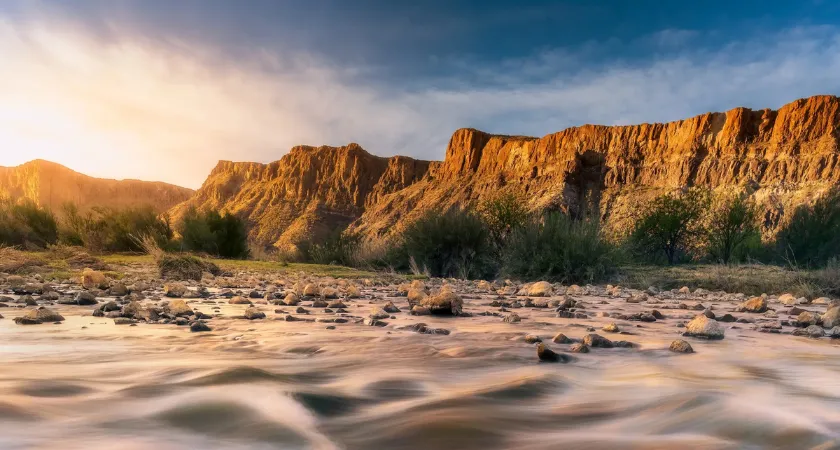
The Trump administration is moving forward with plans to construct a new segment of border wall through Big Bend National Park, according to newly published federal documents and an updated map released by U.S. Customs and Border Protection.
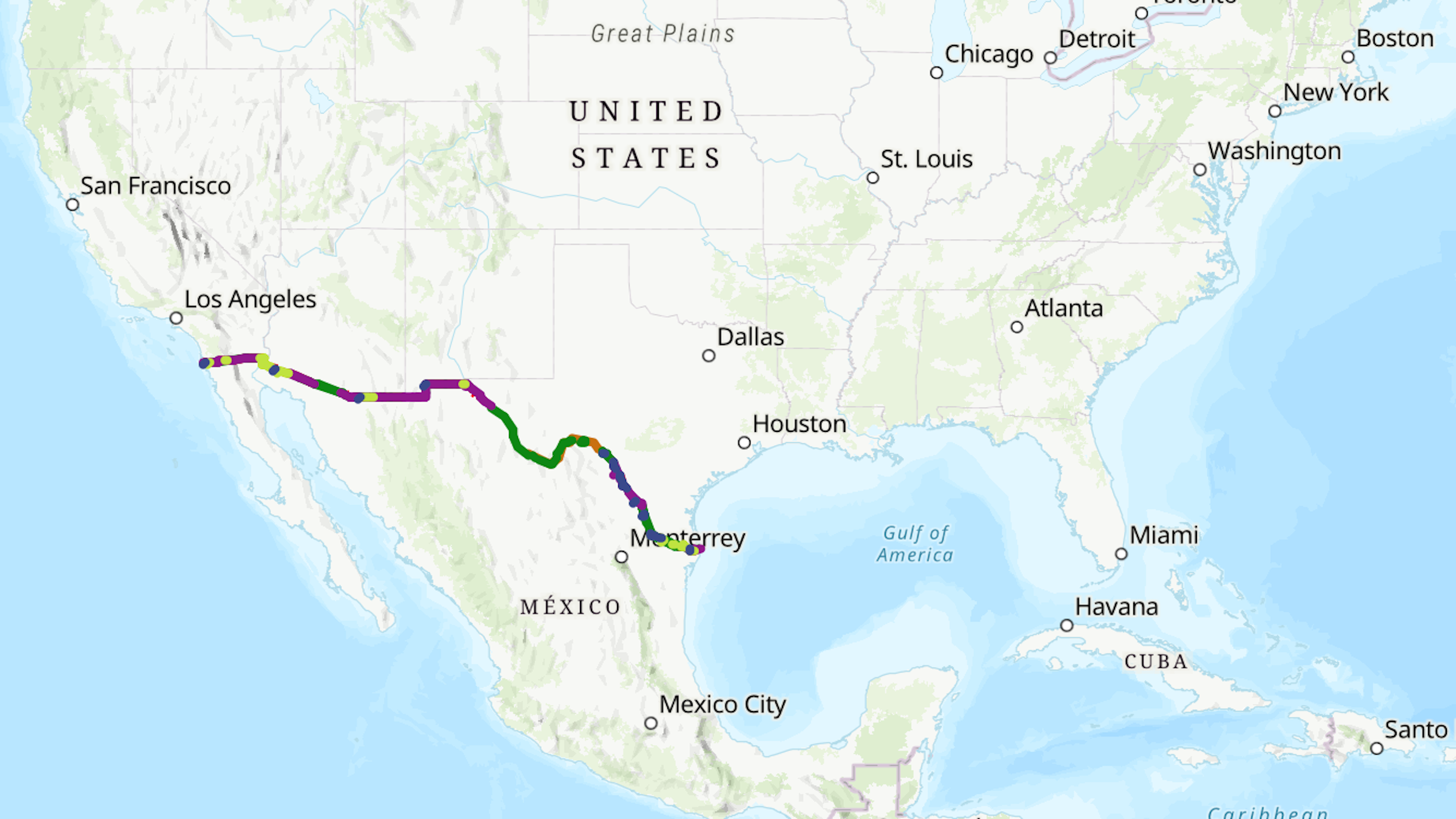
On February 17, U.S. Customs and Border Protection (CBP) posted a map outlining a proposed “Smart Wall” that would extend along the U.S.–Mexico border, including a stretch running along the southern edge of Big Bend. The park, which spans roughly 800,000 acres in West Texas, shares 118 miles of international boundary with Mexico via the Rio Grande.
The wall is slated for completion by 2028 and would incorporate cameras, lighting, and other detection technologies as part of a broader border infrastructure expansion from Southern California to the Gulf of Mexico.
According to notices published in the Federal Register, the Department of Homeland Security (DHS) signed waivers for at least 28 federal laws on February 17 to expedite construction. Among the laws waived are the National Environmental Policy Act, the Endangered Species Act, the Clean Water Act, the Clean Air Act and the National Historic Preservation Act.
Such waivers allow the federal government to bypass environmental review requirements and fast-track border barrier construction. DHS has stated that contracts have already been awarded and that construction could last several years.
Although most of the barrier would run along the park’s southern rim, CBP told Inside Climate News that portions of the structure would be built inside sections of Big Bend and the neighboring Big Bend Ranch State Park.
Environmental advocates warn that installing bollard-style barriers in the rugged Chihuahuan Desert landscape could disrupt wildlife migration corridors and restrict access to the Rio Grande, a critical water source for animals in the region.
National Park Conservation Association (NPCA) raised concerns about ecological and economic impacts, including potential harm to archaeological sites and the park’s tourism-driven economy.
“Building a wall here makes no logistical sense and only serves to harm the region’s wild scenery and thriving community-based tourism economy,” said NPCA Texas Regional Director Cary Dupuy in a statement. “We need to look for border solutions that are as unique as our landscapes and communities. And we must ensure the solutions we find don’t destroy the national treasures we’ve committed to protecting.”
Critics also point to flood risks. Bollard walls can trap debris during flash floods — such as one that struck Big Bend in 2025 — potentially worsening erosion and altering natural water flow patterns.
Big Bend is considered one of the most remote and biologically diverse national parks in the United States. The region is home to desert bighorn sheep, black bears, mountain lions and hundreds of bird species. Its rugged canyons and river corridors have long been recognized as critical habitat for cross-border wildlife movement.
Conservationists argue that physical barriers could fragment ecosystems in ways that advanced monitoring technology alone does not require. Supporters of the project, however, say enhanced border infrastructure is necessary to improve surveillance and national security in remote stretches of the border.
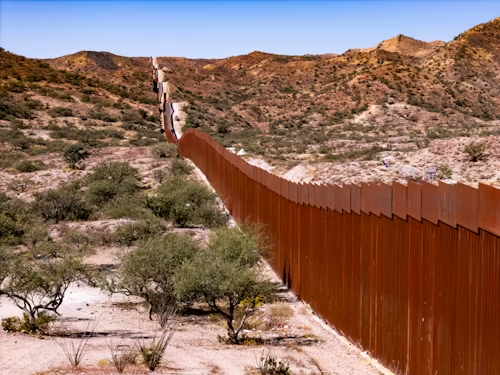
The Smart Wall initiative is part of a broader federal strategy to reinforce sections of the U.S.–Mexico boundary with a mix of physical barriers and digital surveillance systems.
With waivers in place and contracts awarded, construction could begin soon, pending logistical preparations. Environmental groups are expected to continue challenging the project through public advocacy and possible legal action.
As the debate unfolds, the future of border infrastructure through Big Bend highlights the ongoing tension between national security priorities and preservation of public lands widely regarded as some of America’s last wild spaces.
Originally reported by Owen Clarke in Outside Online.